
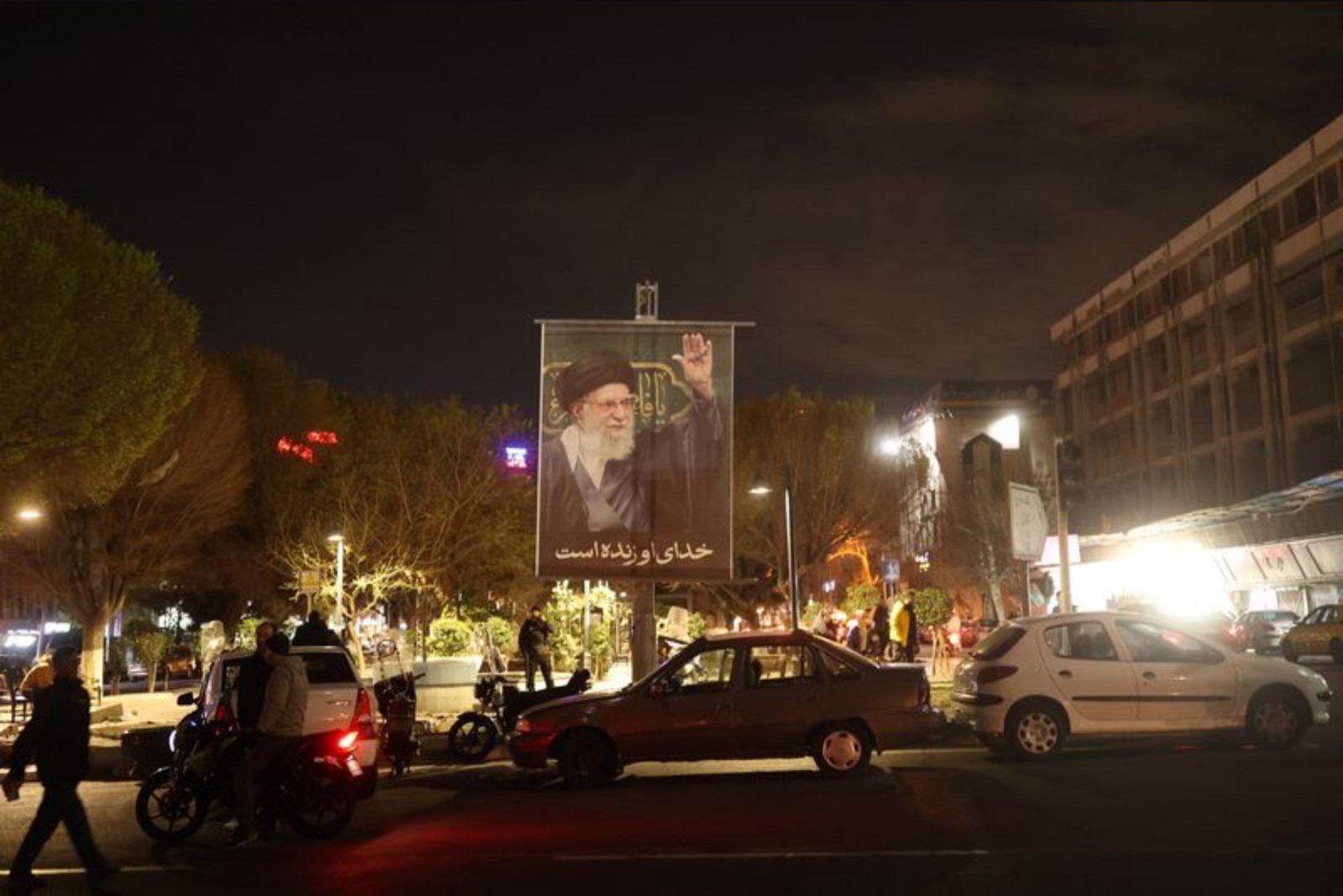
DUBAI, March 1 - The assassination of Iran’s Supreme Leader Ayatollah Ali Khamenei has created what several regional officials and analysts describe as the gravest crisis confronting the Islamic Republic since the 1979 revolution. The event has combined active military pressure on Iranian territory, an unresolved succession mechanism, and growing strains within Iran’s political and security networks.
Despite the shock, multiple regional analysts warned against assuming an imminent collapse of the system. They noted that Iran’s governing architecture was intentionally spread across clerical institutions, security organisations and informal power networks to reduce dependence on any single individual.
"The Iranian system is bigger than one man - removing Khamenei could harden the regime rather than weaken it," said Danny Citrinowicz of the Atlantic Council.
"Iran was built to survive the loss of a leader," added Ali Hashem, a research affiliate at Royal Holloway, University of London. "The danger is not a vacuum. It’s whether war and pressure push the system past the point where that resilience holds."
At the epicentre of this system-level resilience stands the Islamic Revolutionary Guards Corps, long viewed by officials as Iran’s real centre of gravity. The balance of power now turns on whether the IRGC will be weakened by battlefield losses and internal friction, or whether it will respond by consolidating power around a more security-centred model of governance.
"The real question is whether Khamenei’s death takes the air out of the IRGC - the force that actually runs Iran - or whether they close ranks and harden," said Alex Vatanka, a senior fellow at the Middle East Institute. "If rank-and-file officials decide there is no future here, I’m not sure even the Guards can keep the regime together."
Regional officials familiar with the dynamics of the Guards said the organisation is unlikely to change its core ideological identity, which is rooted in protecting the revolution. Still, they noted the IRGC is capable of tactical shifts if the broader system’s survival requires adaptation.
One regional official suggested some mid-level figures within the Guards could pursue conditional pragmatism if that approach is assessed as necessary for maintaining the system. "They may evolve into a less hardline force...there are pragmatic mid-level members open to reducing tensions with the United States if necessary for the system’s survival," the official said. That mixture of ideological commitment and selective pragmatism makes the IRGC both the regime’s principal defender and the key indicator of whether the political order can endure.
Jonathan Panikoff, formerly a U.S. deputy national intelligence officer for the Near East, characterised the apparent strategy of Washington and Israel as aimed not only at degrading Iran’s military response capacity but also at destabilising its ruling order by targeting senior leadership and probing the loyalty of security forces. He said the success of such an approach would hinge on whether Iran’s security organisations choose to stand aside or defect should significant public unrest re-emerge.
In the immediate aftermath of the killing, Tehran has emphasised continuity. Officials report that key parts of the command structure remain operational despite intense pressure. Iranian missile units, air defences and senior commanders have been struck, yet the system has so far absorbed the blows and continued to function.
Analysts and officials outline three intersecting tests for the Islamic Republic: whether the security state can maintain cohesion under sustained attack; whether the elite can settle on a successor or adopt a temporary governing arrangement; and whether public sentiment and domestic fault lines will deepen the political rupture.
Politically, control of the transition places the constitutionally mandated duty on the Assembly of Experts, an 88-member clerical body. But analysts say wartime conditions could push the succession toward an improvised outcome - either a rapid elevation of a single successor or a provisional collective leadership dominated by security institutions.
Veteran politician Ali Larijani, who is secretary of Iran’s Supreme National Security Council, announced that a temporary leadership council would oversee the transitional period following Khamenei’s death. Lawmakers and security figures such as Larijani and Mohammad Baqer Qalibaf, the parliament speaker, are being mentioned as potential bridge figures who could lead through a security-oriented yet pragmatic phase.
Observers point out that Khamenei had taken steps before his death to influence succession dynamics. After a 12-day conflict with Israel last June that targeted him and his close circle, he is reported to have nominated preferred successors and placed backup commanders into senior military posts. Two figures reported as among those he favoured include judiciary chief Gholam-Hossein Mohseni-Eje’i and Hassan Khomeini, a moderate cleric and grandson of the Islamic Republic’s late founder. Officials caution, however, that the clerical Assembly may seek to delay naming a new Supreme Leader out of concern for targeting risks.
Externally, sources briefed on regional operations said Israel intends to continue striking political and security institutions tied to Iran’s ruling structure as well as ballistic missile and launcher systems. Those sources described an objective of weakening the state and creating conditions that could lead to regime change. One source said Israel seeks to persist with the campaign until Iran’s missile capabilities are destroyed but noted the operation could be curtailed if the United States reaches an agreement with Tehran.
"The objective is very clear: to remove an existential threat to the State of Israel," Israeli Foreign Ministry spokesperson Oren Marmorstein told reporters in Tel Aviv. "That threat is the Iranian regime. We have no quarrel with the Iranian people."
A senior official involved in joint Israeli-U.S. military planning said it was too early to determine what political order might follow within Iran, stressing the campaign is still at an early stage and outcomes will depend on developments on the ground. The official added that Iranians must ultimately determine their own destiny, and suggested that achieving a degree of air superiority over Iran would make that process easier. Maintaining tempo and intensity of strikes was described as critical to exploiting potential fissures inside Iran and within the IRGC following the elimination of senior leaders, though the official declined to describe what a breakdown in command would look like.
The situation carries additional hazards. With foreign military assets operating in and over Iranian airspace and Iran’s coercive capacities under strain, analysts warn that renewed mass anti-government protests could escalate, increasing the risk of defections within security forces and elevating the role of civilian political actors pressing for change.
For now, Tehran’s priority appears to be projecting continuity and stability, even as it manages a painful strategic and political test. Whether the institutional architecture that was designed to survive the loss of a single leader will withstand sustained external pressure and internal fracture remains the central question facing the Islamic Republic.