
World March 16, 2026

Kennedy Center trustees set to vote on temporary closure for Trump's renovation plan

Meeting in the White House East Room expected to approve two-year shutdown and renovation measures despite objections from non-voting Democrats

By Caleb Monroe
Kennedy Center trustees set to vote on temporary closure for Trump's renovation plan

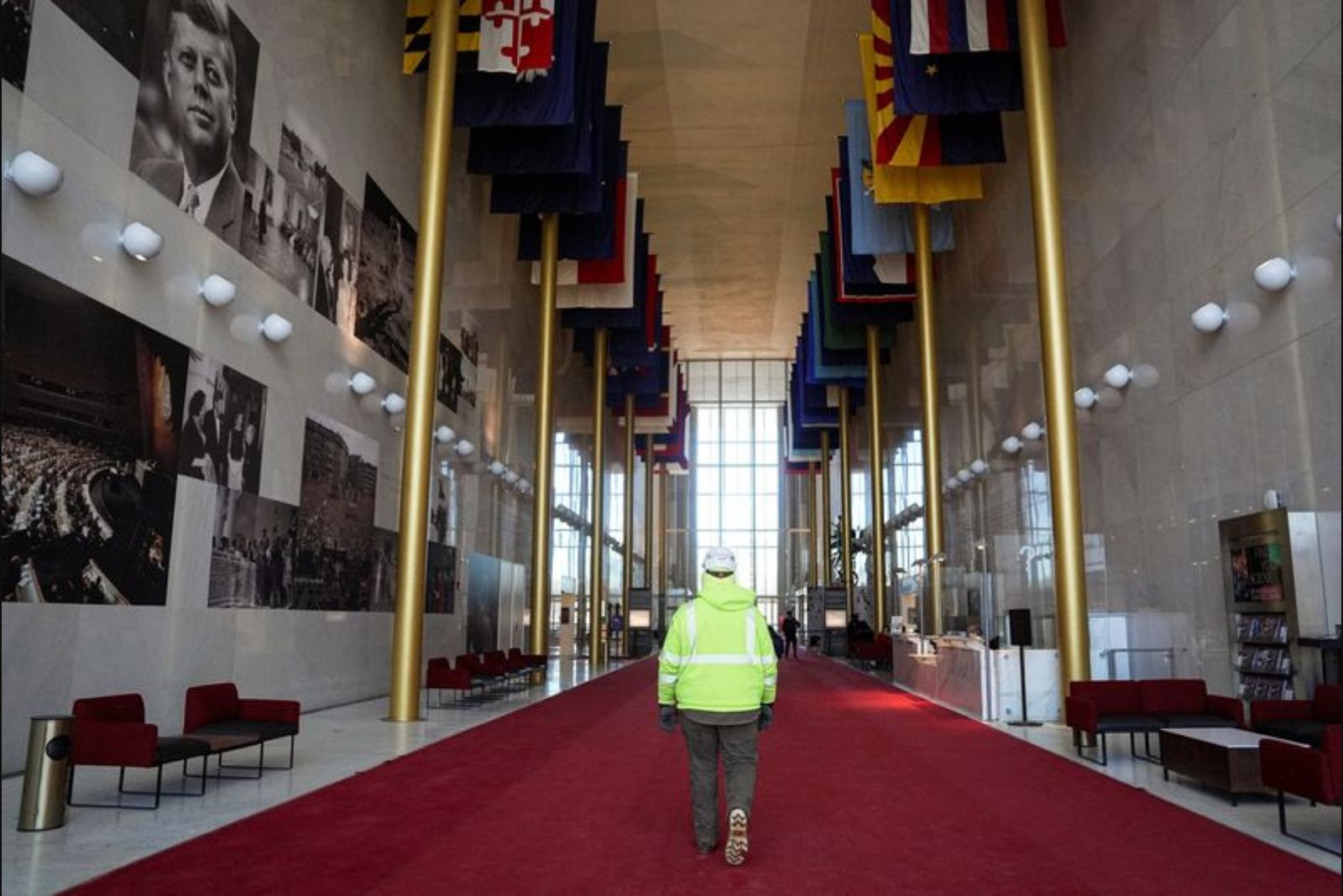
The John F. Kennedy Center for the Performing Arts board of trustees is scheduled to vote on a temporary closure to enable President Donald Trump's proposed renovation. The meeting, taking place in the East Room of the White House, is expected to approve the plans after the board last December voted to rename the venue the Trump-Kennedy Center. Some non-voting Democratic board members have challenged the process in court and a judge has ordered access to the renovation plans for at least one congresswoman.

Key Points

  • Board of trustees to vote Monday in the White House East Room on a temporary closure to implement President Trump's renovation plan - impacts the arts and cultural sector and construction contractors.
  • The board previously approved renaming the venue the Trump-Kennedy Center; voting trustees were appointed by the president, making approval of the renovation plans likely - affects governance and political oversight.
  • A federal judge ordered the administration to allow Representative Joyce Beatty access to the Monday meeting and renovation plans after non-voting Democrats challenged the process - introduces legal and oversight scrutiny affecting federal governance and public institutions.

The board of trustees of the John F. Kennedy Center for the Performing Arts is expected to vote on Monday on a temporary closure to permit the renovation program put forward by President Donald Trump, according to two people familiar with the agenda.

The session will be held in the East Room of the White House, and the renovation proposals are anticipated to receive approval. The president has been an active proponent of the changes, and the voting members of the board were appointed by him.

In a separate action last December, the board approved changing the name of the building - which Congress dedicated as a living memorial to President John F. Kennedy after his assassination in 1963 - to the Trump-Kennedy Center.

President Trump has previously announced that the center would close for two years of renovation, with that shutdown slated to begin after the July 4 Independence Day holiday. In announcing the closure on February 1, he said: "The temporary closure will produce a much faster and higher quality result."

Not all members of the center's oversight structure have supported the plan. Some Democrats who hold non-voting positions on the board, including U.S. Representative Joyce Beatty, have formally challenged the president's proposals. A federal judge last week ordered the administration to permit the congresswoman to attend Monday's meeting and to be given access to the renovation plans.

"No president has the authority to shut Congress out of the governance of the Kennedy Center, much less unilaterally rename or demolish it," Beatty said in a statement after the court order.

The full scope of the expected renovations remains unclear. President Trump has described the building as "run down" and dangerous. On Friday he released exterior renderings that show a look similar to the current white marble facade and the white columns that ring the structure, elements that were recently painted over.

Interior visual plans have not been released. In December the president suggested adding white marble arm rests to the center's seating. He has also said changes will be made to the carpet, walls, chandeliers, stages and ventilation systems.


As the trustees prepare to vote, the immediate outcomes are limited to the approval process and access to the renovation documentation ordered by a court. The decision to temporarily close, if approved, is intended to accelerate work and alter significant interior and infrastructure elements, but precise designs and timelines beyond the stated two-year closure have not been disclosed.

Risks

  • Legal and political challenges: Non-voting Democratic board members have contested the process and secured a court order for access to documents and meetings, creating legal and procedural uncertainty - impacts governance and institutional oversight.
  • Unclear renovation scope: The exact extent of the changes to the center remains unspecified, leaving uncertainty for cultural programming, capital planning and contractors reliant on defined project scope - impacts performing arts operations and construction market participants.
  • Operational disruption from closure: A planned two-year shutdown beginning after July 4 would interrupt performances and center operations, with implications for artists, venue staff and local cultural economic activity - impacts the arts and hospitality sectors.

More from World

U.N. Extends Afghanistan Assistance Mission for Three Months After U.S. Seeks Review Mar 16, 2026 Human Rights Watch Says El Salvador Has Detained Deported Salvadorans Without Judicial Oversight Mar 16, 2026 BBC Seeks Dismissal of Donald Trump’s $10 Billion Defamation Suit Over Edited Documentary Mar 16, 2026 Encyclopaedia Britannica Sues OpenAI, Alleging Unauthorised Use of Reference Content Mar 16, 2026 European and other allies decline U.S. call to send ships to Strait of Hormuz Mar 16, 2026