
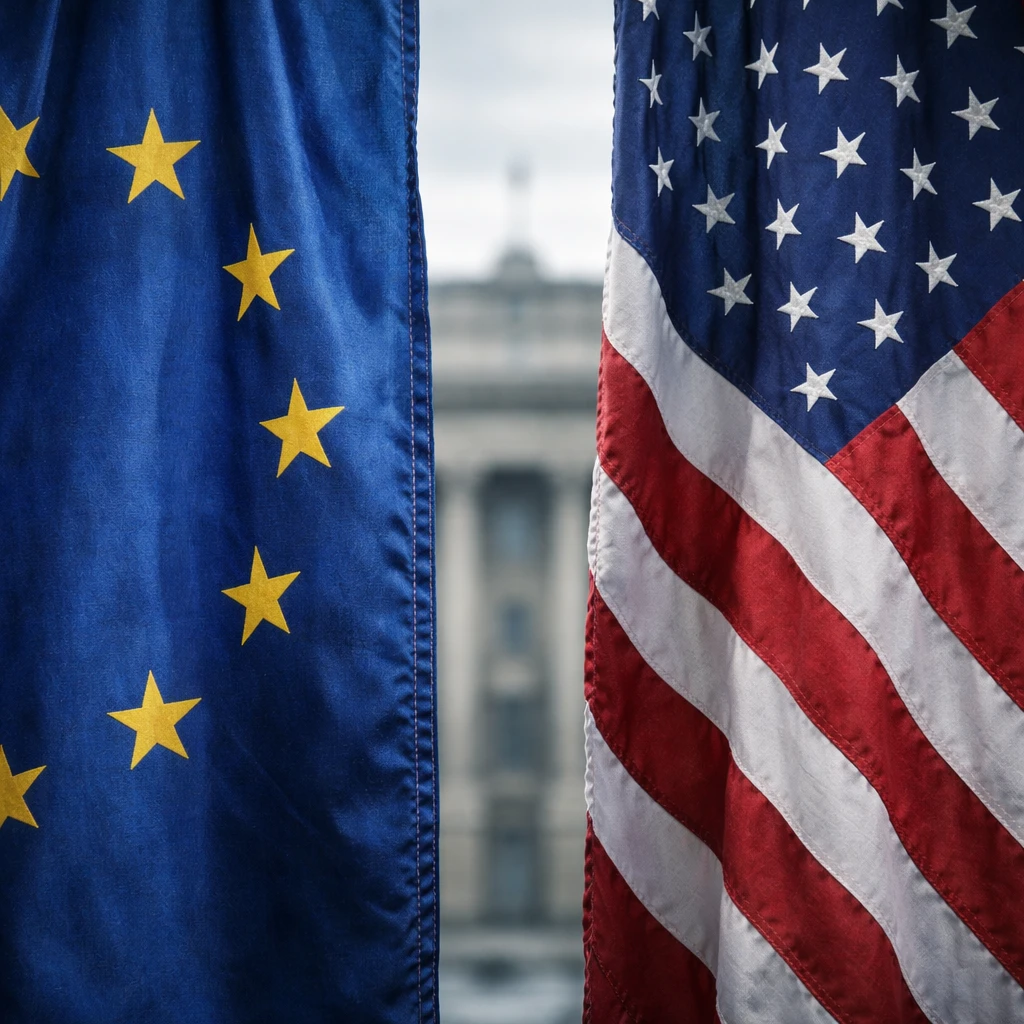
European Union foreign policy chief Kaja Kallas stated in an interview published by the Financial Times that the United States intends to split Europe and harbors a dislike for the EU. The remarks, delivered in a high-profile interview, underline persistent tensions in relations across the Atlantic.
Kallas framed her observation starkly: "What I think is actually important for everybody to understand is that the U.S. has been very clear that they want to divide Europe. They don’t like the European Union," she told the Financial Times. Her comments come against a backdrop the article describes as more than a year of turmoil in transatlantic relations.
She said the United States’ approach toward the EU resembled strategies employed by the bloc’s adversaries, according to her remarks to the Financial Times. That parallel was raised directly by Kallas as part of her broader critique of how Washington has engaged with Europe in recent months.
In practical terms, Kallas urged EU member states to avoid negotiating with the U.S. on an individual basis. "EU countries should not be looking to deal with Trump bilaterally," she said, adding that members should instead approach such interactions together. "Because we are equal powers when we are together," she said, underscoring her argument for a united European stance in dealings with the United States.
Her comments highlight an internal policy preference: responding to external pressure through coordinated action rather than fragmented bilateral arrangements. They also reflect concern about the potential effects of unilateral engagement on the cohesion and diplomatic leverage of the EU as a bloc.
Context and implications
While Kallas did not propose specific policy moves in the interview beyond urging collective engagement, her assessment emphasizes unity as a means of preserving the EU's influence in dealings with the United States. The remarks were delivered in the context of a period described as having more than a year of transatlantic turbulence.
Observers of European diplomacy may read the comments as an appeal to maintain institutional solidarity when confronting external pressures. Kallas’ characterization of U.S. behavior as similar to tactics used by adversaries signals a notable level of concern from one of the EU’s senior foreign policy officials.