
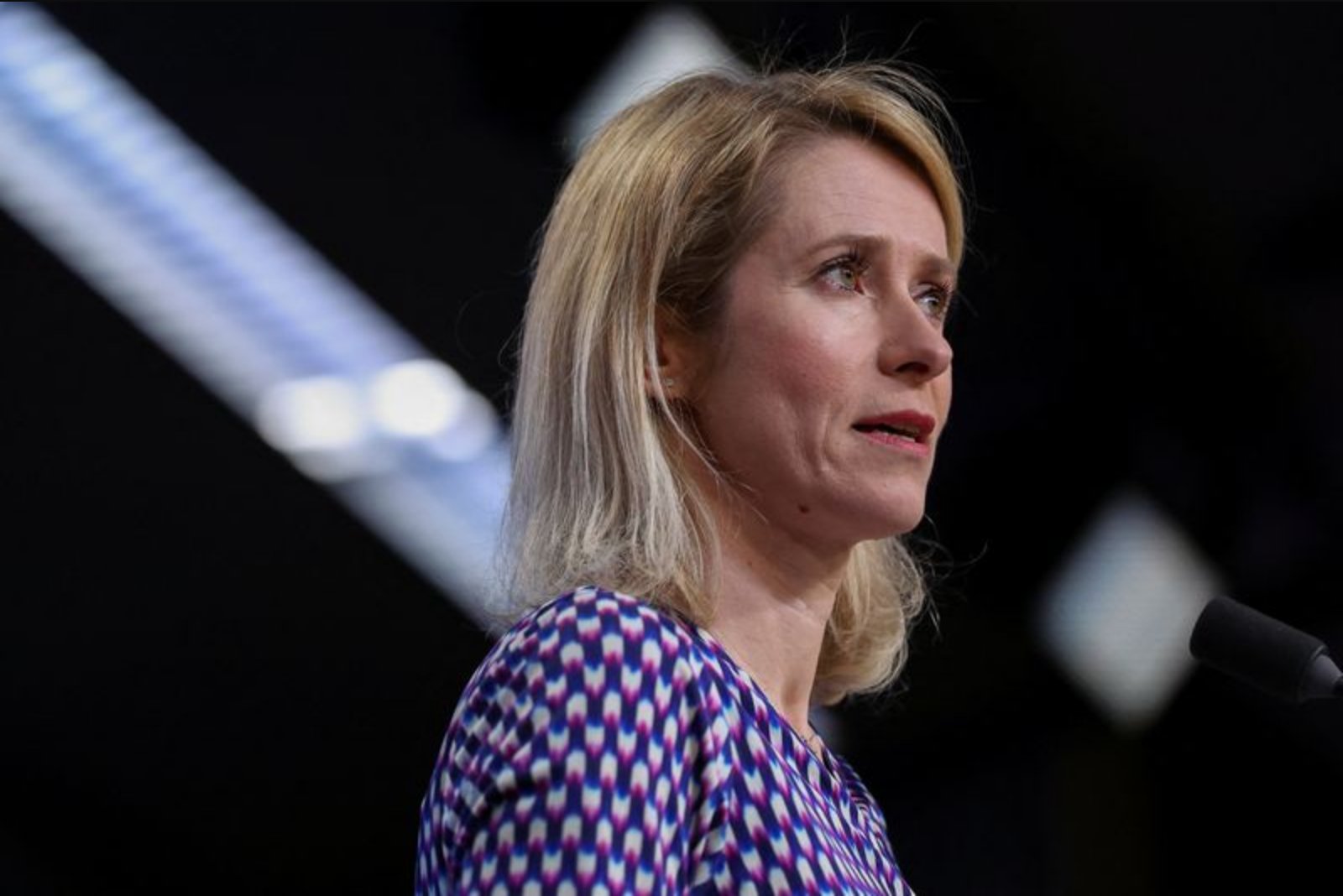
BRUSSELS - European Union High Representative for Foreign Affairs and Security Policy Kaja Kallas told Reuters in Brussels that the United States and Israel should bring their war with Iran to an end and that the EU is consulting with regional governments on ways to secure a ceasefire and a diplomatic resolution.
Kallas said the EU was discussing options with neighbors in the Middle East and that Europe could offer diplomatic support to bring the parties together. "We have been consulting with regional countries like the Gulf countries, Jordan, Egypt, (about) whether we could also bring forward proposals for Iran, Israel and the U.S. to get out of this situation so that everybody saves face," she said, without providing additional details on the conversations.
Asked whether it was time to end the war, Kallas responded: "Absolutely. I think ... it would be in the interest of everybody if this war stops. The problem with wars is that it’s easier to start than to stop them, and it always gets out of hand." The comment framed the EU position as one favoring negotiated disengagement rather than military escalation.
On the question of restoring freedom of navigation in the Strait of Hormuz, Kallas said the door remained open to European participation but that any such role would probably be tied to a broader diplomatic solution. Multiple European governments have declined U.S. President Donald Trump’s calls to join a mission to reopen the Strait - a key corridor for oil, gas and other goods that Iran has largely blocked. Kallas reiterated that leaders across Europe have been unwilling to place their forces in harm’s way in a war they did not initiate.
"Nobody is ready to put their people in harm’s way in the Strait of Hormuz," she said. "We have to find ... diplomatic ways to keep this open so that we don’t have a ... food crisis, fertilisers crisis, energy crisis in the world." Her comments underscore EU concerns that disruptions in the Strait could ripple through commodity markets and supply chains, affecting energy supplies as well as shipments of foodstuffs and fertilizers.
Kallas also acknowledged tensions between Europe and the United States over the conduct and objectives of U.S. policy in Iran since President Trump returned to the White House in January last year. "The main concern of the European countries is that we were not consulted with (before) starting this war - actually the opposite. There were many Europeans who were trying to convince the U.S. and Israel not to start this war," she said, adding that Europe has become accustomed to Washington’s unpredictability and has responded with what she described as "more calm" approaches.
European leaders have warned that joining a U.S.-led operation in the Strait could expose their forces to danger and have pointed to the lack of consultation prior to the onset of hostilities as a reason for reluctance. President Trump has warned that European hesitation could have negative consequences for the NATO alliance; Kallas’ remarks reflect persistent diplomatic friction stemming from those disagreements.
To address the immediate logistical and humanitarian impacts of the conflict, Kallas proposed considering a model similar to a U.N.-brokered arrangement used to allow Ukraine to export grain, foodstuffs and fertilizers from the Black Sea during wartime without civilian vessels coming under attack. She said she had discussed the concept with U.N. Secretary-General Antonio Guterres and that the U.N. was "working on this."
"Now the question is what also the neighbouring countries could agree to, especially Iran," Kallas said, pointing to the practical and political hurdles in implementing a corridor or protected export mechanism in the Strait of Hormuz. She emphasized that any European contribution to keeping the shipping lane open would most likely be tied to diplomatic progress rather than unilateral military action.
Throughout the interview, Kallas framed the EU role as primarily diplomatic: offering to convene parties, propose face-saving measures and consult regional actors on feasible paths out of the crisis. She did not outline specific proposals, troop commitments, or timelines, and provided no operational details about how a navigational corridor would be enforced if agreement were reached.
Contextual note: Kallas’ comments were delivered in Brussels during an interview with Reuters. She spoke about ongoing consultations with Gulf states, Jordan and Egypt, and about contacts with the United Nations related to safeguarding exports through contested waterways.