
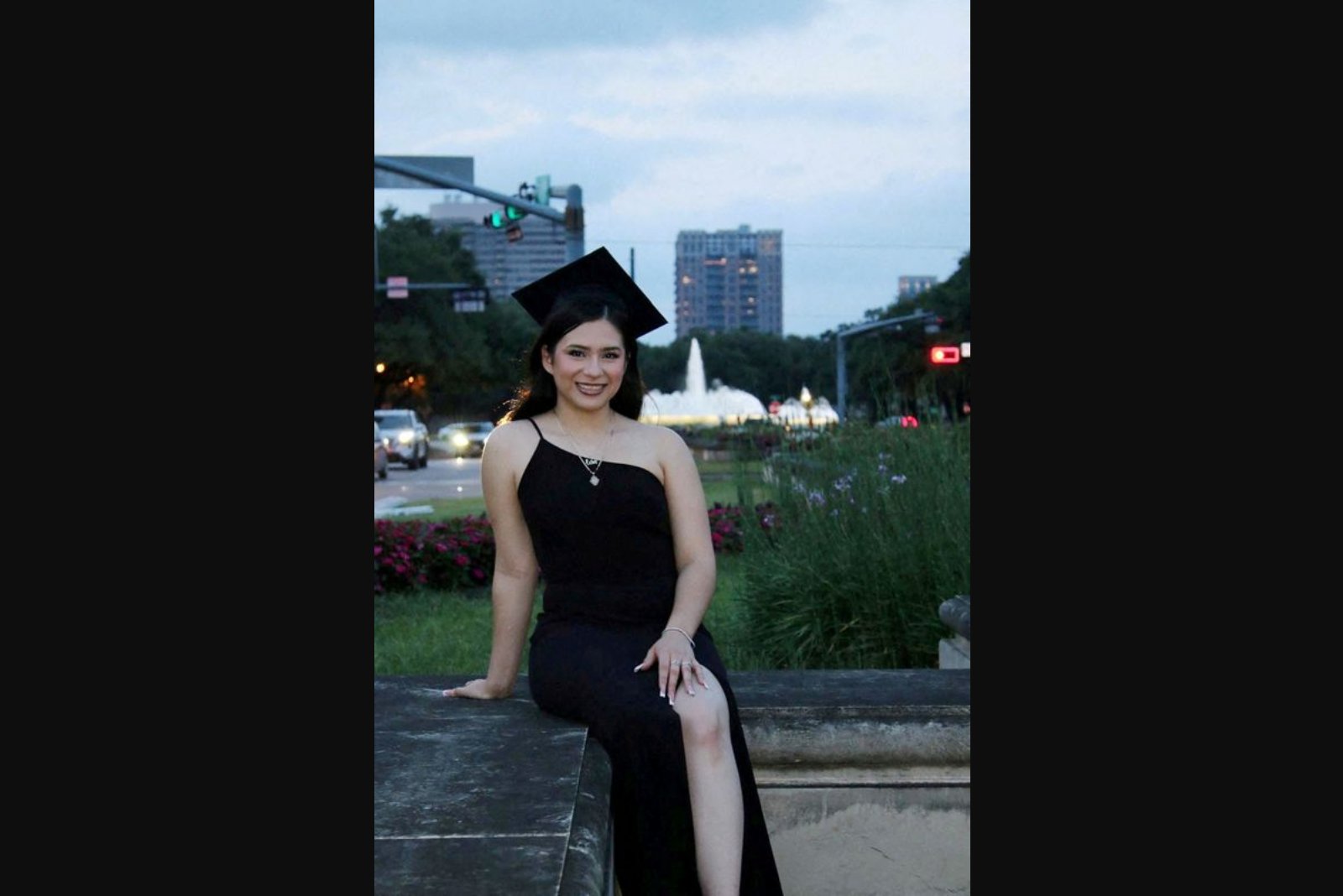
BOSTON, March 6 - A federal judge who had ordered U.S. authorities to arrange for the return of a college student deported to Honduras said on Friday that the case must be dismissed because the student chose not to take the flight authorities offered her.
Any Lucia Lopez Belloza, a 20-year-old freshman at Babson College in Massachusetts, declined on February 27 to board a U.S. Immigration and Customs Enforcement flight arranged to bring her back to the United States. The administration had told her it would again seek to deport her if she returned.
Lopez Belloza, who arrived in the United States from Honduras at age 8, has said she did not know she was subject to a final order of removal that was entered when she was 11. Her legal team had asked the U.S. District Court in Boston to allow her to continue the lawsuit she filed after immigration authorities detained her at Boston’s Logan International Airport in November while she was traveling to Texas for the Thanksgiving holiday.
Judge Richard Stearns reaffirmed his earlier view that he lacked jurisdiction to decide the detention question because, by the time Lopez Belloza filed suit on November 21, she had already been flown by immigration authorities to Texas. The judge noted that the only remaining basis for his jurisdiction would have been to enforce an order issued by another judge minutes after Lopez Belloza’s case was filed that barred her deportation or transfer out of Massachusetts for 72 hours.
Despite that judicial order, immigration authorities flew Lopez Belloza from Texas to Honduras the next day. A U.S. government lawyer later apologized to Judge Stearns for a "mistake" by an ICE officer who failed to notify others in the agency about the existence of the judicial order.
On February 13, Stearns directed the administration to remedy the error by facilitating Lopez Belloza’s return to the United States. The administration stated last week that it would comply by placing her on an ICE flight from Honduras to Texas. At the same time, officials told the court that ICE intended to proceed with deportation efforts upon her arrival in the United States and that it had the authority to detain her.
Lopez Belloza said the prospect of being immediately detained and deported again created a "nightmare" scenario that led her to refuse to board the flight and to remain in Honduras. In his written order dismissing the case, Stearns wrote: "The sad truth is that when Any declined the flight she also waived this court’s only remaining basis for jurisdiction."
Stearns added that had Lopez Belloza accepted transport back to Texas, the earlier judicial order barring her prompt deportation would have continued in effect, which the judge said would have provided her "ample opportunity" to file a new legal challenge in Texas to contest any subsequent detention.
Todd Pomerleau, the lawyer representing Lopez Belloza, said he intends to appeal the dismissal.
This litigation has moved through rapid procedural turns: an initial detention at a U.S. airport, a prompt filing in federal court, the issuance of a short-term order barring removal or transfer, an unexplained operational failure within ICE, a federal order to return the student to the United States, and finally the student’s decision not to board the return flight. The judge’s dismissal hinges solely on the loss of the court’s remaining jurisdictional basis when the student declined repatriation on the ICE-arranged flight.