
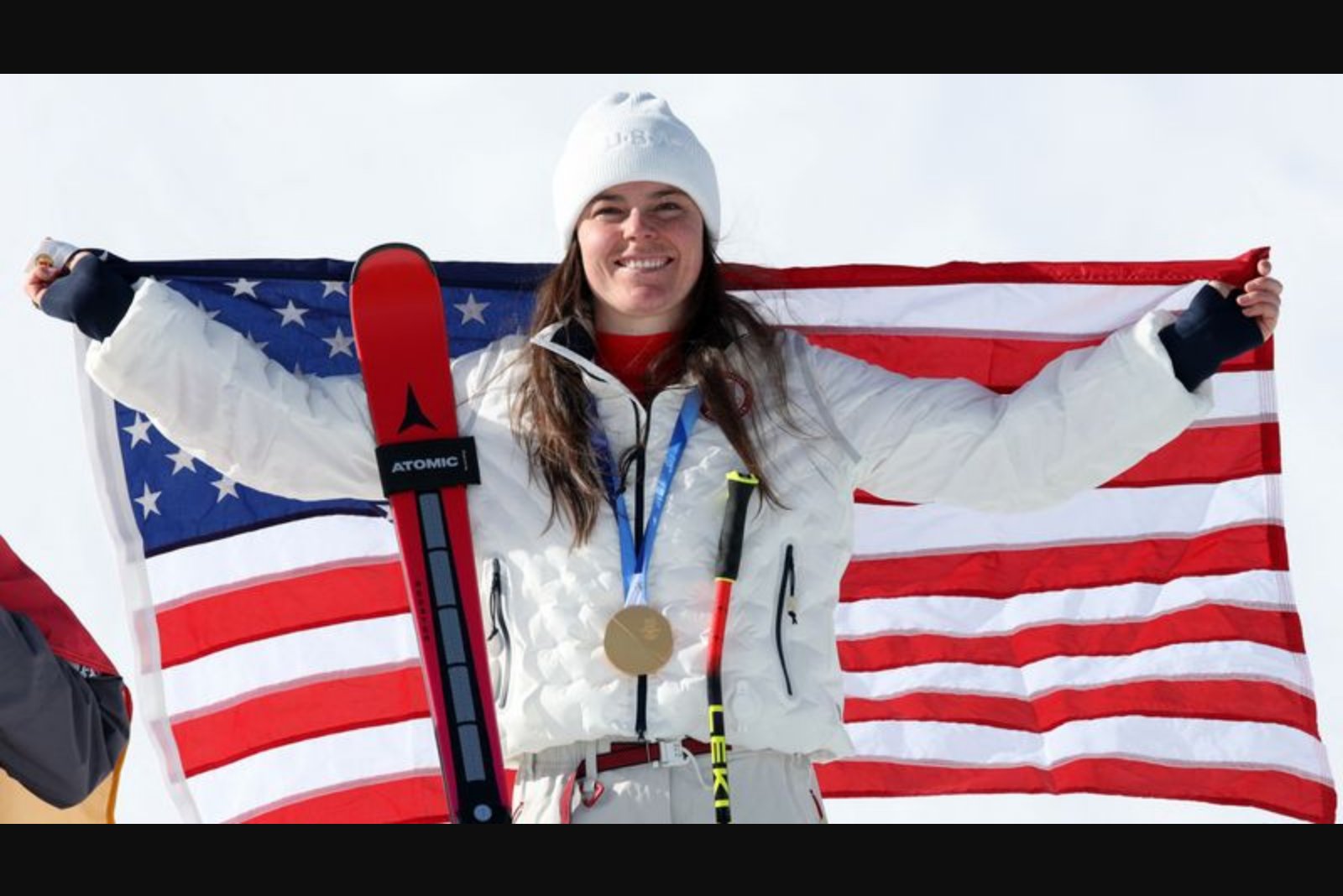
Lead: Breezy Johnson emerged victorious in the women's downhill at the Milano Cortina Games on Sunday, recording a winning time of one minute 36.10 seconds on the Olimpia delle Tofane piste in Cortina d'Ampezzo. The result marked the United States' first Olympic gold in women's downhill since 2010 and drew a sharp contrast of elation and alarm when teammate Lindsey Vonn suffered a serious crash later in the event.
Race details: Johnson, the reigning world champion, started sixth and put down a time that proved untouchable. Germany's Emma Aicher completed the run 0.04 seconds slower to claim silver, while Italy's Sofia Goggia, the 2018 Olympic champion and local favourite, secured the bronze medal. The course glittered under clear conditions as Johnson, who had won world championship gold in Saalbach, Austria exactly one year earlier, delivered a decisive performance.
In final training the day before, which was disrupted by weather, Johnson had been fastest while Lindsey Vonn was third. On race day Johnson said she approached the run determined to push harder than in training: "I had a good feeling about today," she said. "I sort of still can’t believe it yet. The run, I knew I had to push. I knew I had to go harder than I did in training. I had to be super-clean and I felt like I did that." Johnson has not won a World Cup race to date and faced a nervous wait as many of the later starters failed to close the gap to her benchmark.
Crash and medical response: The competition took a grim turn when Lindsey Vonn, who started 13th and was a prominent medal contender, lost control of her skis. Television coverage captured a moment in which Vonn appeared to clip the fourth gate with her shoulder and then tumbled off the piste at high speed, coming to rest in a collapsed position. The fall lasted barely 13 seconds on the clock, and she was heard screaming during the televised sequence. Fans and teammates reacted with audible shock at the scene.
Following the crash, Vonn was flown to hospital. Race officials halted the event to allow medical teams to attend to her on the course and for safety procedures to be completed. Johnson was visibly affected, wiping her eyes and turning away after teammates and spectators witnessed the severity of the incident. Speaking about the dangers inherent in the sport, Johnson said: "It’s a tough road and it’s a tough sport. I think that’s the madness of it, that it can hurt you so badly but you keep coming back for more. My heart aches for her. It’s such a brutal sport sometimes."
Goggia, starting 15th, had to remain at the top of the mountain while medics tended to Vonn before the race could resume, delaying the field and adding to the tense atmosphere.
Other competitors and incidents: Johnson had leapfrogged earlier leader Ariane Raedler of Austria by more than a second to claim the top time. Aside from Aicher, who started 10th, the later high-profile starters were unable to match Johnson's pace. Jacqueline Wiles finished in a tie for fourth place alongside Austria's Cornelia Huetter, who acknowledged making "a big mistake" shortly before the final section of her run.
Italy's Federica Brignone, the 2022 giant slalom silver medallist who was returning to Olympic competition after multiple leg fractures and a torn anterior cruciate ligament last April, placed 10th. The race experienced further stoppages when Austria's Nina Ortlieb and Andorra's final starter Cande Moreno both crashed; Moreno was carried off the slope on a stretcher.
Background on the winner: Breezy Johnson, a native of Wyoming, became world champion at Saalbach one year earlier. Her trajectory includes a 14-month ban that began in October 2023 and was publicly announced in May 2024, a sanction handed down after three anti-doping whereabouts failures. She also missed the 2022 Beijing Olympics following a crash in downhill training in Cortina.
Closing: Johnson's Olympic gold was achieved on one of the sport's most iconic downhill tracks and came amid dramatic and sobering moments that underscored the physical risks inherent to high-speed alpine skiing. The event combined a breakthrough achievement for Johnson and the U.S. team with immediate concerns over the condition of one of the sport's most celebrated athletes.
Summary: Breezy Johnson won the Olympic women's downhill in Cortina d'Ampezzo with a time of 1:36.10, ahead of Emma Aicher and Sofia Goggia. The race was overshadowed by a severe crash by Lindsey Vonn, who was transported to hospital. The contest included multiple interruptions and notable comebacks and setbacks among seasoned competitors.