
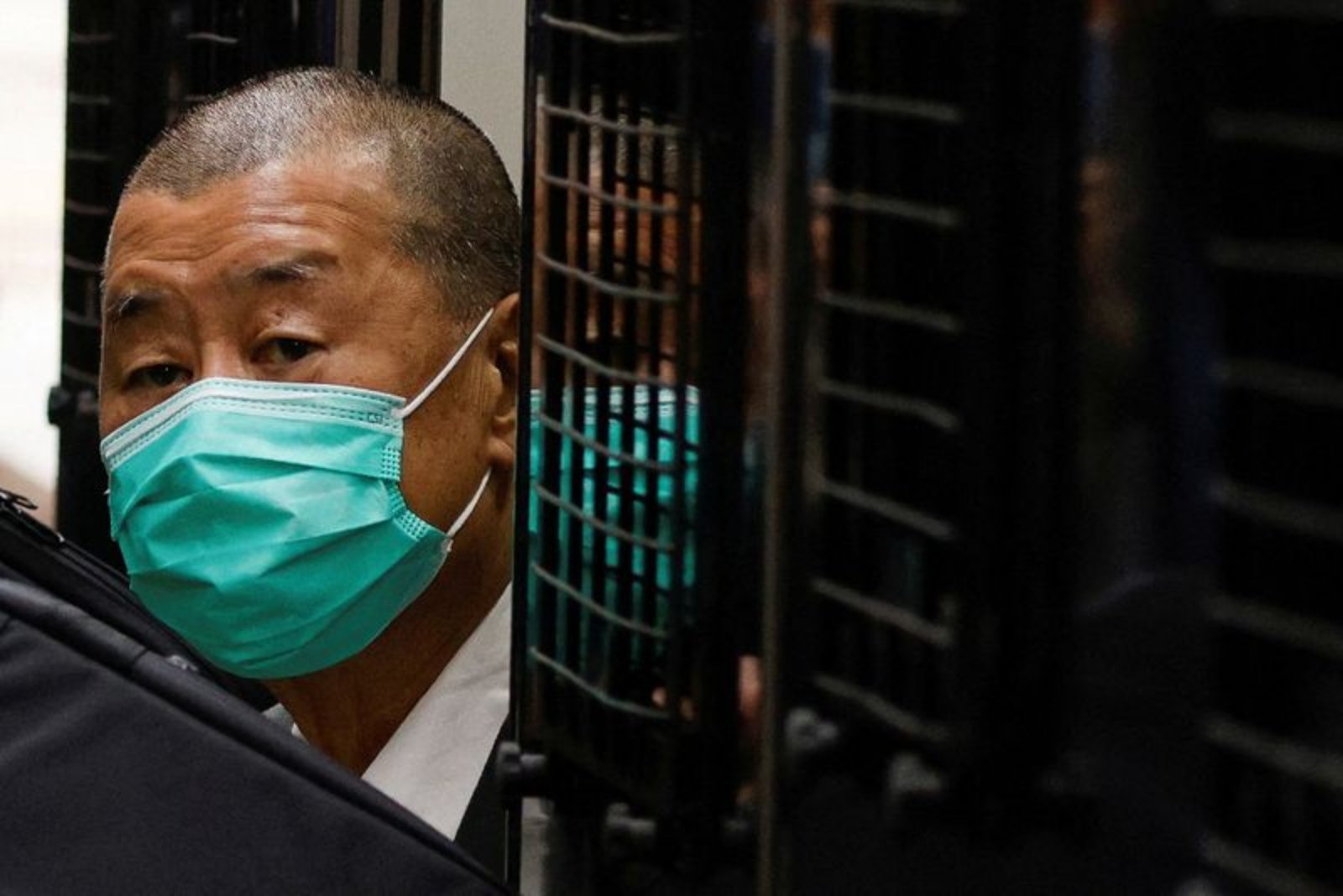
Jimmy Lai, the Hong Kong media entrepreneur long known for his vocal criticism of mainland Chinese authorities, was handed a 20-year prison term on Monday, the stiffest sentence permitted under Hong Kong’s national security law. The sentence caps a prolonged legal battle that followed the imposition of the law after the 2019 pro-democracy street protests.
The court said the penalty was elevated by Lai’s central role in what judges described as foreign collusion conspiracies, identifying him as a leading figure behind the actions at issue. The ruling is the latest and most severe judicial outcome for a man who built a business empire and then used much of his wealth and media platforms to support liberal causes and Hong Kong’s pro-democracy movement.
Background and public profile
Lai rose from modest origins to become a prominent and controversial figure in Hong Kong public life. Known for a stocky, boxer-like build and a combative public persona, he invested his fortune in journalism and activism. His tabloid, Apple Daily, blended sensational reporting with investigative pieces targeting political and business elites and persistently criticised government authorities until it ceased operations following police raids and the freezing of the company’s assets.
Those police actions occurred in the wake of a national security law introduced by Beijing after the sometimes violent demonstrations of 2019. Following the law’s enactment, Lai was arrested and faced charges including collusion with foreign forces and sedition. He had previously told interlocutors he would "fight on till the last day," a stance consistent with his long history of outspoken criticism.
Early life and pathway into media
Born in southern China, Lai fled to Hong Kong in 1961 as a teenager with little money, arriving in the territory in the hold of a fishing boat. He built a clothing business, founding and expanding the chain Giordano, and later turned from retail to publishing. The crackdown in Beijing on pro-democracy demonstrators in June 1989 marked a turning point for him. He launched Next Magazine in 1990 and, after mainland stores of his clothing chain were reportedly blacklisted amid his activism in the mid-1990s, he sold that business and channeled the proceeds into creating Apple Daily in 1995.
Apple Daily achieved rapid commercial success by combining crime reporting, scandal coverage, horse-racing tips and probing investigations into the actions of Hong Kong and mainland figures. Lai wrote a regular column that featured forceful language directed at senior mainland officials, once referring to a former premier as the "son of a turtle’s egg," and later calling China’s current leader a "dictator."
Political context and previous confrontations
After Hong Kong returned to Chinese sovereignty in 1997 under a "one country, two systems" arrangement, Beijing formally pledged to maintain a high degree of autonomy and guarantees of freedom for the territory. Lai and other critics have argued those guarantees have been undermined by an ongoing security crackdown. He was among those detained in connection with the 2014 "Umbrella Movement," during which protesters occupied major thoroughfares for 79 days seeking broader democratic reforms; at that time he avoided imprisonment. By 2019, when mass demonstrations again erupted in response to perceived encroachments on Hong Kong’s freedoms, state media had characterised him as a malign influence rather than a democratic leader.
Throughout these episodes, Lai maintained a message that combined persistence with tactical flexibility, saying demonstrators needed to "be flexible and innovative and patient - but persist."
Trial, sentence and judicial findings
During sentencing, the judges emphasised Lai’s role as the driving force and "mastermind" behind the alleged foreign collusion, factors the court said justified a more severe penalty. Lai, 78, has been in custody for more than five years and has spent a significant portion of that time in solitary confinement. His defenders and family members say his health has deteriorated substantially during his detention.
In court, Lai repeatedly described himself as a "political prisoner," a label that prompted one of the judges to admonish him for framing the proceeding in those terms, insisting that the hearing concerned criminal allegations. Lai responded that he retained the right to a differing interpretation of his circumstances.
Authorities in both Hong Kong and Beijing have defended the national security law, asserting it has restored stability in the city and maintaining that Lai received a fair trial under the statutory framework.
Assets, company closure and family
At the height of his commercial success, Lai was listed among Hong Kong’s wealthiest individuals, with a reported fortune of HK$1.2 billion in 2008. In 2021, his assets and shareholdings in Next Digital were frozen, a move that severely restricted the company’s cash flow and ultimately contributed to the closure of Apple Daily.
Lai’s family has remained publicly supportive. He is a father of six children from two marriages. In October, concerns about his health were underscored when his wife Teresa and one of their daughters were photographed meeting the Pope in formal black attire in Vatican City. His daughter Claire has spoken about a decline in his physical condition, saying he entered custody with strong mental resolve but was far weaker physically after years of confinement.
Family accounts detail a range of health complaints reported by Lai, including back and waist pain, diabetes, heart palpitations and markedly higher blood pressure than in previous years. Claire said long trials and court appearances were especially taxing on his well-being and that he had been harshly challenged by both judges and prosecutors. She nevertheless said the proceedings had demonstrated the personal qualities she associates with her father: a devout faith, a commitment to truth, freedom and family.
Religious faith and visitors
A practicing Catholic, Lai has received visits from senior pro-democracy Catholic figures. Cardinal Joseph Zen, aged 94, a prominent advocate for democracy and a leading cleric, was among those who visited him in jail. Lai’s family described his cell as having only a small window facing a corridor, and they have credited his faith with sustaining him through legal and custodial hardship.
Exchange note
The reporting noted an exchange rate reference: $1 equals 7.7815 Hong Kong dollars.
The sentence marks a critical moment in the legal aftermath of the 2019 protests and in the broader debate over the role of media, civil society and political dissent in Hong Kong. It closes another chapter in the career of a polarising figure who transformed personal adversity into wealth and influence, then redirected that influence into contentious political and journalistic activity that ultimately collided with the legal changes introduced by Beijing.