
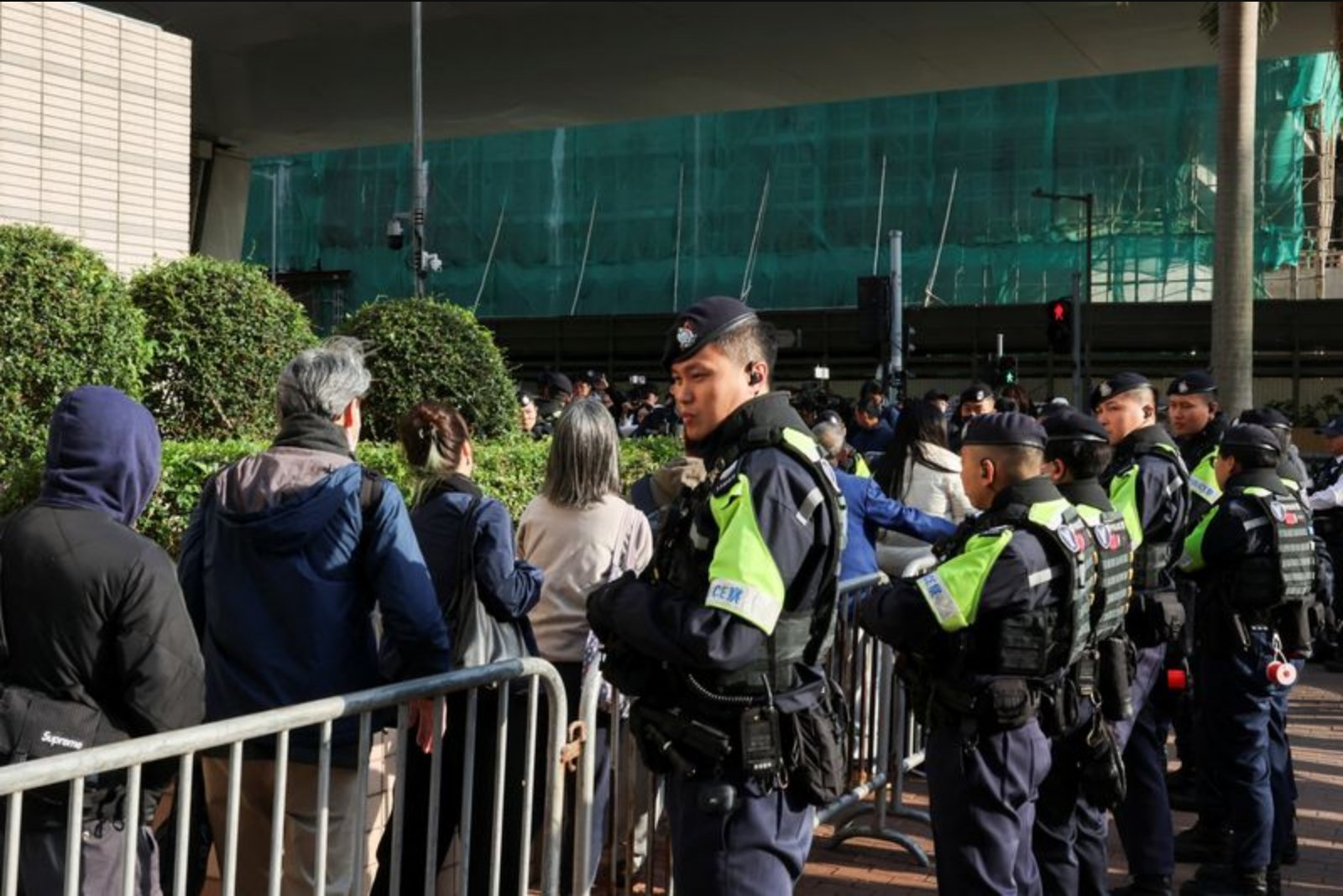
On Feb. 9, Hong Kong media tycoon Jimmy Lai was sentenced to a total of 20 years in jail on three security-related charges. The convictions comprise two counts of conspiracy to collude with foreign forces and one count of publishing seditious materials.
Immediate reactions
Responses from rights groups, supporters and former colleagues were swift and strongly worded.
Jodie Ginsberg, CEO, Committee to Protect Journalism said: "The rule of law has been completely shattered in Hong Kong. Today’s egregious decision is the final nail in the coffin for freedom of the press in Hong Kong. The international community must step up its pressure to free Jimmy Lai if we want press freedom to be respected anywhere in the world."
Chiu Mei-Ying, 71, Lai supporter said: "My feelings are very unsettled. I hope he can receive a lighter sentence .. Of course, the impact on Hong Kong is huge. Look - there’s no news left in Hong Kong now. Even the only outlet, Apple Daily, was taken away. Now there’s no news to read. So I don’t follow the news anymore; I watch YouTube, and news on different online platforms instead."
Elaine Pearson, Asia director, Human Rights Watch said: "The harsh 20-year sentence against 78-year-old Jimmy Lai is effectively a death sentence. A sentence of this magnitude is both cruel and profoundly unjust. Lai’s years of persecution show the Chinese government’s determination to crush independent journalism and silence anyone who dares to criticise the Communist Party."
A former Apple Daily reporter surnamed Wong said: "Now that 'red lines' have formally become part of the judgments and sentences, the news industry - already severely weakened - will shrink even further. If the sentences are used to set the boundaries at the maximum level, it won’t just add insult to injury for press freedom; it will be an avalanche."
Implications highlighted by respondents
The reactions quoted above emphasize two recurring concerns: that the sentence represents a profound blow to press freedom in Hong Kong and that it may further narrow the already diminished space for independent journalism. Supporters and rights groups described the ruling as both crushing for one of the city's best-known media figures and a signal that broader limits on reporting and dissent may become more entrenched.
What those quoted focused on
Calls for international pressure to address the sentence and protect press freedom.
Personal accounts of dislocation from traditional news sources and a turn to online platforms for information.
Warnings that formal judicial incorporation of so-called "red lines" into sentencing could accelerate the contraction of Hong Kong’s news industry.
Those who spoke about the ruling framed it as an outcome with consequences beyond the individual defendant, pointing to the broader condition of independent media and the chilling effect the sentence may have on journalists and news organizations operating in Hong Kong.