
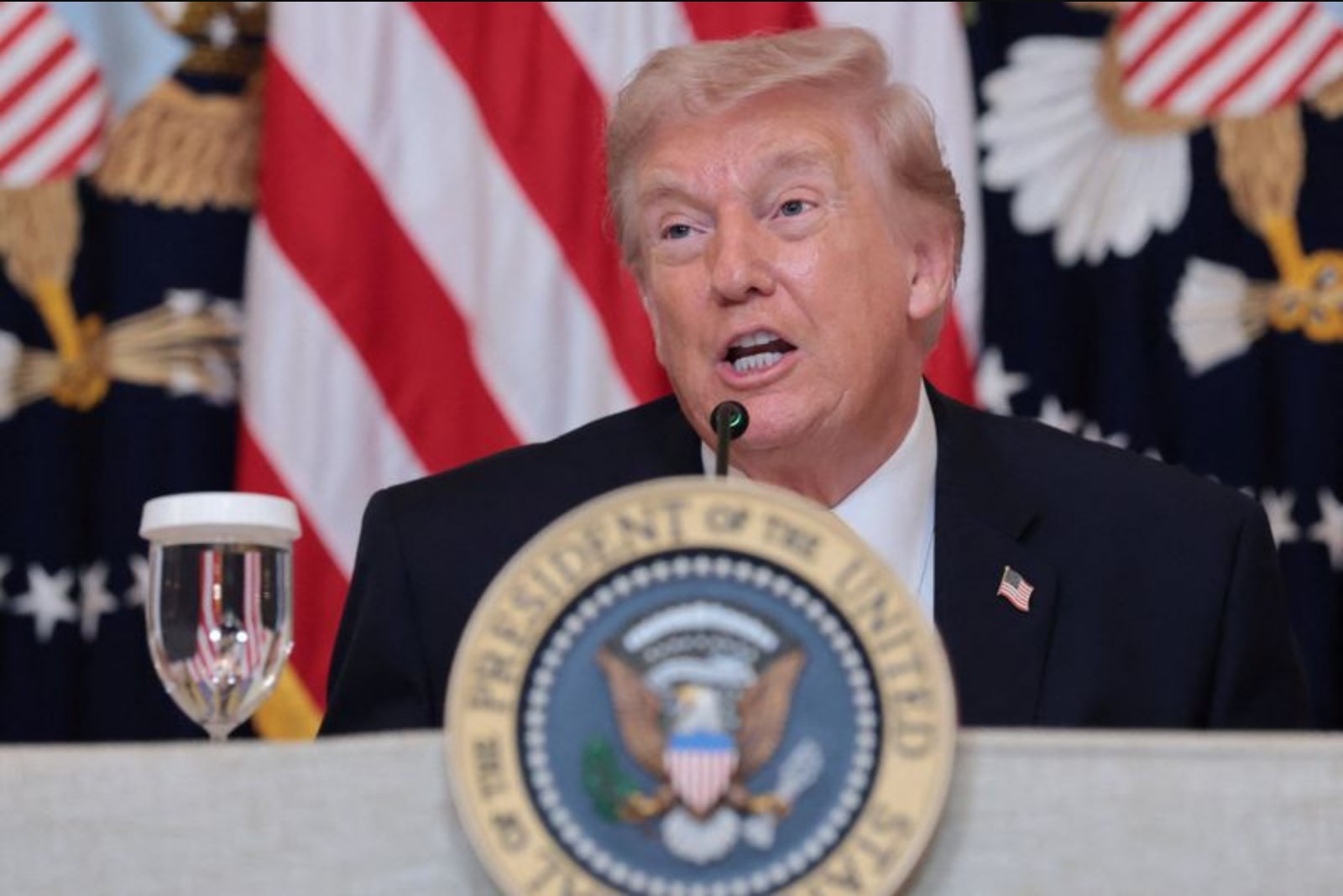
TOKYO, March 18 - U.S. President Donald Trump’s call for allies to dispatch naval vessels to escort oil tankers through the Strait of Hormuz has reopened debate in Tokyo over how far pacifist Japan can go to assist its closest ally in a conflict.
Prime Minister Sanae Takaichi’s choices are limited by Japan’s post-World War Two constitution, which was drafted by the United States and renounces the use of force to settle international disputes. Within that constitutional framework, however, Japan has a defined set of legal options that allow some overseas deployments by the Maritime Self-Defense Force - primarily for law-enforcement style missions.
Policing role
One legal pathway available to the government is the deployment of MSDF vessels on missions framed as law enforcement. The most direct precedent is Japan’s anti-piracy operation off Somalia and in the Gulf of Aden, which Tokyo joined in 2009 after revising legislation to permit Japanese warships to protect vessels of all nationalities.
Following the U.S. president’s entreaty, Defence Minister Shinjiro Koizumi told parliament on Monday that a similar policing action could be considered "if further measures by the SDF are deemed necessary."
But that policing framework is oriented to law enforcement rather than to combat operations. Observers note that applying it to missions where Japanese forces might confront a state actor such as Iran would raise legal difficulties, because the anti-piracy model was not designed for operations against sovereign militaries.
Higher legal threshold
Japan’s legal room for manoeuvre expanded in 2015 when security legislation was enacted to permit the limited use of force overseas under strict conditions. Those laws allow action only when an attack - including one against a close security partner - threatens Japan’s survival and there are no other means to address the danger.
The 2015 legislation permits a broader set of responses than are possible under anti-piracy statutes, but the bar to invoke them is deliberately high. To justify using those laws in the event of disruptions to shipping through the Strait of Hormuz, Takaichi would need to demonstrate that a closure of the strait or sustained disruption to energy supplies rose to the level of an existential threat to Japan.
That is a difficult legal and political case to make, and it would likely face significant domestic opposition. The 2015 security laws have not been used since their passage, and this week Takaichi said Japan would prioritise diplomatic efforts to reduce tensions in the Middle East.
Past deployments as guideposts
Tokyo’s prior operations in and around the Middle East illustrate how Japan has stayed within its legal limits while still seeking to support allied efforts.
During the 1991 Gulf War, Japan’s contribution was financial rather than military, a posture critics labelled "chequebook diplomacy." After hostilities ended, Japan dispatched minesweepers to the Persian Gulf, marking the first overseas deployment by the Self-Defense Forces.
"Japan’s poor response during the Gulf War remains a scar in the national consciousness. So I suspect her (Takaichi’s) government is looking hard for some way to show the flag," said Michael Green, a professor and chief executive of The United States Studies Centre at the University of Sydney.
Following the September 11 attacks in 2001, Japan sent MSDF ships to the Indian Ocean to provide refuelling and support to U.S.-led operations in Afghanistan. That mission lasted eight years but did not include combat or escort duties.
In 2004 Tokyo deployed roughly 600 ground troops to Iraq for reconstruction tasks, supported by aircraft for transporting supplies and personnel. Those soldiers were authorised to use force only as a last resort and were guarded during their two-year deployment by Dutch and Australian units.
More recently, in 2019, after the U.S. attributed attacks on tankers to Iran, Japan rerouted a destroyer and a patrol plane from anti-piracy duties near Somalia to gather intelligence in the Gulf of Oman, the Arabian Sea and the Gulf of Aden. Those assets, however, remained outside the Strait of Hormuz and the Persian Gulf.
International law considerations
Japan also faces a broader legal question about whether any U.S. military action in response to incidents in the Gulf would comply with international law. Under the United Nations Charter, use of force is generally prohibited unless authorised by the U.N. Security Council or justified as self-defence against an armed attack.
Japan has long positioned itself as a supporter of international law, and that posture could constrain how far Tokyo is willing to follow U.S. measures. Legal experts remain divided on whether recent U.S. strikes on Iran would satisfy the self-defence threshold, and Takaichi has not publicly stated Japan’s assessment of that legal question.
As the United States presses allies to contribute naval escorts through a strategically vital waterway, Japan’s response will be shaped by a narrow set of legal pathways, a high statutory bar for broader force, previous deployment choices and unresolved international law questions. Those constraints together will make any decision by Prime Minister Takaichi politically sensitive and legally intricate.