
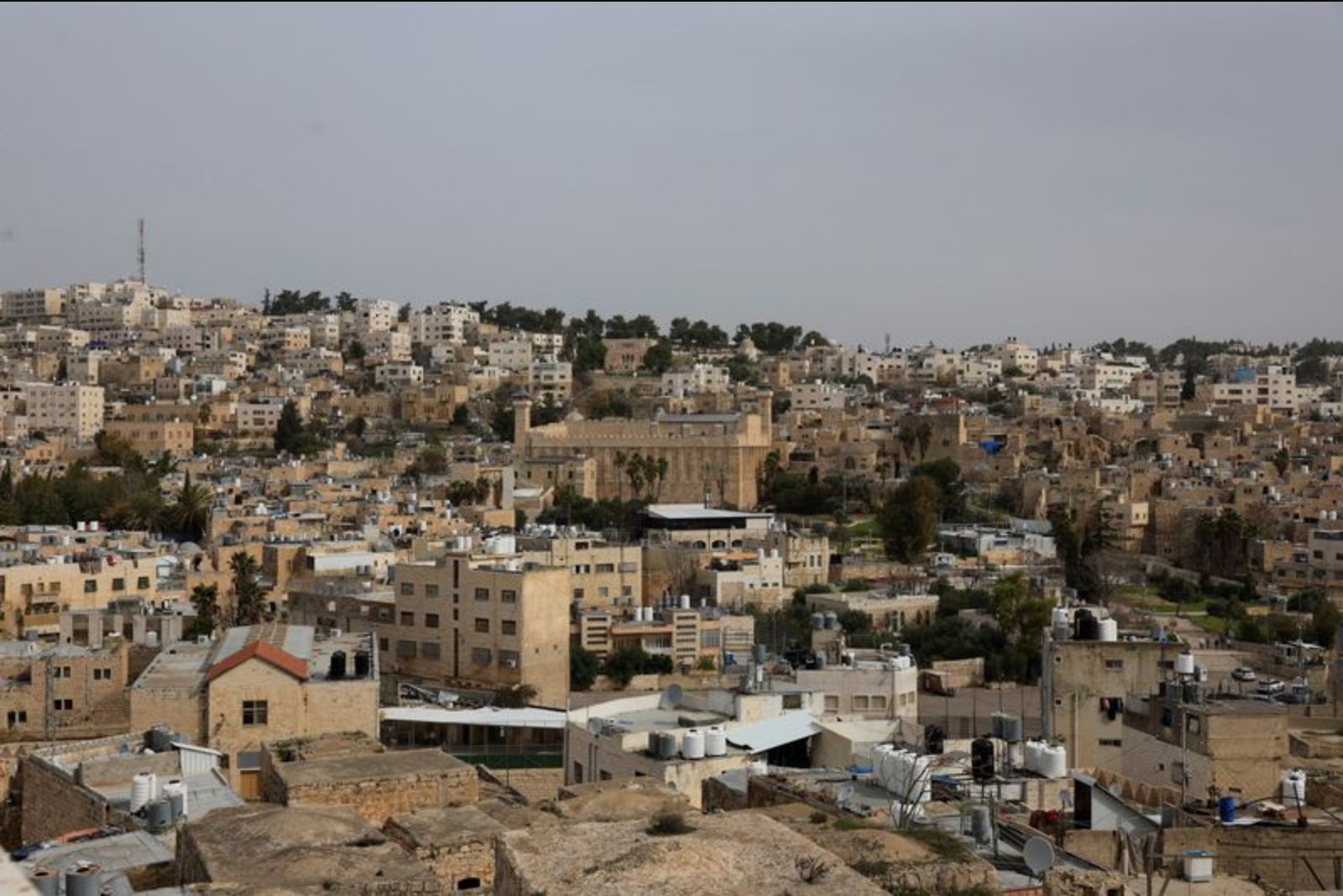
Israel has announced a package of measures aimed at simplifying settler land purchases in the occupied West Bank and broadening its enforcement role in parts of the territory where Palestinians exercise limited self-rule. Israeli officials framed the actions as administrative changes, while Palestinian authorities and their supporters say the moves are intended to undercut the possibility of a Palestinian state coexisting alongside Israel on land captured in the 1967 war.
The changes include making previously confidential West Bank land registries public, repealing an old Jordanian law that governed land purchases in the West Bank, and expanding so-called "monitoring and enforcement actions" into West Bank areas where the Palestinian Authority (PA) holds civil responsibilities. The finance and defence ministers said the enforcement expansion would specifically target water offences, damage to archaeological sites and environmental hazards that they said affect the wider region.
How the West Bank is administered
Under the arrangements set out by the Oslo Accords, the West Bank is partitioned into Areas A, B and C. Area A, which comprises roughly 18% of the territory, is under full Palestinian Authority civil and security control. Area B, about 22% of the land, is administered by the PA for civil matters while security control remains with Israel. The remaining 60% of the West Bank - Area C - is under full Israeli control and includes the border with Jordan and settlements.
Most Palestinians in the West Bank live within Areas A and B. The Israeli measures would extend certain enforcement activities into Areas A and B, actions that Palestinian President Mahmoud Abbas called violations of international law and said were designed to weaken Palestinian institutions and jeopardise any future two-state arrangement.
What the new Israeli decisions entail
- Publishing West Bank land registries that were previously confidential, with the stated effect of expediting settler purchases of land.
- Repealing a Jordanian law that had governed land purchases in the West Bank; Jordan controlled the territory from 1948 until 1967.
- Extending monitoring and enforcement actions into Areas A and B, focusing on what Israeli ministers described as environmental and heritage-related offenses.
Ultranationalist Israeli Finance Minister Bezalel Smotrich praised the steps as a "real revolution" and said, "we will continue to kill the idea of a Palestinian state." Smotrich has previously said there is no such thing as a Palestinian people. Palestinian leaders have denounced the moves, framing them as illegal under international law and as a direct assault on the foundations of Palestinian self-rule.
Origins and evolution of the two-state idea
The aspiration for separate Israeli and Palestinian states traces back to tensions in British-ruled Palestine between Arab residents and Jewish migrants who sought a national homeland after fleeing antisemitic persecution in Europe and citing historic ties to the land. In 1947, the United Nations proposed partitioning Palestine into Jewish and Arab states, with Jerusalem placed under international administration. Jewish leaders accepted the proposal, which allocated about 56% of the territory to a Jewish state; the Arab League rejected it.
On May 14, 1948, Israel declared statehood. The next day, armed forces from five Arab states launched an attack. The resulting war left Israel controlling approximately 77% of the territory. An estimated 700,000 Palestinians fled or were expelled from their homes, becoming refugees in neighbouring states and in territories captured by Israel. Subsequent conflicts reshaped the map again, most notably the 1967 war when Israel took control of the West Bank, including East Jerusalem, from Jordan and Gaza from Egypt.
Recognition and displacement
While 157 of the United Nations' 193 member states recognise Palestine as a state, Palestine is not a full member of the U.N., and the majority of Palestinians therefore are not recognised by the world body as citizens of a sovereign state. The article cites roughly nine million Palestinians living as refugees across Syria, Lebanon, Jordan and territories captured by Israel in 1967. Another two million Palestinians live as Israeli citizens.
Attempts at peace and persistent obstacles
The Oslo Accords, signed by Israeli Prime Minister Yitzhak Rabin and Palestine Liberation Organization Chairman Yasser Arafat, included provisions in which the PLO recognised Israel's right to exist and renounced violence. Palestinians viewed the accords as the opening of a path toward independence, with East Jerusalem envisaged as a future capital.
The peace process endured repeated setbacks. Hamas, an Islamist movement that has called for Israel's end in earlier charters, carried out suicide bombings that killed Israelis and seized control of Gaza from the PA in 2007. In recent years Hamas has at times expressed willingness to accept a Palestinian state along the 1967 lines, but Israel has characterised such statements as tactical rather than a lasting shift in outlook.
In 1995, Rabin was assassinated by an ultranationalist Israeli opposed to concessions. A high-profile attempt to bridge differences in 2000 ended without agreement, with Jerusalem's final status a central sticking point; Israel regards Jerusalem as its "eternal and indivisible" capital. The failure of the Camp David talks was followed by a second Palestinian uprising from 2000 to 2005 and renewed efforts by successive U.S. administrations to restart negotiations, without success; the last major diplomatic effort collapsed in 2014.
Current barriers to a viable Palestinian state
On the ground, the expansion of Jewish settlements in the West Bank and East Jerusalem has been a central obstacle to the viability of a contiguous Palestinian territory. Settlement populations increased from about 250,000 in 1993 to roughly 700,000 three decades later, according to the Israeli organisation Peace Now. Palestinian leaders argue that continued settlement growth undermines the territorial basis for an independent state.
Settlement activity accelerated markedly after the Gaza war that began in 2023. Israel also constructed a barrier inside the West Bank during the Second Intifada, which Israeli authorities said was intended to prevent suicide bombings; Palestinians regard the barrier as a land grab.
Under the Oslo framework the Palestinian Authority administers fragmented areas of the West Bank that are surrounded by zones of Israeli control. These arrangements, combined with expanding settlement footprints and security measures, complicate prospects for the territorial contiguity many analysts say would be necessary for a viable Palestinian state.
Political context
Prime Minister Benjamin Netanyahu leads a government described as the most right-wing in Israel's history, with coalition partners that include religious nationalists who rely on settler support. The political landscape has produced statements and policies that many observers see as moving away from a two-state outcome. The conflict between Hamas and Israel has produced multiple rounds of hostilities over the past two decades, culminating in the October 7, 2023 attacks on communities in southern Israel that sparked a major escalation in Gaza.
Taken together, the recent Israeli measures on land registration and enforcement, the growth of settlements, political shifts in Jerusalem and ongoing security confrontations all contribute to the erosion of the two-state framework as it has been traditionally understood. Palestinian leaders and international observers warn that the cumulative effect of these changes is to narrow the space for a negotiated, mutually recognised Palestinian state.
Conclusion
The recent Israeli decisions regarding West Bank land registries, the repeal of a Jordanian-era land law and expanded enforcement in Areas A and B mark a new phase in long-standing contestation over territory and sovereignty. For Palestinians and supporters of a two-state outcome, the measures are another sign that the pathway to an independent Palestinian state is increasingly constrained. For Israeli leaders advancing the changes, the steps are framed as administrative moves addressing land and environmental concerns. The dispute between these perspectives underscores how deeply contested the basics of territory, sovereignty and national identity remain in the Israel-Palestinian conflict.