
World June 7, 2026 02:28 AM

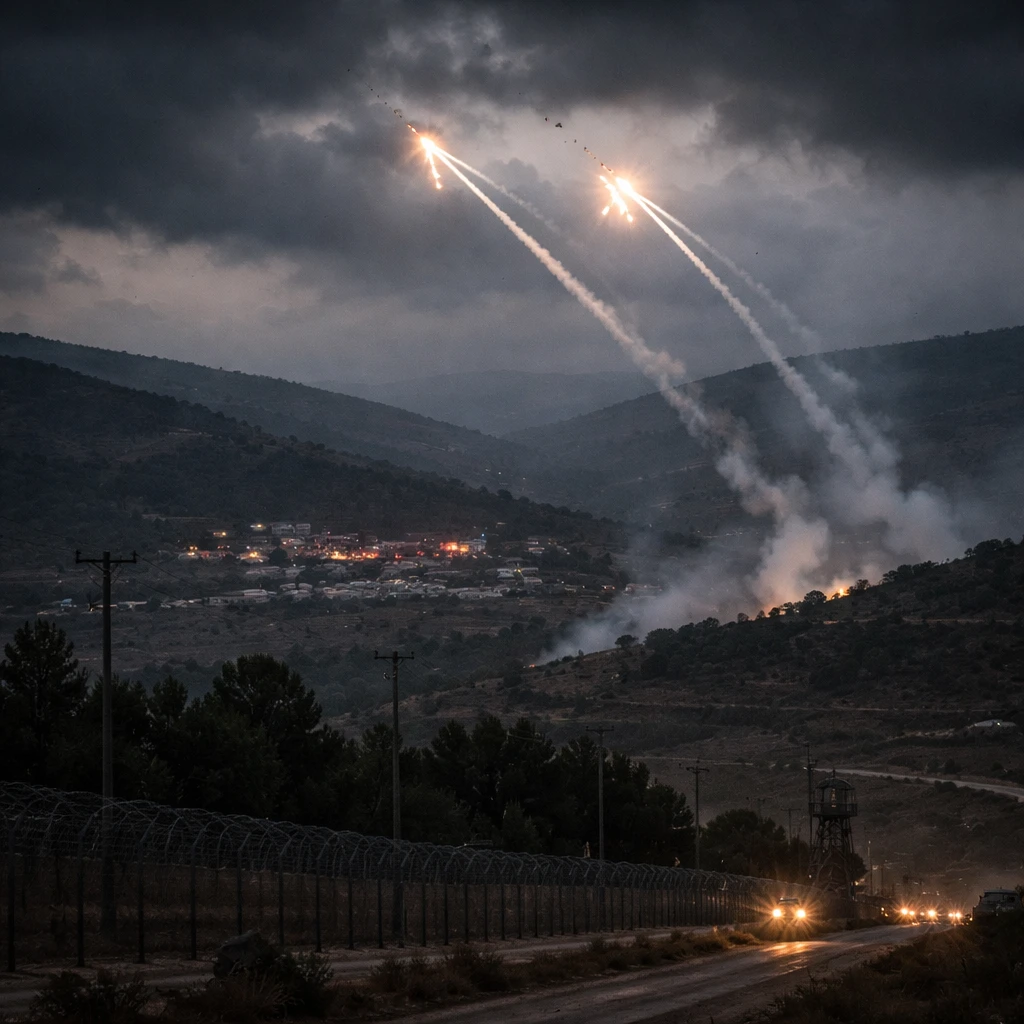
Israeli Forces Say Two Projectiles from Lebanon Were Intercepted After Border Sirens

Hostilities persist between Israel and Hezbollah as the militant group rejects linking a ceasefire to its disarmament

By Leila Farooq
Share
Twitter Reddit Facebook LinkedIn

The Israeli military reported on Sunday that it intercepted two projectiles that had crossed into Israeli territory from Lebanon following air-raid sirens in the Yiftah and Ramot Naftali areas. Fighting between Israel and Hezbollah continues, with Hezbollah rejecting proposals that would make a ceasefire conditional on its disarmament. Iran has tied any U.S. peace deal to a ceasefire in Lebanon between Israel and Hezbollah. Hezbollah says it joined the conflict on March 2 in retaliation for the killing of Iran's Supreme Leader. The conflict has resulted in thousands of deaths in Lebanon and displaced more than a million people. Israel says its strikes target Hezbollah personnel and infrastructure, and it had been conducting strikes even before Hezbollah's entry on March 2 despite a U.S.-brokered ceasefire that went into effect in November 2024.

Israeli Forces Say Two Projectiles from Lebanon Were Intercepted After Border Sirens
Summarize with
ChatGPT Perplexity Claude Grok Gemini

Key Points

  • Israeli military reported intercepting two projectiles that crossed into Israel from Lebanon after sirens sounded in Yiftah and Ramot Naftali - impacts security and defense sectors.
  • Hezbollah refuses proposals tying a ceasefire to its disarmament, insisting Israel must halt attacks and withdraw from southern Lebanon - affects regional stability and defense-related markets.
  • Iran conditions any U.S. peace deal on a ceasefire in Lebanon between Hezbollah and Israel; Hezbollah says it entered the war on March 2 in retaliation for the killing of Iran's Supreme Leader - relevant to geopolitics and energy/commodity market sentiment.

The Israeli military said on Sunday it intercepted two projectiles that crossed into Israeli territory from Lebanon after sirens sounded in the northern communities of Yiftah and Ramot Naftali. Officials described the events as part of ongoing skirmishes along the border zone.

Clashes between Israeli forces and the Lebanese militant group Hezbollah have persisted. Hezbollah has rejected proposals that would make a ceasefire contingent on the group first disarming, arguing instead that Israel must stop its attacks and withdraw forces from southern Lebanon before any disarmament can be discussed.

Separately, Iran has made a ceasefire in Lebanon between Hezbollah and Israel a condition for any peace agreement with the United States, according to statements referenced by officials. Hezbollah said it entered the war on March 2, stating it was retaliating for the killing of Iran's Supreme Leader at the start of the conflict.

The confrontation has had a heavy humanitarian toll in Lebanon. The parties report that thousands of people in Lebanon have been killed and more than a million have been displaced as a result of the fighting.

Israel has maintained that its strikes are directed at Hezbollah members and infrastructure. The Israeli military also continued strikes in Lebanon prior to Hezbollah's entry into the war on March 2, including actions taken despite a U.S.-brokered ceasefire that came into force in November 2024.

Sunday's interceptions came after local sirens alerted residents in the affected communities. The military's statement noted the projectiles crossed from Lebanese territory before being intercepted, but it did not provide additional operational details in the initial announcement.

As of the military's report, the border exchanges remain unresolved, with both tactical events and political positions - such as Hezbollah's rejection of disarmament-linked ceasefire proposals and Iran's condition for any U.S. peace deal - sustaining the current stalemate.

Risks

  • Continued cross-border exchanges and military strikes risk further escalation along the Israel-Lebanon frontier - potential implications for defense spending and regional investor confidence.
  • Humanitarian toll in Lebanon, with thousands reported killed and over a million displaced, creates sustained instability and reconstruction needs - relevant for aid funding and regional economic recovery.
  • Political positions tying ceasefire terms to disarmament or withdrawal introduce uncertainty into prospects for negotiations, prolonging conflict-related disruptions to markets sensitive to geopolitical risk.

More from World

Xi’s Trip to Pyongyang Comes as Kim Projects Confidence, Economic Agenda in Focus Jun 7, 2026 Multiple Injured in Exchange of Gunfire Near Toledo Festival, Police Say Jun 6, 2026 Mexico City Attempts World Record for Largest Mexican Wave Ahead of World Cup Jun 6, 2026 Kosovo Returns to the Polls as Political Deadlock Persists Jun 6, 2026 Heightened Security and Street Closures as President Trump Attends Knicks-Spurs Game at Madison Square Garden Jun 6, 2026