
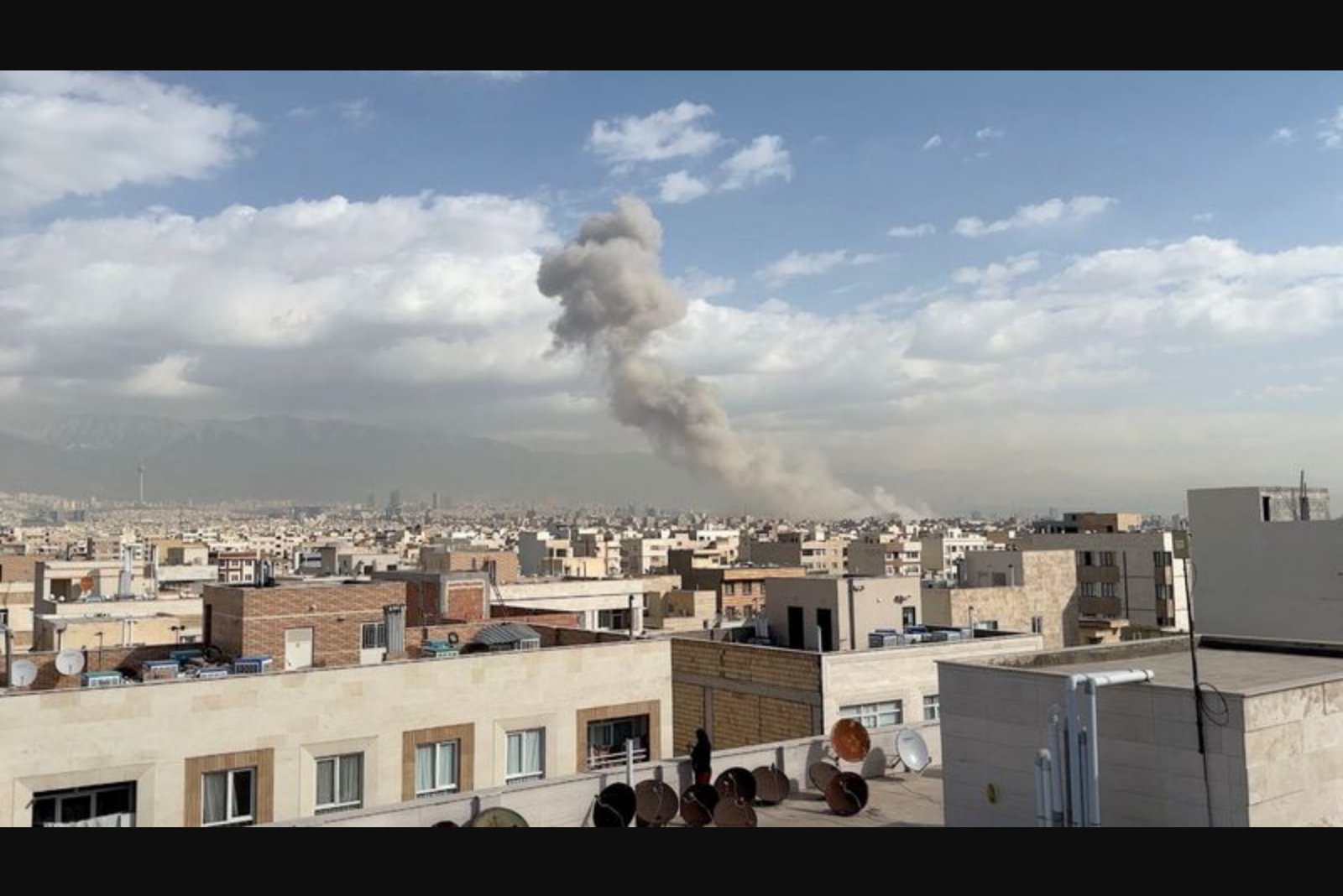
Israel announced on Saturday that it had launched a pre-emptive attack against Iran, an action that escalates tensions in the Middle East and reduces prospects for a diplomatic resolution to Tehran’s longstanding nuclear dispute with Western nations.
U.S. strikes on Iran were reported as underway, citing a U.S. official. A separate source said Iran’s supreme leader, Ayatollah Ali Khamenei, was not in Tehran and had been transferred to a secure location.
The Israeli government framed the operation as defensive. "The State of Israel launched a pre-emptive attack against Iran to remove threats to the State of Israel," Defence Minister Israel Katz said.
Israeli officials indicated the operation had been prepared over a period of months in close coordination with Washington. One defence official said the timing for the launch was decided weeks ago.
Explosions were reported in Tehran on Saturday and Iranian media relayed the sounds. In Israel, sirens sounded around 08:15 local time as the military issued a proactive alert intended to prepare the public for the possibility of incoming missile strikes. In response to the heightened threat environment, the Israeli military announced the closure of schools and workplaces, except for essential services, and imposed a ban on public airspace.
Civilian air travel in Israel was halted when the country closed its airspace, and the national airports authority advised the public not to travel to any airports.
The attack follows earlier confrontations between the two countries. It comes after Israel and Iran engaged in a 12-day air war in June, and after repeated warnings from the United States and Israel that they would strike again if Iran pursued its nuclear and ballistic missile programmes.
Diplomatic efforts between the United States and Iran had resumed in February in an attempt to resolve the dispute through negotiation and to avoid a military clash that could destabilise the region. Israel has maintained that any U.S. agreement with Iran must go beyond halting enrichment - it has insisted that Tehran’s nuclear infrastructure must be dismantled - and has urged Washington to include restrictions on Iran’s missile programme in discussions.
Iran, while saying it was prepared to discuss limits on its nuclear programme in return for sanctions relief, has rejected merging nuclear talks with restrictions on missiles. Tehran also stated it would defend itself against any attack and warned countries hosting U.S. forces that it would retaliate against American bases if Washington struck Iran.
In June, the United States joined an Israeli campaign targeting Iranian nuclear facilities in what was described at the time as the most direct American military action against Iran. Tehran responded by firing missiles in the direction of the U.S. Al Udeid air base in Qatar, the largest U.S. base in the Middle East.
Western governments have cautioned that Iran’s ballistic missile development poses a threat to regional stability and could, if developed further, be a delivery mechanism for nuclear weapons. Iran denies seeking atomic bombs.
Context and immediate effects
The Israeli announcement and related reports of U.S. military activity introduce immediate security measures across Israel, including public sirens, closures of schools and workplaces for most sectors, and the suspension of civilian flights. The situation remains fluid as officials on all sides react to the developments.
What remains unclear
At this stage, details about the scope of the strikes, the specific targets hit, and the extent of any damage or casualties have not been made public in the available reporting. It is also not yet clear how Iran will respond beyond previously stated warnings of retaliation against U.S. bases in the region.