
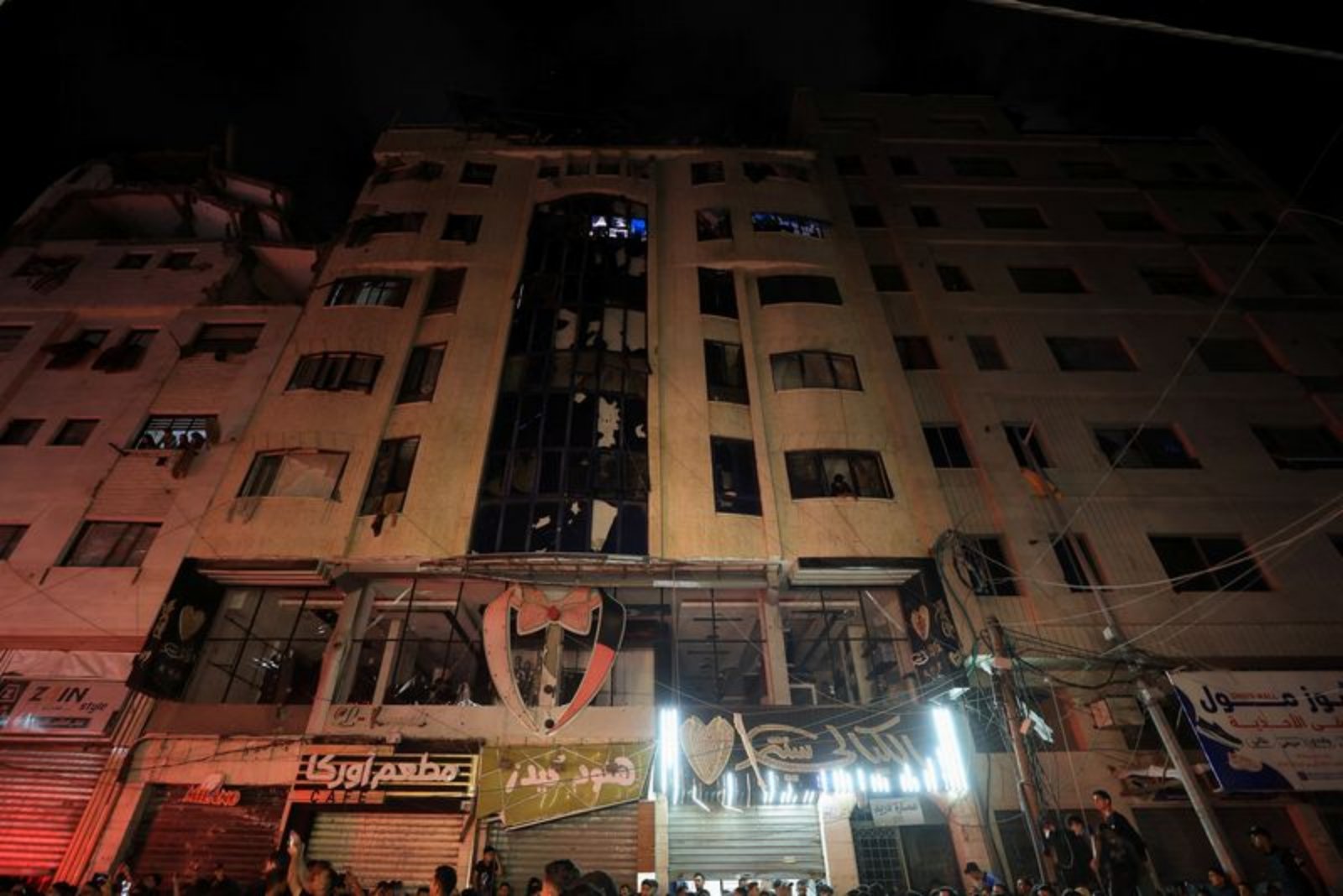
Israel said on Wednesday that it had killed Mohammad Odeh, whom Israeli officials identified as the newly appointed head of Hamas’s armed wing in Gaza. The Israeli military said the operation that killed Odeh took place on Tuesday. A relative of Odeh confirmed his death and said his funeral would be held after noon prayers in Gaza City.
Hamas has not issued a formal statement confirming the killing. A family statement reported by local contacts said Odeh was killed together with his wife and son.
Gaza health officials reported that six people were killed and more than 20 others wounded in the same Israeli strike that destroyed an upper floor of an apartment building in the Rimal neighbourhood of Gaza City. At least one of the dead was identified as a woman, and rescue workers remained at the scene searching for possible additional casualties.
Israeli Prime Minister Benjamin Netanyahu said Odeh had led Hamas’s intelligence division at the time of the October 7, 2023 cross-border attack into Israel that sparked the Gaza war. Netanyahu also said Odeh had been appointed about a week earlier to replace Izz al-Din al-Haddad, the group’s chief armed commander, who Israel said it killed on May 15.
Individuals close to Hamas did not formally confirm Odeh’s appointment as the new military chief, but they acknowledged he was regarded as a likely successor. Those sources described him as the group’s chief of military intelligence and suggested he may have been among the last remaining members of the armed wing’s higher leadership council believed to be alive.
The announcement of Odeh’s killing came hours after Israel said it had expanded ground operations in Lebanon, where it has been engaged in fighting with Hezbollah militants aligned with Iran. Israeli officials linked those operations to the wider regional hostilities that intensified after Israel and the United States launched attacks on Iran at the end of February. Israel is also reported to be stepping up military activity in the West Bank.
Diplomatic efforts remain at an impasse. Israel and Hamas are engaged in indirect talks over implementing the second phase of a ceasefire agreement. That phase is to address Hamas’s disarmament and Israeli army withdrawals, but negotiators have yet to bridge their differences. The ceasefire reached in October left Israel in control of more than half of Gaza, with Hamas retaining control of a narrow strip of coastal territory.
In a statement, Israeli Defense Minister Israel Katz said Hamas would no longer exercise civilian or military control over Gaza. Katz added that a plan for what he described as a "voluntary migration" from the enclave would be put into effect "at the right time and in the right way."
Gaza health authorities reported that roughly 900 Palestinians have been killed in Israeli strikes since the ceasefire came into effect; those figures do not distinguish between combatants and civilians. During the same span, Israel’s military said four Israeli soldiers were killed by militants.
Since the beginning of the Gaza war, Israel has said it has killed dozens of Hamas leaders and military figures and has vowed to target anyone it asserts was involved in the October 7 attacks. Hamas does not publish casualty figures for its fighters. Israel has characterized its post-ceasefire strikes as measures taken to prevent further attacks or to stop people from approaching the armistice line with Hamas.
Gaza health authorities also reported that more than 72,000 people in Gaza have been killed since the war began in October 2023, and said the majority were civilians. Israel has said it takes extraordinary steps to avoid civilian casualties. Israel’s tallies attribute 1,200 deaths to Hamas’s October 7, 2023 attacks inside Israel.
This development comes as military, political, and humanitarian dynamics in and around Gaza remain fluid. The reported killing of a senior figure described by Israeli officials as the armed wing’s head adds to a series of leadership losses Israel has announced since the conflict began. At the same time, expanding operations in Lebanon and increased activity in the West Bank underscore the broader regional tensions that remain unresolved.