
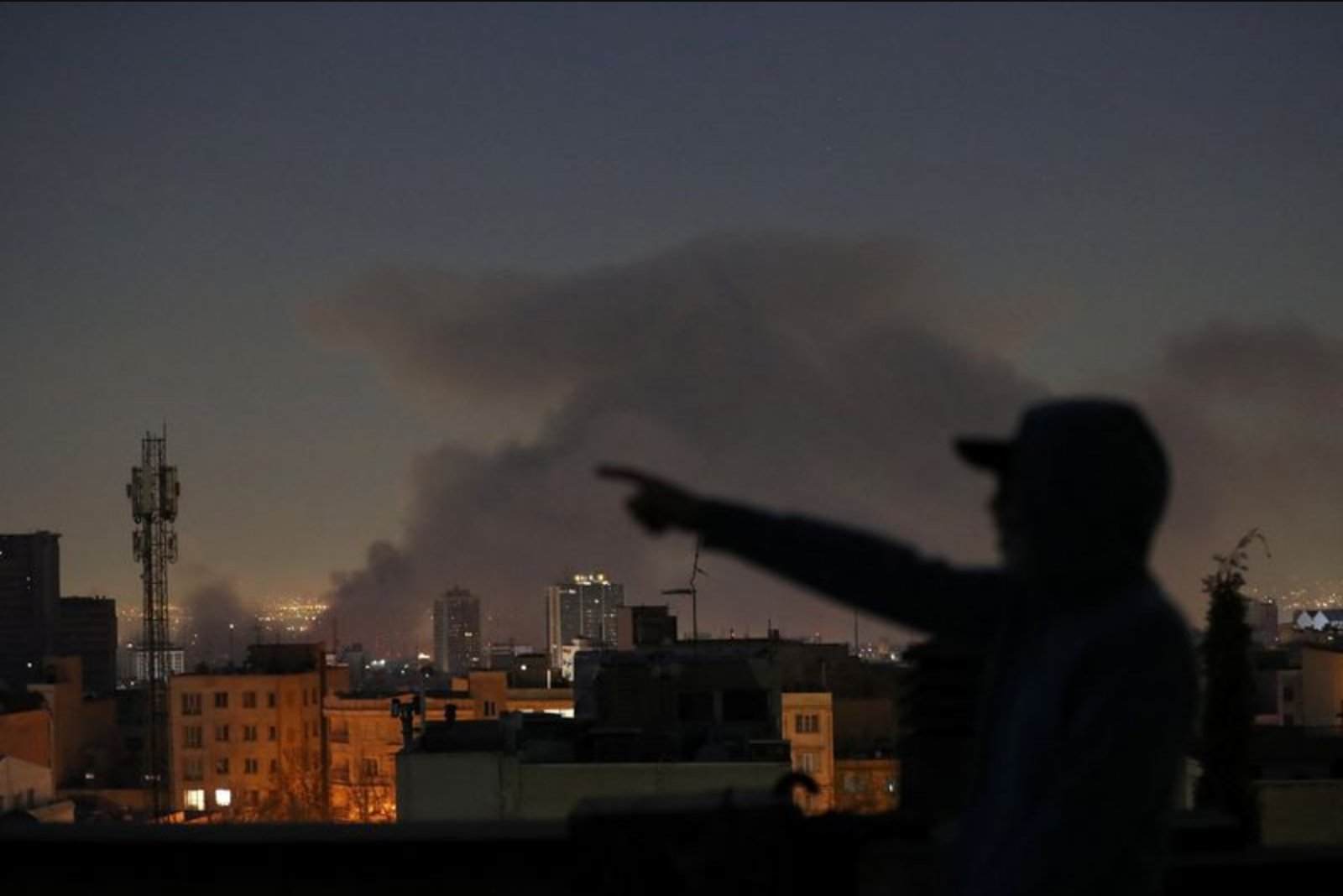
Sources familiar with engagement between Israeli officials and Iranian Kurdish insurgent groups say Israel has been carrying out strikes inside western Iran and is working with Kurdish factions that aim to seize towns close to the Iran-Iraq frontier.
The idea of an offensive by Iranian Kurdish forces based in Iraqi Kurdistan drew attention recently after U.S. President Donald Trump said it would be "wonderful" if they crossed the border. The three sources who discussed the situation with reporters said Kurdish militants see the United States and Israel's military pressure on Iran as an opportunity to expand influence in frontier areas.
Two of the sources are members of Iranian Kurdish movements operating from the semi-autonomous region of Iraqi Kurdistan and described having direct knowledge of the armed dissident groups. A third source from Israel said talks had been long-term and that Israel had engaged with these factions. All three spoke on condition of anonymity.
According to the sources, an early objective for the Kurdish factions is to take control of Iranian territory adjacent to the border. One Kurdish source identified the towns of Oshnavieh and Piranshahr among those targeted for seizure. They said that thousands of fighters were massing on the Iraqi side of the frontier and preparing for an offensive that could be launched within a week, although those preparations were not independently verifiable.
Independent estimates cited by the sources place the combined strength of the militias at between 5,000 and 8,000 fighters, and the Kurdish sources emphasized that these groups are equipped mainly with light arms. That relative lack of heavy weaponry would limit their ability to mount a decisive campaign for self-rule, the sources said, but with air support and other assistance from the United States and Israel they could nevertheless create instability along the border and pose challenges to Iran's security forces.
An Israeli source told reporters that Israel did not expect Iranian Kurdish forces to be capable of toppling the Iranian government, but that supporting them could erode Tehran's hold over peripheral regions and divert the attention of the Islamic Revolutionary Guard Corps.
At the end of last month, five longstanding Iranian dissident groups announced an alliance. The partnership includes the Kurdistan Free Life Party (PJAK), the Democratic Party of Iranian Kurdistan (PDKI) and the Kurdistan Freedom Party (PAK). Each of these groups has a history of insurgency and maintains fighters inside Iraq.
It is unclear whether the alliance will receive active backing from Iraqi Kurdish political leadership. Officials in Iraqi Kurdistan have publicly denied any plan to send fighters into Iran or to become involved militarily, despite what the sources described as reports of outside pressure to do so. An Israeli source cautioned that pushback from Iraqi Kurds could make it difficult for Iranian Kurdish factions to mobilize effectively without practical support from their ethnic counterparts in Iraq.
The sources also said that uncertainty about how long the wider war might continue has contributed to hesitation among potential backers and fighters. They noted that U.S. comments on the conflict's duration have been unclear, a factor that has affected calculations by Kurdish leaders weighing whether to commit to an offensive.
Iran has, in recent weeks, carried out attacks on Kurdish armed groups inside Iraq, and it has struck at targets connected with U.S. forces in the region. Tehran also warned Iraqi Kurdistan that it would retaliate if hostile forces were deployed on the frontier.
All three sources reported that Kurds inside Iran have been supplying targeting intelligence on border areas to both the United States and Israel. Commentators cited by the sources offered competing interpretations of the strategy. Israeli analyst Jonathan Spyer was quoted as saying Israel seeks to "destroy the regime by any means available." Another analyst, Danny Citrinowicz, a former Israeli intelligence officer and Iran specialist, said an uprising did not yet appear to have broad support among Iraqi and Iranian Kurds, suggesting many were waiting to see whether Tehran would retain control.
Turkish and Iraqi officials have also expressed reservations, the sources said, reflecting reluctance to support separatism among Kurdish populations that span parts of Iraq, Turkey, Syria and Iran. Citrinowicz warned that external backing for an uprising carries the risk of stoking nationalist sentiment inside Iran, which could undermine the objectives of outside supporters.
Sources described a pattern of discreet ties between Israel and various Kurdish groups that dates back decades. Those ties encompass military, intelligence and commercial contacts, according to the sources, with Israel viewing Kurdish actors as regional counterweights to shared adversaries.
Despite that history, the Kurdish sources said the groups were coordinating more closely with the United States than with Israel, though any significant cross-border operation would likely require air support from both partners. One Kurdish source said the factions had not yet received weapons shipments but would likely request air defence systems, armed drones, small arms and artillery if an offensive were to go ahead.
Relations between Kurdish groups and the United States have been strained by recent events, one Kurdish source said, referencing concerns among Kurdish leaders about being left exposed after serving as partners. That source noted Kurdish fears of a repeat of past situations in which local allies were forced to cede territory after acting with U.S. support. The Kurdish leadership, according to the sources, has sought guarantees from the United States, though the nature of those guarantees was not specified.
Contextual notes
This reporting is based on three individuals who described direct knowledge of engagement between Israeli officials and Iranian Kurdish groups, together with statements from analysts and accounts of recent military activity in the region. Several details reported by the sources, including the timing and scale of any offensive, could not be independently verified at the time of reporting.