
Israel initiated a new wave of strikes against Iranian infrastructure on Friday, a move that followed U.S. pressure against repeating attacks on energy facilities and came amid a campaign that has intensified since late February. An Israeli Defense Forces spokesperson said, "The IDF has just begun a wave of strikes against the infrastructure of the Iranian terror regime in the heart of Tehran," but offered no additional operational details.
The current hostilities have their roots in a U.S.-Israeli campaign that began after talks over Tehran's nuclear program failed to produce an agreement. The strikes, which started on February 28, have resulted in thousands of deaths, crossed into neighbouring countries and dealt heavy blows to key energy assets, with broad economic repercussions.
In the early hours of Friday, Bahrain, Kuwait and the United Arab Emirates reported they were confronting missile attacks. Those incidents followed a series of Iranian strikes on regional energy infrastructure that roiled global markets. Energy prices surged on Thursday after Iran struck Qatar's Ras Laffan Industrial City in response to an Israeli attack on a major gas field. Ras Laffan, which processes roughly a fifth of the world's liquefied natural gas, sustained damage that industry officials say will take years to repair.
Saudi Arabia's principal Red Sea port - a key alternate route to offset disruptions in the Strait of Hormuz - also came under attack on Thursday. The Strait of Hormuz remains a pivotal conduit for about a fifth of global oil supplies, and the threat to its security contributed to concerns of an escalating oil shock.
Despite the prior rise in prices, oil slipped on Friday after a group of leading European nations and Japan said they stood ready to help secure safe passage for vessels through the Strait of Hormuz. Those countries - Britain, Canada, France, Germany, Italy, the Netherlands and Japan - issued a joint statement expressing "our readiness to contribute to appropriate efforts to ensure safe passage through the Strait" and pledged "other steps to stabilise energy markets, including working with certain producing nations to increase output." The United States also signalled measures to boost oil production.
The attacks on energy facilities underscored Tehran's capacity to retaliate in ways that impose substantial costs on the U.S.-Israeli campaign, and highlighted the limits of regional air defenses in safeguarding the Gulf's most valuable energy infrastructure.
President Donald Trump, who has expressed concern about the political fallout from rising fuel prices, publicly said he had admonished Israeli Prime Minister Benjamin Netanyahu against repeating assaults on energy infrastructure. Speaking to reporters in the Oval Office on Thursday, the president said, "I told him, 'Don't do that', and he won't do that." Netanyahu subsequently stated that Israel carried out the strike on Iran's South Pars gas field alone and confirmed that the U.S. president had asked Israel to refrain from further such attacks. Netanyahu further asserted that Iran was being "decimated" and that it no longer had the capacity to enrich uranium or produce ballistic missiles, while adding that a revolution in Iran would require a "ground component," a comment he made without elaboration.
Escalating energy crisis and international responses
With no immediate end visible to the fighting and the prospect of a global oil shock rising, the joint statement from multiple western and Asian governments pointed to a willingness to intervene in maritime security and to take additional steps aimed at stabilising energy markets. German Chancellor Friedrich Merz, however, clarified that any direct contribution to securing the strait would be contingent on an end to hostilities.
Major U.S. allies have been cautious about becoming directly involved in the conflict, reflecting scepticism about the objectives of the war and unease at being drawn into a campaign they did not initiate and over which they claim limited influence. The Israeli bombing of the South Pars gas field - an operation the U.S. president said had not been communicated to his administration in advance - brought into relief fractures in coordination between the principal actors in the campaign.
Three Israeli officials told reporters that the South Pars operation had been carried out in consultation with the United States, but that a similar strike was unlikely to be repeated. At the same time, testimony to lawmakers pointed to divergent national aims. Director of National Intelligence Tulsi Gabbard told the House intelligence committee that U.S. and Israeli objectives were not identical: "...the Israeli government has been focused on disabling the Iranian leadership. The president has stated that his objectives are to destroy Iran's ballistic missiles launching capability, their ballistic missile production capability, and their navy."
Iran's response and regional warnings
Iran's military framed its strikes on energy infrastructure as ushering "a new stage in the war," saying it had attacked facilities linked to the United States. Iranian military spokesman Ebrahim Zolfaqari warned, according to state media, "If strikes (on Iran's energy facilities) happen again, further attacks on your energy infrastructure and that of your allies will not stop until it is completely destroyed."
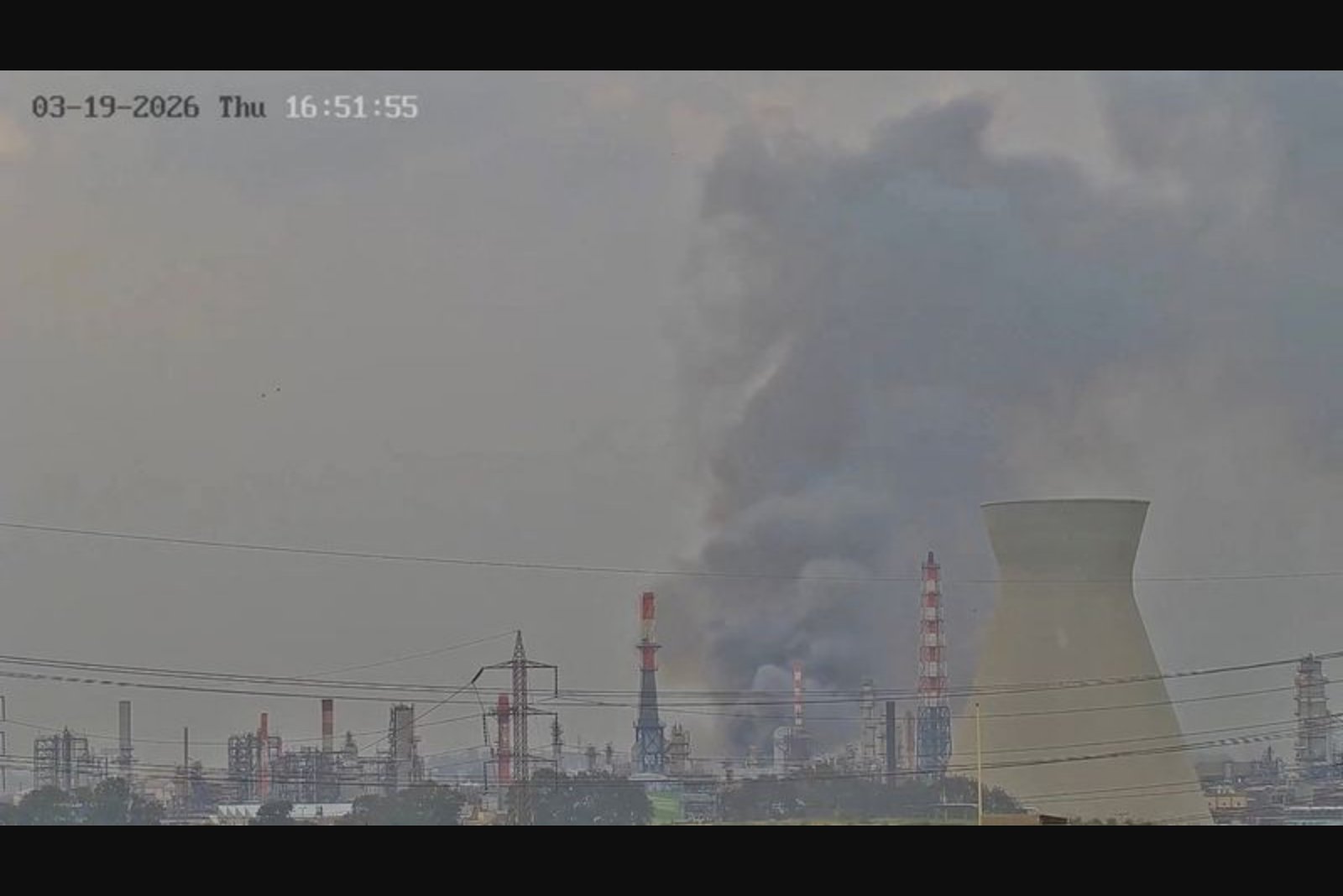
QatarEnergy's chief executive told industry reporters that the Iranian attacks had shuttered roughly one sixth of Qatar's LNG export capacity, a loss the company estimated at about $20 billion a year, and that repairing the damage would take between three and five years. Israeli media also reported damage to oil facilities at Israel's port of Haifa from an Iranian strike, noting damage but no casualties.
Implications for markets and security
The spiraling exchanges have demonstrated both the strategic leverage of attacks on energy infrastructure and the vulnerability of regional logistics and export hubs. The statements from multiple governments about potential measures to secure shipping lanes and stabilise supply underline the economic stakes. At the same time, variance in national objectives among the United States, Israel and regional players complicates prospects for a coordinated policy response and raises uncertainty about the trajectory of the conflict.
As the situation unfolds, the balance between efforts to protect maritime routes, the willingness of allies to engage, and Iran's retaliatory capacity will continue to shape market responses and security planning in the coming weeks.