
Overview
Israel said on Thursday it would maintain pressure on targets in Lebanon and keep its forces in the south for the time being, Defence Minister Israel Katz announced, even as officials from Lebanon and Israel unveiled a conditional ceasefire in Washington. The arrangement, presented after talks between Lebanese and Israeli representatives under a U.S.-led diplomatic track, is explicitly dependent on Hezbollah fully stopping its military actions. Hezbollah has not issued a response to the agreement.
Continued strikes and incidents
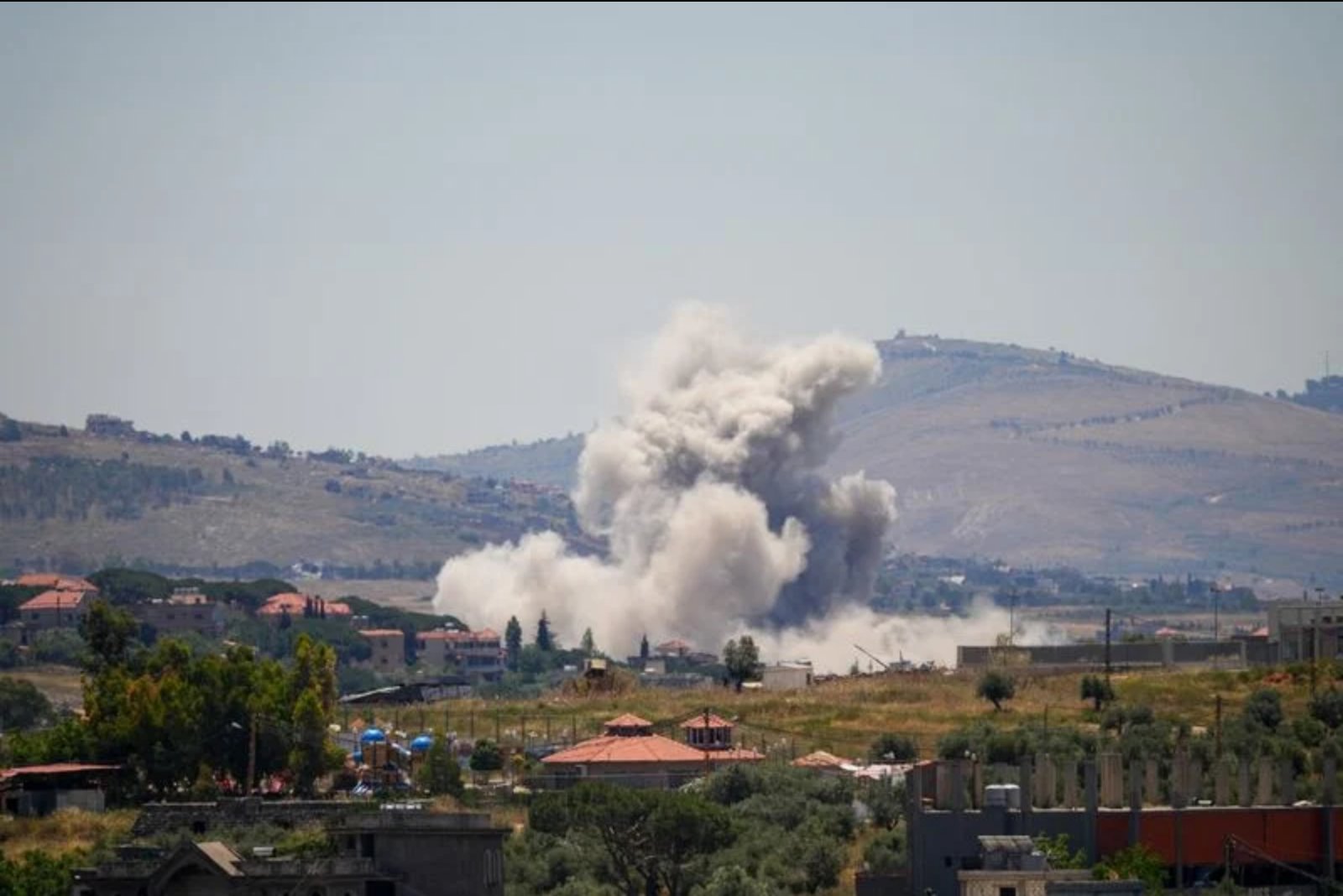
Security sources reported that the Israeli military carried out several attacks in southern Lebanon on Thursday. Lebanon’s National News Agency said a drone strike on a motorbike killed one person and wounded another. Observers also reported a drone buzzing over Beirut. In a statement aimed at residents of southern Lebanon, the Israeli military warned that it continued to target Hezbollah facilities.
Katz said Israeli forces would remain in what Israel describes as a security zone in the south - including the area around Beaufort castle, which Israeli units seized over the recent weekend - and that the troops would remain there "and without the return of the population," his office added. He further stated that Israel "will, for the time being, continue its fire and operations on the ground."
The ceasefire framework
The U.S. State Department released a statement saying the Israel-Lebanon ceasefire was contingent on Hezbollah completely halting fire and evacuating its operatives from the area between the border and the Litani River. The statement did not require an Israeli withdrawal from the south, a zone Israel says it has seized to protect northern communities from attacks.
The joint declaration between Lebanon and Israel also said both sides agreed "to swiftly advance the creation of pilot zones in which the Lebanese Armed Forces will take exclusive control of the territory to the exclusion of all non-state actors." The Lebanese army had previously entered the south as part of a ceasefire agreed in November 2024 to end the last round of fighting between Hezbollah and Israel, and in January declared it had established control over the area between the border and the Litani.
Political reactions and factional tensions
Reactions inside Israel were mixed. National Security Minister Itamar Ben-Gvir, a far-right member of the government, called the ceasefire a "serious mistake" and urged Prime Minister Benjamin Netanyahu to submit the arrangement to the cabinet for a vote. Ben-Gvir asserted that Hezbollah would not withdraw fighters from the south of the Litani River and questioned the ability of the Lebanese Armed Forces to enforce the terms.
Domestically in Lebanon, the presidency and premiership had not yet commented on the Washington announcement at the time of the statement. Lebanon’s ambassador to Washington, Nada Hamadeh Moawad, described the announcement as "a very historic moment for Lebanon."
The political leadership in Beirut has been engaged in a tug-of-war with Hezbollah for months. Maronite President Joseph Aoun and Sunni Prime Minister Nawaf Salam have sought Hezbollah’s peaceful disarmament for about a year, a stance that has intensified tensions with the Iran-backed Shi’ite group. Hezbollah has demanded that Lebanon disengage from the Washington talks.
Regional context and points of contention
Diplomats see the fighting as an obstacle to broader efforts to stabilise the wider regional conflict. Hostilities between Hezbollah and Israel flared on March 2, when Hezbollah opened fire in what it described as support for Tehran after Iran came under U.S.-Israeli attack. Tehran’s Islamic Revolutionary Guards Corps, which established Hezbollah in 1982, has insisted that any deal include an end to Israeli strikes on Lebanon.
President Donald Trump, speaking on Monday, said Israel would not carry out strikes on Beirut after Prime Minister Netanyahu said he had ordered operations against Hezbollah-controlled suburbs. That exchange prompted criticism from Netanyahu’s opponents and some allies who argued the prime minister had compromised national sovereignty.
Katz said Israel would continue to "dismantle terrorist infrastructure in the area" while retaining what he described as "freedom of action, backed by the United States, to strike in Beirut in response to attacks on Israeli communities and territory."
Humanitarian and security toll
Lebanese authorities report that Israel’s campaign has driven some 1.2 million people from their homes, including hundreds of thousands from southern Lebanon. The authorities said most of the internally displaced are Shi’ite Muslims. The continuing operations and periodic ceasefire announcements have thus far not reversed the large-scale displacement.
Separately, the U.N. peacekeeping mission in Lebanon, UNIFIL, reported that a peacekeeper died on Thursday from wounds sustained when mortar shells hit his position near Marjayoun late the previous night. UNIFIL did not indicate the origin of the shells, said two other peacekeepers were wounded, and opened an investigation into the incident.
Where the situation stands
The Washington-brokered framework establishes conditional measures aimed at limiting hostilities and returning territory south of the Litani to Lebanese state control under the Lebanese Armed Forces. However, the statement from the U.S. department left in place Israeli control of a self-declared security zone in the south and did not mandate Israeli withdrawal from that area. On the ground, reports of strikes, drone activity, and military warnings show that, for now, conflict dynamics remain active even as diplomatic channels seek to stabilise the situation.