
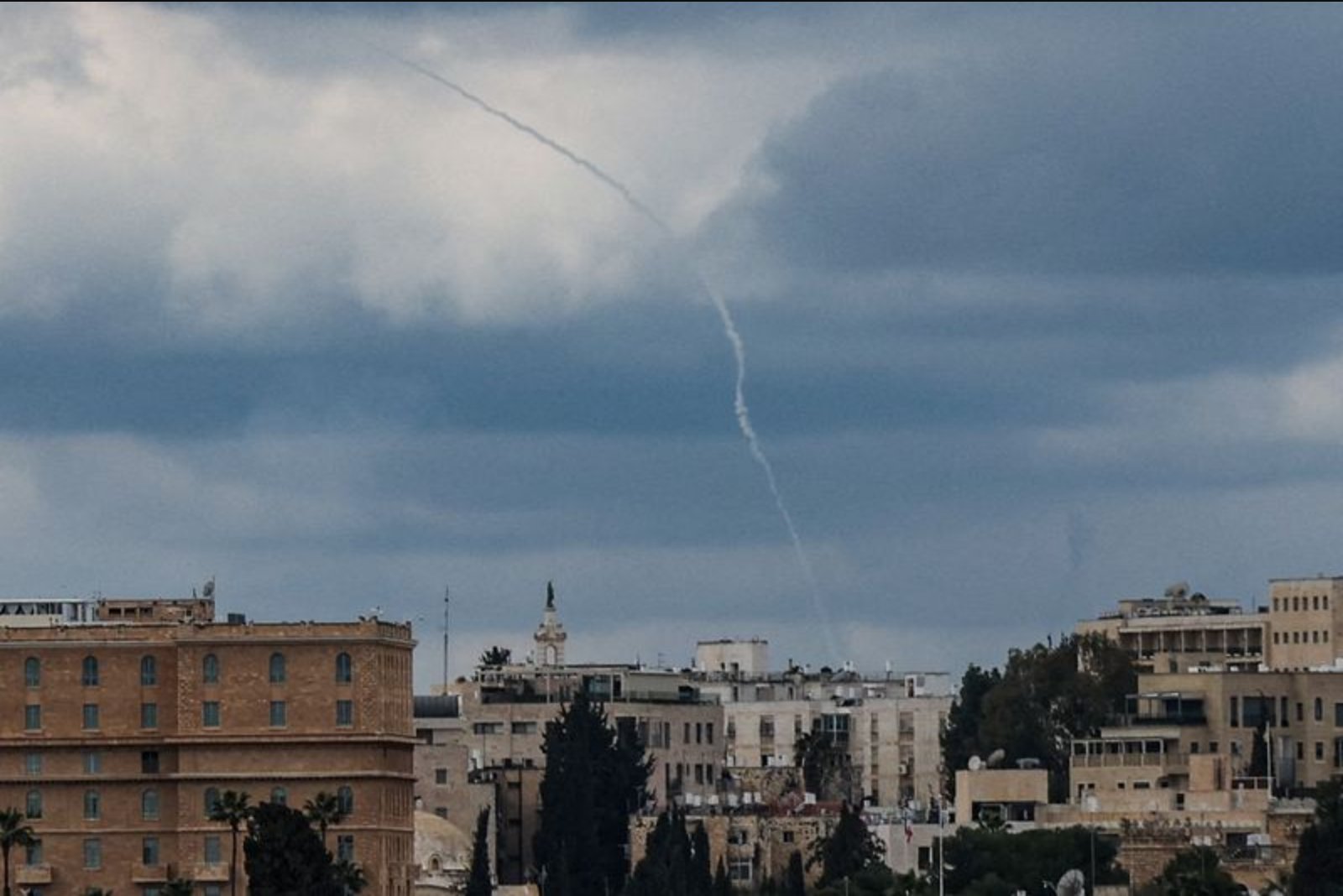
Israel on Monday broadened its military campaign in the region, conducting new air strikes that included attacks on Iran-backed Hezbollah positions in Lebanon after the Shi'ite group acknowledged launching missiles and drones toward Israeli territory. Israeli forces also said they carried out strikes in Tehran targeting sites tied to intelligence, security and military command, an escalation that has reverberated across the Middle East.
The Israeli military reported intercepting a projectile fired from Lebanon while other munitions landed in open areas inside Israel. In Beirut, air strikes struck areas under Hezbollah control in the southern suburbs, and more than a dozen explosions were reported in the Lebanese capital. The military said senior Hezbollah militants near Beirut were also targeted.
Beirut residents fled along clogged roads on foot and by car after the strikes began, which the Israeli military said started at approximately 2:40 a.m. (0040 GMT). Those movements reflected the immediate civilian dislocation caused by the escalation.
Hezbollah acknowledged that it had launched missiles and drones toward Israel - an action the group described as retaliation for the killing of Iran's Supreme Leader Ali Khamenei. Israel, for its part, warned that it was attacking sites connected to the organization, which is one of Tehran's principal regional allies. The exchanges mark a sharp deterioration after the two sides had observed a U.S.-brokered ceasefire in 2024 following more than a year of fighting that had left Hezbollah considerably weakened.
The Israeli military issued warnings for civilians in dozens of villages in southern and eastern Lebanon to evacuate, saying Hezbollah would be held "fully responsible for any escalation." The notice underlined the risk of a widening confrontation along the Israel-Lebanon border.
In parallel with the Lebanon strikes, the Israeli air force reported having established aerial superiority over Tehran and said a wave of strikes across the Iranian capital had targeted intelligence, security and military command centers. Air raid sirens sounded across Israel late on Sunday, including in Tel Aviv, as projectiles streaked across the night sky amid new Iranian missile barrages.
Iran's internal leadership situation was in flux, with President Masoud Pezeshkian saying that a temporary leadership council - composed of himself, the head of the judiciary and a member of the Guardian Council - had assumed the duties of the Supreme Leader.
The fighting has already resulted in the first confirmed U.S. combat casualties of the operation, including three service members whose deaths were announced on Sunday. Two U.S. officials, speaking on condition of anonymity, told reporters that the U.S. personnel were killed on a base in Kuwait. President Donald Trump paid tribute to the fallen as "true American patriots" while warning that further casualties were likely.
Trump has signaled that the U.S.-Israeli military campaign against Iran could last for weeks. In a pre-recorded video, he said that strikes would continue until "all our objectives are achieved," without providing detailed public targets or an end state. He asserted that the assault had so far neutralized Iran's military command and destroyed nine Iranian navy ships and a naval building. The U.S. military reported that American aircraft and warships had struck more than 1,000 Iranian targets since the onset of major combat operations.
Trump also issued direct appeals to elements of Iran's security apparatus and to the Iranian public. He called on Iranian military and police forces, including the Islamic Revolutionary Guards Corps, to stop fighting, offering immunity to those who surrendered and threatening "certain death" for those who resisted. He urged Iranians to rise up against their government, saying "America is with you."
In interviews, Trump said the campaign could continue for at least four weeks. Administration officials scheduled briefings for members of both houses of the U.S. Congress as senior aides prepared to outline the ongoing operations. According to officials familiar with internal deliberations, the administration sought to avoid mixed public signals while policy discussions continued internally.
The death of Khamenei - and other senior Iranian leaders - has raised questions about Iran's near-term political trajectory. The Trump administration has not set out a long-term plan for Iran's governance or political transition, and it remains unclear how Tehran will rebuild its leadership. Khamenei, who was 86 years old according to the available reporting, had held supreme power since the death of the republic's founder in 1989.
Analysts noted that while the deaths of top figures could significantly weaken Iran, they may not end the entrenched influence of clerical leadership or the power of the Revolutionary Guards. It was said to be too early to predict how the Iranian public would react to these developments. A social media analysis cited from Redpoint Advisors indicated the public was already looking beyond Khamenei for potential successors.
Regional consequences were immediate. Iran's Revolutionary Guards said they had struck three U.S. and UK oil tankers in the Gulf and the Strait of Hormuz, and had attacked military bases in Kuwait and Bahrain using drones and missiles. Shipping data indicated that hundreds of vessels, including oil and gas tankers, were anchoring in nearby waters as traders anticipated sharp rises in crude oil prices. The strikes and counterstrikes also severely disrupted air travel, with major Middle Eastern airports closed, including Dubai, which is one of the busiest international hubs.
Diplomatic signals meanwhile were mixed. Oman's foreign ministry reported that Iranian Foreign Minister Abbas Araqchi had indicated Tehran was open to de-escalation, but Araqchi also posted remarks suggesting Iran was prepared to continue fighting. The juxtaposition of tentative diplomatic outreach and continued military action underscored the uncertainty about whether hostilities could be contained.
The unfolding events have direct implications for regional security, civilian safety and several market sectors. Shipping and aviation have already seen immediate operational disruption, while energy markets have reacted to the heightened risk of supply interruptions. Politically, an extended campaign poses potential risks for U.S. domestic politics, given low public approval for the operation in recent polling and the proximity of midterm elections.
For now, Israeli strikes on Lebanon and Tehran, Hezbollah's retaliatory launches, U.S. casualties, and Iran's stepped-up attacks on shipping and bases illustrate a conflict that has broadened rapidly across the Middle East and that, according to senior leaders involved in the campaign, could persist for weeks.