
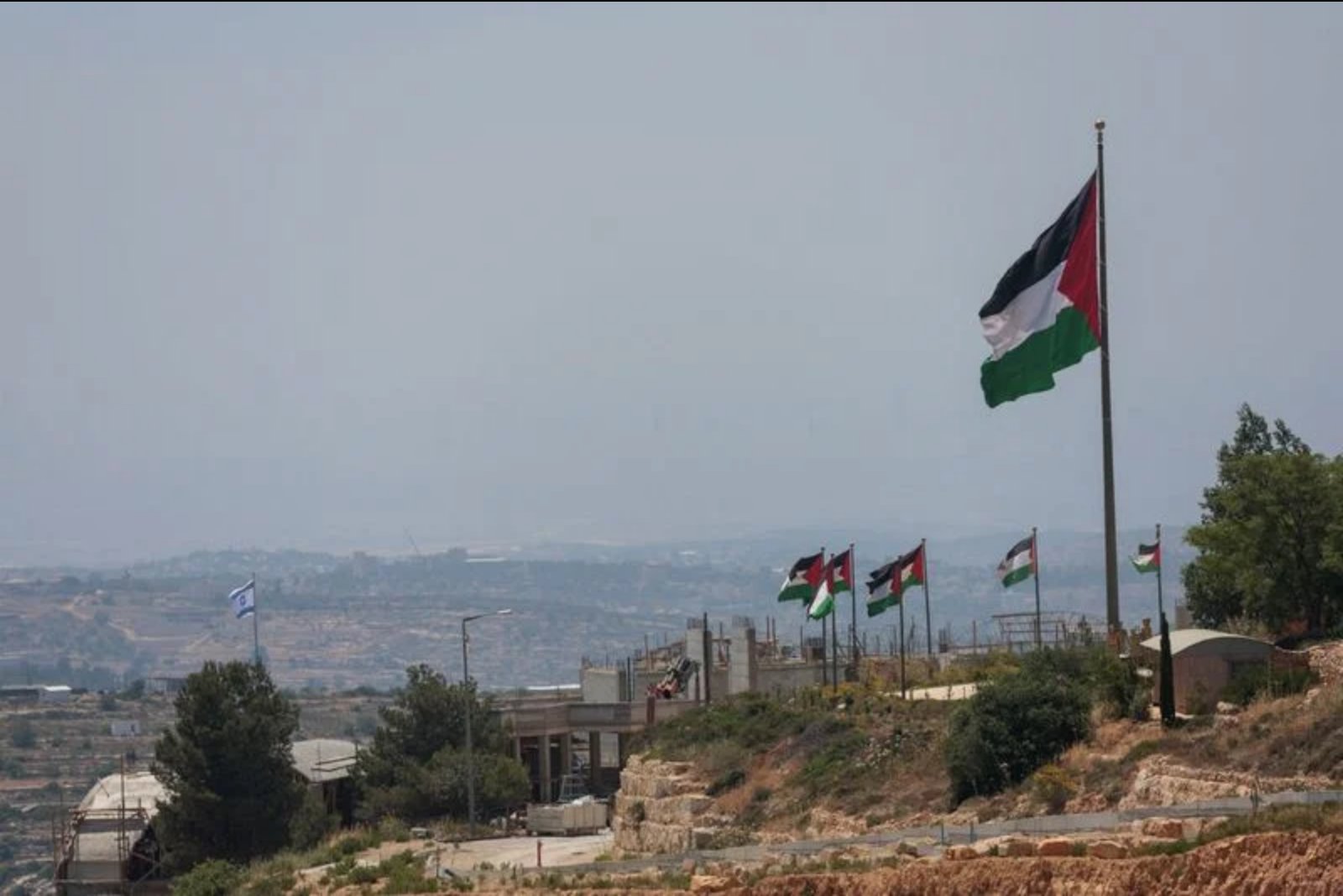
Israel's hardline finance minister announced on Wednesday that a planning committee had approved the construction of 2,162 new Jewish homes in the occupied West Bank, in a move likely to deepen tensions between Israelis and Palestinians. The approvals cover three settlement clusters - 1,006 housing units in a new settlement near Jerusalem, 922 near the Palestinian city of Nablus, and 234 close to Hebron.
The minister, who has authority over parts of Israel's civilian administration in the West Bank, framed the plan as a practical continuation of state-building efforts. In a statement he said: "We are continuing to build the Land of Israel in practice." He added that the new construction would "strengthen our hold on the land, reinforce Israel’s security, and establish clear facts on the ground that prevent the creation of an Arab terror state in the heart of the country." He did not provide a timeline for when building would begin.
The minister is an ultranationalist who has been sanctioned by Britain, France and other governments that accuse him of incitement against Palestinians. He has rejected those sanctions, saying they will not alter Israeli policy. Since taking ministerial office three years ago, he has pursued policies to tighten Israel’s control and presence in the West Bank and has opposed the concept of a Palestinian state.
Prime Minister Benjamin Netanyahu’s right-wing government has overseen both the substantial expansion of existing settlements in the West Bank and the creation of new ones. The announcements come against the backdrop of competing national aspirations: Palestinians seek the West Bank as part of a future independent state that would include East Jerusalem and Gaza, while roughly half a million Israelis currently live in the West Bank alongside an estimated 3 million Palestinians.
International response has been mixed. The United States under President Donald Trump has been less critical of rapidly expanding settlements than some previous administrations, although Trump said last September he would not permit Israel to annex the West Bank, a position that angered some right-wing Israeli lawmakers. The United Arab Emirates - one of the few Arab states with formal ties to Israel - has publicly cautioned against annexation as well.
Palestinian leaders condemned Wednesday’s approvals. The office of Palestinian President Mahmoud Abbas described Israel’s actions as "provocative" and warned they are pushing the region toward further rounds of violence. That office also called on the United States to intervene and halt what it termed Israeli "madness."
The finance minister has also made recent public statements asserting he would mount a campaign against the Palestinian Authority after saying he had been informed the International Criminal Court prosecutor had sought a confidential arrest warrant against him. The court has not confirmed that assertion.
The newly approved units are divided among areas Palestinians hope to include in a future state. Observers note that the expansion of settlements is widely regarded by most nations as illegal under international law and a major barrier to a two-state solution, a characterization reflected in the sharp reactions to this announcement.
Details of construction schedules, financing and exact locations beyond the city proximities were not provided in the minister’s statement. The announcement adds another chapter to a continuing debate within Israel and between Israel and its international partners over settlements, sovereignty and security in the West Bank.
Contextual note: The figures in this article reflect the approvals announced by the Israeli planning committee and the statements released by Israeli and Palestinian officials.