
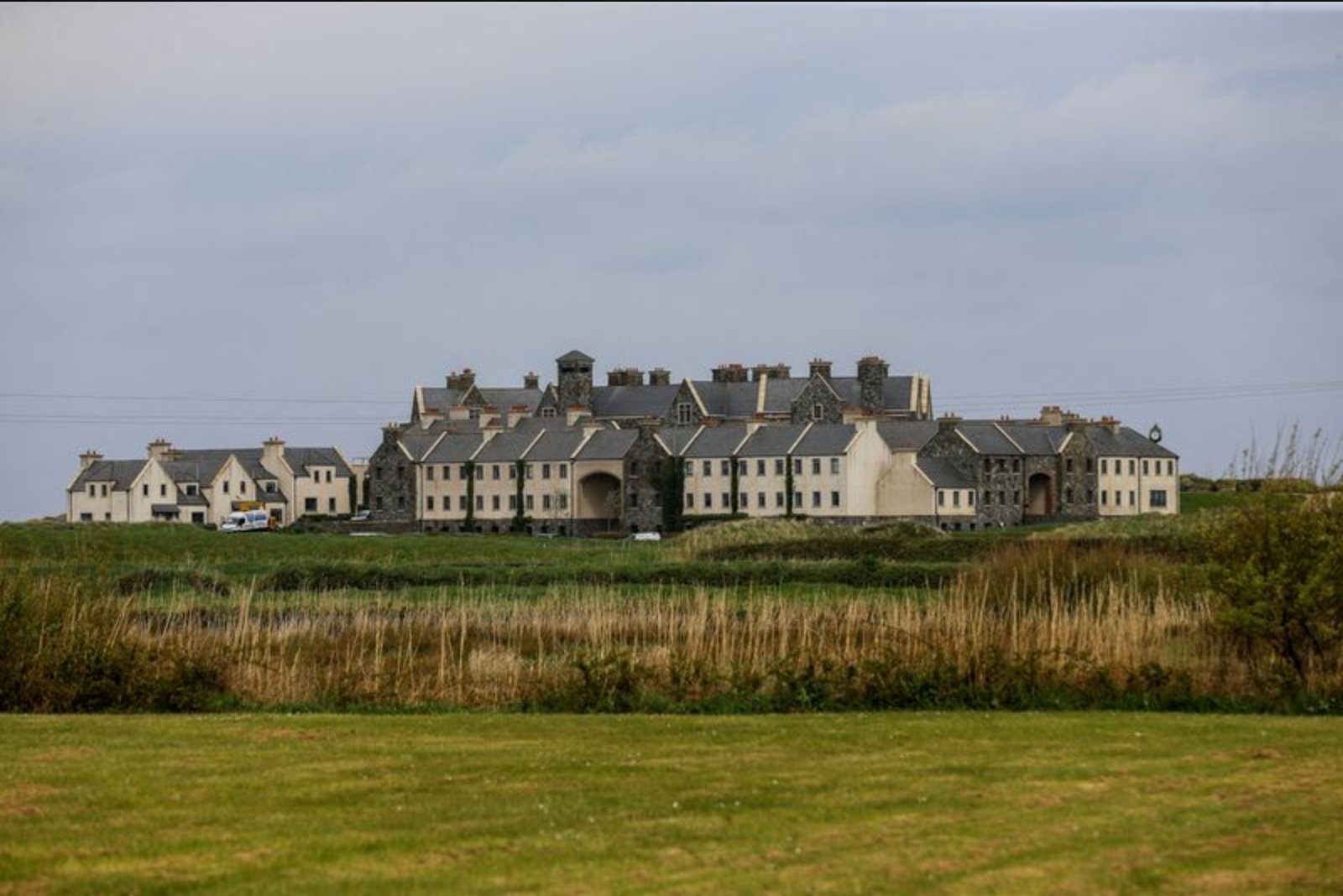
DUBLIN, Feb 24 - Clare County Council on Tuesday granted planning permission for a ballroom at the Trump International Golf Club in Doonbeg on Ireland's west coast, on the condition that the club produces measures to help protect a tiny, protected snail species that lives on the site.
The proposal, submitted in December, calls for a ballroom with capacity for 320 guests. Eric Trump was quoted as saying it would be "the nicest ballroom in the country". Environmental campaigners raised concerns about potential impacts on the rare Vertigo angustior snail, which is covered by a European Union habitats directive aimed at maintaining or restoring populations of protected species.
Planners approved the development but attached 14 conditions. Among those conditions is a requirement that the golf club prepare and submit a plan detailing how it will conserve and monitor the snail population prior to any commencement of construction activity.
Friends of the Irish Environment argued against granting new permissions until a court order connected to the original 1999 plans for the course - which required the "maintenance or improving" of the snail's status - had been complied with. The council's decision indicates permission can proceed, subject to the newly imposed conditions designed to address those conservation concerns.
Some local groups backed the ballroom plan, pointing to the employment the resort provides. The Doonbeg operation employs about 300 people during the peak summer season, and many locals have credited the owner with safeguarding jobs after the course was purchased in 2014.
The planned ballroom would cover 1,240 square meters. The application notes, for comparison, that this is a small portion of the 8,360 square meters allocated to a ballroom planned for the White House.
The report also notes that the U.S. owner stayed at the Doonbeg hotel during an official visit to Ireland in 2019; the hotel lies approximately 300 km (180 miles) from Dublin. It states that when he assumed office, the owner placed the Trump Organization into a trust managed by his children while retaining beneficiary status.
The planning history at the site includes a 2020 refusal for permission to build a sea wall intended to protect the course from coastal erosion; planners at the time concluded the sea wall proposal did not sufficiently demonstrate that it would avoid adverse effects on the sand dune habitat on the property.
Key points
- Clare County Council approved a 320-person ballroom at Doonbeg with 14 conditions, including a snail conservation plan - impacting local construction and hospitality sectors.
- Environmental groups objected, citing obligations under an EU habitats directive to protect the rare Vertigo angustior snail - relevant to conservation and regulatory compliance.
- Support from some local groups highlights the resort's role in local employment, with around 300 seasonal jobs at stake - relevant to tourism and regional labor markets.
Risks and uncertainties
- Legal and compliance risk tied to the court order related to 1999 plans and requirements to "maintain or improve" the snail's status - this affects the timeline and conditions for construction.
- Environmental uncertainty over whether proposed conservation measures will satisfy regulators and stakeholders before work can start - this impacts the construction and planning sectors.
- Potential future planning challenges, as seen in the 2020 refusal for a sea wall due to habitat concerns, which illustrate ongoing tensions between coastal protection efforts and habitat preservation - relevant to infrastructure and coastal management.