
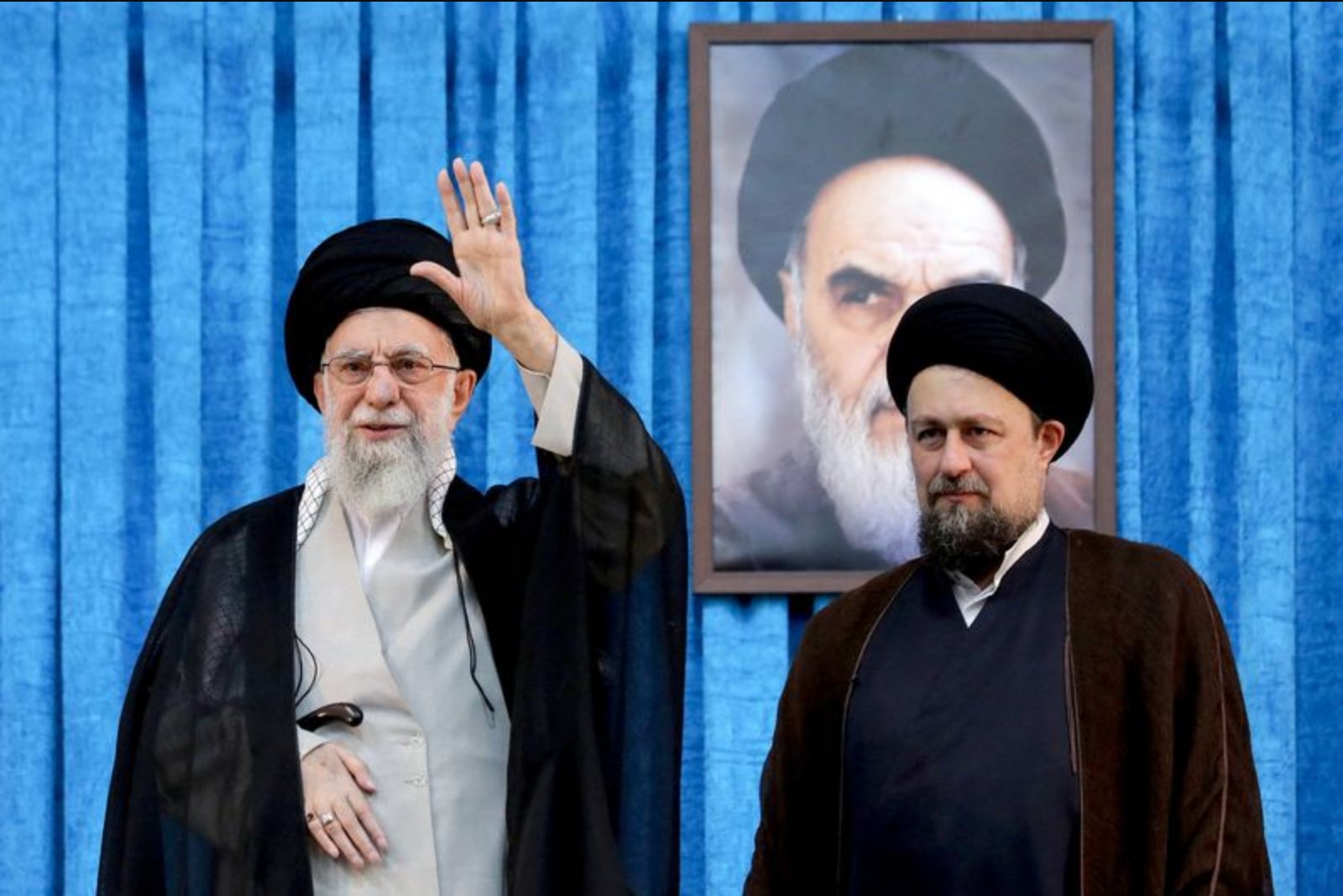
Iran’s religious-political hierarchy is preparing to designate a new supreme leader after the death of Ayatollah Ali Khamenei in strikes attributed to the United States and Israel, officials involved in the process say. The clerical body tasked with selecting a successor has said it is close to naming a replacement, and an announcement could come as soon as Sunday, according to those overseeing the consultations.
The vacuum at the top of the Islamic Republic arrives at a time of intense external pressure. Israel and the United States have declared they will continue military operations and have threatened to target whoever succeeds Khamenei as well as individuals participating in the selection process. That warning applies not only to the clerics who will formally vote in the Assembly of Experts but also to Revolutionary Guards personnel and political operatives who wield influence behind the scenes.
How the supreme leader is defined under Iran’s system
The Islamic Republic’s structure of authority stems from the 1979 revolution and the doctrine of vilayat-e faqih, or guardianship of the Islamic jurist. The concept assigns ultimate political authority to a senior Shi’ite cleric who is considered to act as guardian until the return of the hidden 12th Imam. Under this constitutional order, the supreme leader has overriding powers across state institutions and is constitutionally empowered to guide the elected president and parliament.
Both Ayatollah Ruhollah Khomeini, the founder of the revolution, and Ayatollah Khamenei, who succeeded him, exercised the final say on national policy. Any successor will be expected to be a senior cleric and to assert the supremacy of the clerical office during what officials acknowledge is a major rupture in the system.
Who is responsible for picking the next leader?
By constitutional requirement, the Assembly of Experts must appoint a new supreme leader within three months. In the interim, an ad hoc leadership council has been convened: President Masoud Pezeshkian, Guardians Council member Ayatollah Alireza Arafi and Judiciary chief Ayatollah Gholamhossein Mohseni-Ejei are jointly overseeing affairs.
The Assembly of Experts is a roughly 90-member body of senior clerics elected to eight-year terms. Many members are elderly, and, because strikes have continued, the assembly has reportedly been conducting deliberations online. Observers involved in the process indicate they are near a decision, though the mechanics of final approval remain tightly intertwined with Iran’s entrenched power centers.
Formally the assembly makes the choice, but in practice the decision is likely to reflect the preferences of the most senior figures who have exercised authority under Khamenei. Among those figures is veteran adviser Ali Larijani, identified within Iran’s establishment as a leading powerbroker. The Islamic Revolutionary Guard Corps (IRGC) is also expected to play a pivotal backroom role in shaping the outcome.
Principal contenders and the political calculus
Several names are reported as plausible successors, each embodying different strands of Iran’s political-religious spectrum.
- Mojtaba Khamenei - Khamenei’s son is widely viewed as the most probable candidate after surviving the initial strikes, although his wife was killed. Iran’s political-religious ideology does not endorse formal hereditary succession, yet Mojtaba is believed to maintain significant backing within the Guards and from his father’s office, which remains a powerful institution.
- Hassan Khomeini - The grandson of the revolution’s founder has long been associated with the reformist camp. He could be perceived as a figure who might alleviate tensions with Western adversaries and address domestic disaffection among Iranians who have lost faith in electoral politics.
- Alireza Arafi and Gholamhossein Mohseni-Ejei - Both are senior clerics with profiles that could appeal to continuity within Iran’s hardline establishment. Mohseni-Ejei in particular has a track record in internal security, having been responsible for suppressing protests during the 2009 unrest when he served as intelligence minister.
- Other clerical figures - Assembly members such as Ahmad Alamolhoda and Mohsen Araki are also mentioned as hardline candidates with close engagement in Iranian politics. The assembly could, in theory, select a lesser-known ayatollah, though fractures in the ruling system are likely to make it difficult to solidify the authority of a newcomer.
The Guards’ influence and recent degradation of its leadership
The IRGC has long been expected to exert decisive influence over any succession. Unlike the conventional military, which answers to the elected president, the IRGC reports directly to the supreme leader and has been a major instrument of Iran’s regional strategy and domestic control.
However, U.S. and Israeli strikes over recent years have significantly damaged the IRGC’s top ranks. The 2020 killing of Qassem Soleimani, the Quds Force commander, was a notable blow to the corps’ external operations leadership. Israeli strikes last summer and the latest wave of attacks have killed other senior commanders, and the most recent strikes reportedly killed the IRGC’s top commander Mohammed Pakpour, according to multiple sources familiar with the matter.
The Basij, a volunteer paramilitary arm under IRGC control, plays an important domestic role by helping to suppress protests, enhancing the corps’ internal security reach. Separately, the IRGC’s commercial arm, predominantly through the contracting firm Khatam al-Anbiya, has acquired substantial economic stakes in Iran’s oil and gas sector and other infrastructure projects. The corps’ interest in protecting these economic assets is an additional factor that may shape which candidate the Guards will support.
What role do Iran’s citizens and elections play?
Under the constitution, Iranians elect a president and a parliament to four-year terms. The presidency oversees day-to-day governance inside the parameters set by the supreme leader. Historically, electoral participation was high during the early years of the republic. Today, public trust in electoral processes has declined markedly, and turnout has been waning.
President Pezeshkian, who is viewed as a moderate and is part of the interim leadership council, is likely constrained in his influence over the succession process. Reports indicate he faced political pressure and had to reverse his public stance on the conduct of the war, illustrating the limits on presidential autonomy amid a security crisis.
It is also important to note the electoral filtering system that affects the Assembly of Experts itself. Candidates for national office, including the assembly, must be vetted by the Guardians Council. This vetting process ensures that those eligible to stand for election are generally aligned with the state, narrowing the pool of potential voices for change within the formal institutional structure.
Implications and immediate challenges facing a successor
Any new supreme leader will confront a deeply unsettled environment. Externally, threats from the United States and Israel are explicit and ongoing. Internally, the combination of a fractured ruling class, diminished IRGC leadership, economic entanglements of the Guards, and public disaffection with electoral politics presents a complex set of governance challenges.
As the Assembly of Experts moves toward a formal designation, the actual outcome will likely reflect a balance among the clerical establishment’s preferences, the IRGC’s strategic calculations, and the practical ability of a candidate to consolidate authority at a time of national emergency. The choice will not only be a religious or symbolic appointment; it will determine who holds ultimate sway over Iran’s institutions at a moment when external military pressure and internal strains coincide.
Summary
Iran’s clerical selectors are reportedly close to choosing a new supreme leader after Khamenei’s death in U.S.-Israeli strikes. The Assembly of Experts is the constitutional body charged with the appointment, but the outcome is expected to reflect the preferences of senior figures and the IRGC. Main candidates range from Khamenei’s son to reformist and hardline clerics. External attacks and damage to the Guards’ leadership complicate the power dynamics and raise questions about the successor’s ability to assert authority.
Key points
- The Assembly of Experts must appoint a new supreme leader within three months; an interim leadership council is in place.
- The IRGC remains a central power broker, though its senior ranks have been weakened by successive strikes, and it has substantial economic interests in the oil and gas sector through Khatam al-Anbiya.
- Potential successors span a spectrum from Mojtaba Khamenei and hardline clerics to reformist-linked figures like Hassan Khomeini; the assembly’s choice will be shaped by senior establishment figures and the Guards.
Risks and uncertainties
- External military pressure - Continued strikes by the United States and Israel create acute security risks for any successor and for those involved in the selection process, with potential consequences for Iran’s stability and governance.
- Institutional fragmentation - Damage to IRGC leadership and fractures within the ruling elite complicate the consolidation of authority, raising uncertainty about the successor’s capacity to govern effectively.
- Economic exposure - The IRGC’s commercial holdings, notably in oil and gas through Khatam al-Anbiya, link the succession decision to economic concerns, potentially affecting energy sector contracts and investor confidence.
Tags: Iran, Succession, Guards, Clergy, Energy