
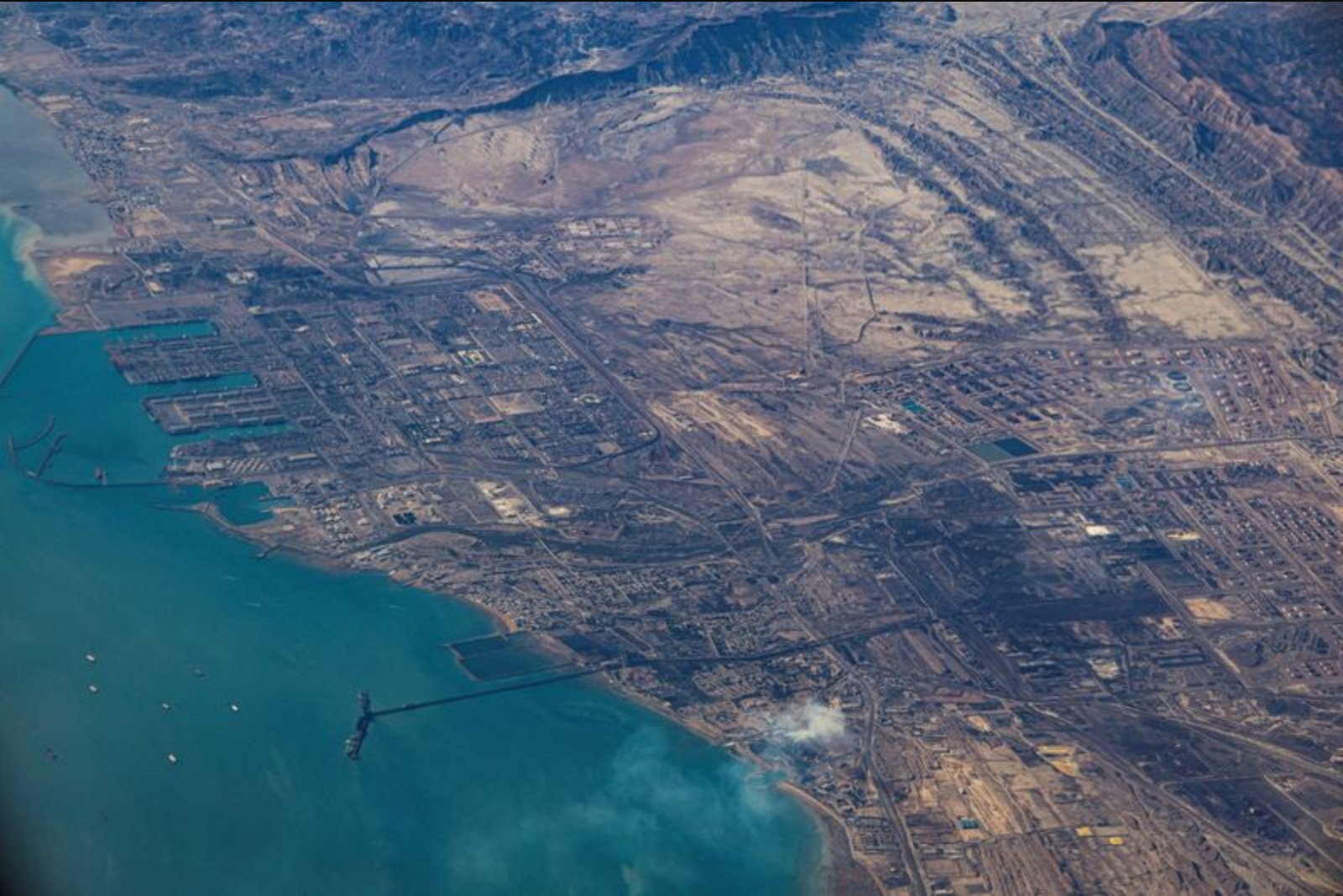
Iranian drone strikes have the potential to make the Strait of Hormuz unsafe for commercial shipping for an extended period, intelligence officials and military analysts say, though the duration of Tehran's missile campaign is less certain. Since the U.S. and Israel attacked Iran on Saturday, Iran has launched hundreds of missiles and more than 1,000 drones at Gulf states aligned with Washington. While most of those weapons were intercepted by air defences, attacks have damaged residential and commercial structures, infrastructure and U.S. military facilities.
Central to the risk to maritime traffic is Iran's industrial drone capability. The Centre for Information Resilience, a non-profit research group funded by Britain’s Foreign Office, estimates Tehran can produce about 10,000 drones per month. By contrast, estimates of Iran's missile holdings vary, with Israel's military putting the figure at roughly 2,500 and other analysts suggesting it could be around 6,000. How much of that missile inventory remains available will be a determining factor in the conflict's evolution.
The Strait of Hormuz, a narrow channel separating Iran and Oman and a conduit for roughly one fifth of the world's crude oil and liquefied natural gas, has been a strategic target. Shipping through the waterway has slowed to a near standstill after Iranian strikes hit six vessels. Energy markets have reacted: Brent crude rose 12% and a European natural gas benchmark increased by about 50% so far this week.
"Iran is not going to fold easily or quickly, they have the means to make it unsafe for commercial traffic to flow through Hormuz," said Bob McNally, president of Rapidan Energy Group. He added that U.S. operations are prioritising strikes on Iranian munitions, bases and facilities that threaten the Strait. "But all Iran has to do is show they can hit a few tankers and concern will take care of the rest, folks just won't go through."
Analysts say Iran's missile supplies represent a vulnerability. A former director at Britain’s MI6 intelligence agency noted that Russia is ill-placed to resupply Iran and that China would likely be cautious about providing significant military hardware, given the potential diplomatic fallout with Gulf Cooperation Council states - Bahrain, Kuwait, Saudi Arabia, Qatar, Oman and the United Arab Emirates.
A Western intelligence source said missile caches may already have been drawn down because Tehran had been supplying allied groups such as Hezbollah in Lebanon and the Houthis in Yemen. Stocks were also reduced during a 12-day war with Israel in June, though Israeli military intelligence says levels have been partially replenished. Research by Britain's Centre for Information Resilience shows that launchers for missiles are a potential bottleneck - supplies of launchers have at least halved over the last year due to strikes by Israel and the U.S., and have declined further over the past five days.
Despite constraints on missiles, Iran appears able to sustain prolonged operations using drones. Farzin Nadimi, a senior fellow at the Washington Institute, said Iran's latest Shahed-136 drones have a range of 700 to 1,000 kilometres (435 to 620 miles), enough to reach any point on the southern Gulf coast when launched from the Iranian mainland or from vessels. CIR analysts note that many of these drones are produced at dual-use plants and that other facilities could be converted to increase output.
These Shahed-136 variants have penetrated Gulf states' air defences: 65 drones entered the UAE since the conflict began, striking targets including Amazon data centres, Dubai International Airport and a Fairmont hotel. Bahrain has reported material damage to infrastructure, a U.S. naval base and a mixed-use tower containing a hotel and apartments as a result of drone strikes.
Oil traders are girding for additional price volatility as market participants assess how long disruption to the Strait might last. A senior executive at Vitol, a global commodity trading house, said the risk is currently underpriced in oil markets. "The prevalent theory is that Iran is using old missiles and drones first to deplete air defences. If so, their response is yet to start properly," the executive said.
If Iran's stocks of missiles and drones begin to diminish, analysts warn that Tehran could shift tactics and deploy sea mines. Maritime risk intelligence firm Dryad Global estimates Iran has an inventory of between 5,000 and 6,000 sea mines. These can be moored to the seabed, be rocket-propelled, or drift in the water, detonating on contact with a vessel.
There is no current evidence that mines have been laid in the Strait of Hormuz, analysts said. But if mines were deployed, maritime security experts warn that remediation would be slow and difficult. "If sea mines are laid, it will take a long time to deal with them," said Cormac McCarry, director at Control Risks, who focuses on maritime intelligence and security. "That's where we will be looking at months of destruction."
Implications for markets and sectors
- Energy markets - The immediate jump in oil and gas benchmarks signals heightened price risk linked to reduced flows through a critical shipping choke point.
- Maritime and shipping - Tankers and commercial vessels face operational disruption and potential route avoidance, with attendant insurance and logistical impacts.
- Defence and security - Sustained drone use and the targeting of munitions and launchers make military supplies and countermeasures central to the conflict's trajectory.
As the situation evolves, monitoring the remaining stocks of missiles, the availability of launchers and any movement toward mine-laying will be critical to understanding whether the disruption to the Strait of Hormuz is measured in weeks or months. For now, analysts and market participants are factoring in a period of heightened risk and uncertainty that could reverberate across energy, shipping and insurance markets.