
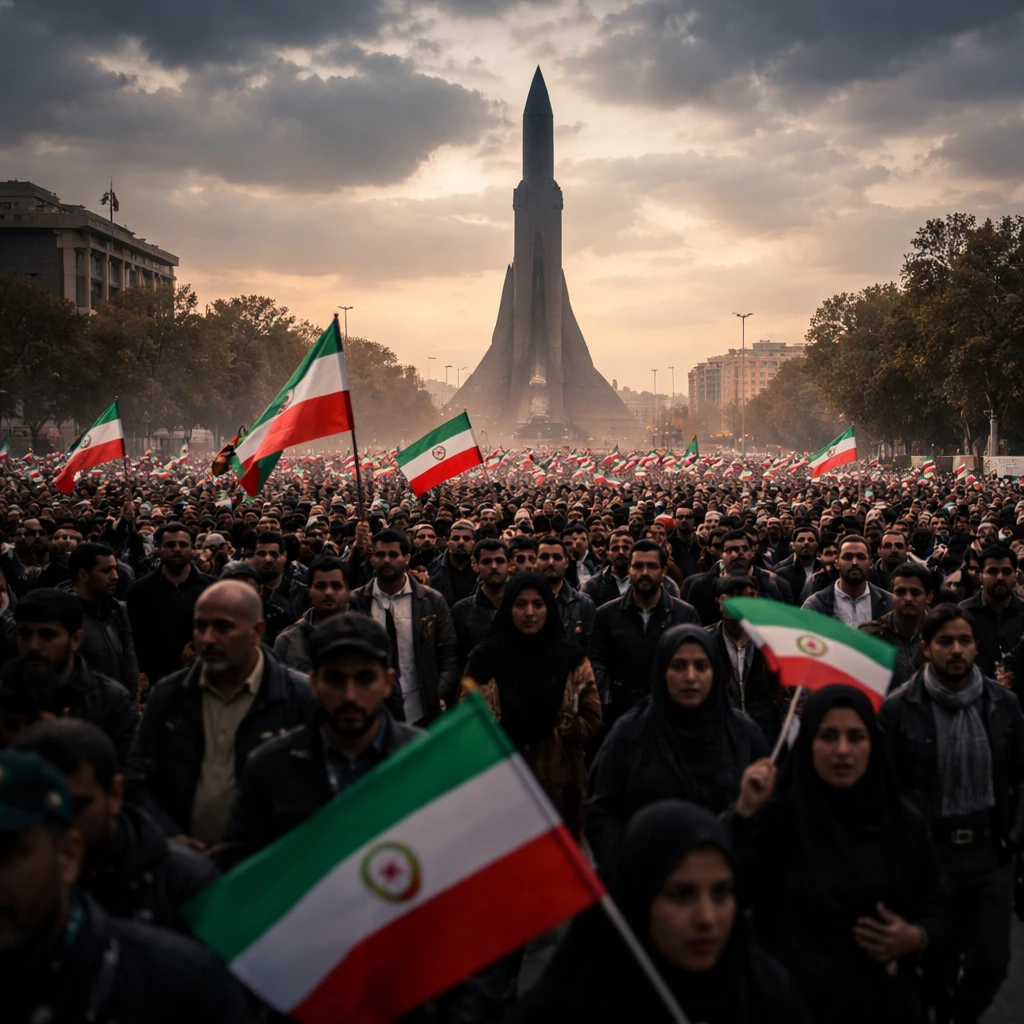
Iran continues to draw a firm line on its ballistic and missile capabilities, an adviser to the country’s supreme leader said, signaling that the issue will not be part of any negotiation package even as diplomatic exchanges with Washington resume.
"The Islamic Republic's missile capabilities are non-negotiable," Ali Shamkhani told state media on Wednesday while taking part in a public march marking the 47th anniversary of the Islamic Revolution. The remark was made amid renewed diplomatic activity between Tehran and Washington.
Last week, U.S. and Iranian diplomats held indirect discussions in Oman. The meetings followed a regional U.S. naval buildup that Iran has characterized as a threat to its security environment. Officials in Tehran have pointed to that buildup as a context for their continued defense posture.
U.S. negotiators have sought to expand the scope of talks beyond strictly nuclear issues to include Tehran's missile program. According to the statements reported from Tehran, Iran has been open to discussions that would limit its nuclear activities in return for relief from sanctions, but it has repeatedly resisted linking those nuclear talks to other subjects.
Iran’s foreign minister, Abbas Araqchi, reiterated that position on Sunday, saying the missile program has not been part of any negotiation agenda. That statement aligns with Shamkhani’s comments at the anniversary event and underscores Tehran’s consistent refusal to negotiate away or attach conditions to its missile capabilities.
The public comments come as both sides engage in cautious diplomatic contact - indirect in format - while maintaining sharply different views on what topics should be on the table. Tehran’s messaging emphasizes a separation between nuclear discussions and its missile forces; Washington’s approach, as reported, seeks a broader negotiating remit that would include missile restrictions.
Summary
An adviser to Iran’s supreme leader and Iran’s foreign minister have both stated that Tehran’s missile capabilities will not be part of negotiations, even as indirect talks between U.S. and Iranian diplomats took place in Oman against the backdrop of a U.S. naval buildup the Iranian government views as threatening.
Key points
- Ali Shamkhani declared Iran’s missile capabilities non-negotiable during a march marking the Islamic Revolution’s 47th anniversary.
- Indirect U.S.-Iran discussions occurred in Oman last week while Iran cited a U.S. naval buildup as a perceived threat.
- Washington has attempted to broaden talks to include missile restrictions; Tehran has limited negotiations to nuclear activities in exchange for sanctions relief.
Risks and uncertainties
- Differences over negotiation scope - whether missile capabilities are open for discussion - create a clear diplomatic impasse.
- Perceptions of a threatening regional naval buildup increase tensions between Tehran and Washington and may complicate further diplomatic engagement.
- Ongoing indirect talks without agreement on agenda items leave the outcome of discussions uncertain.