
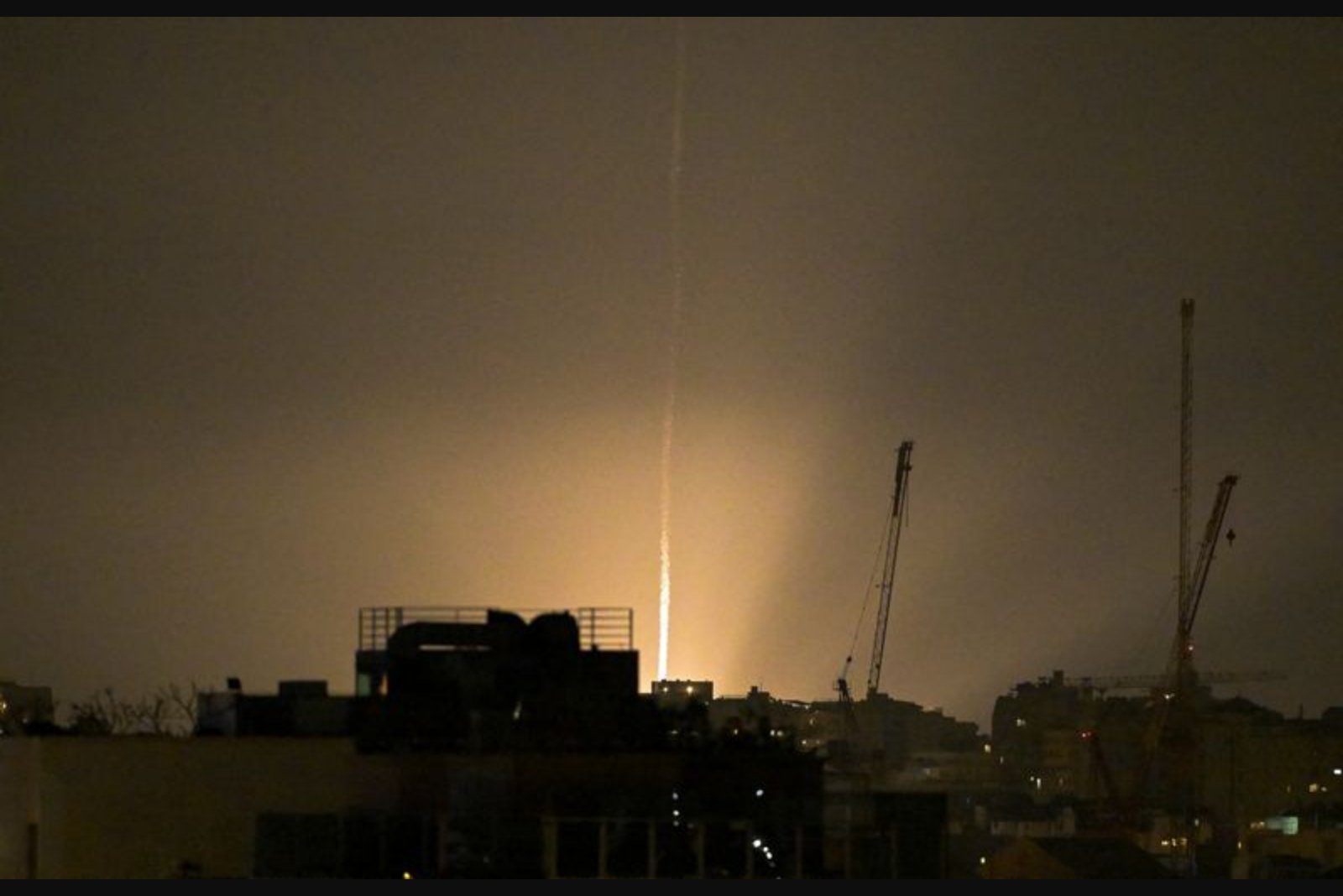
Shi'ite armed factions aligned with Tehran have increased the tempo of operations against Israel and U.S. interests in the region, conducting simultaneous rocket and drone strikes that underscore their continued ability to mount attacks despite damage the alliance has sustained during the Gaza conflict.
In a recent development, Hezbollah and Iran's Revolutionary Guards carried out a synchronized rocket barrage on Israel, with the Lebanese group firing 200 missiles. Israeli authorities reported that two of those missiles hit Israeli territory. At the same time, Iraqi Shi'ite militants have stepped up drone and missile strikes on U.S. targets within Iraq over the last three to four days, according to multiple Iraqi security sources and sources close to the groups.
One potential actor that has not yet entered the current round of strikes are the Houthi forces in Yemen - long-standing allies of Tehran. The Houthis retain significant armaments and demonstrated during the Gaza conflict their capability to target Red Sea shipping and Israel. Their engagement, if it occurs, could further affect maritime traffic and oil flows in the region. Last week Houthi leader Abdul Malik al-Houthi said the group had its "fingers on the trigger" and would act militarily as developments warranted it.
Context within the alliance known to Tehran as the Axis of Resistance shows strains after a series of setbacks earlier in the conflict. The alliance suffered heavy losses following the October 7, 2023 attack by Hamas on Israel, an event the article links to a chain of outcomes that decimated the Palestinian group and dealt blows to Hezbollah. Israel reportedly killed Hezbollah's leader Hassan Nasrallah, and the ripple effects of the fighting are described as having toppled Bashar al-Assad in Syria, removing what the article characterizes as a pillar of the Axis.
Analysts quoted in the reporting frame the current period as existential for Iran and its allies. Mohanad Hage Ali of the Carnegie Middle East Center described Iran's approach as building the Axis for a moment like this and termed the confrontation an "existential war" for Iran and Hezbollah. He added that despite reductions in Hezbollah's capabilities over the past three years, the organization remains a relevant and dangerous force.
Israeli military spokesman Lieutenant Colonel Nadav Shoshani provided the Israeli account of the exchange, saying that the Hezbollah attack on Wednesday included 200 rockets and 20 drones. He said there was no contradiction between having heavily diminished Hezbollah in recent years and the group remaining a significant and dangerous actor.
Iran's leadership has publicly acknowledged support for allied forces in the region. Iran's new Supreme Leader Mojtaba Khamenei issued a statement thanking "the fighters of the Resistance Front" and affirming relations with countries of the Resistance Front, a statement read on state television and reported as the first issued in his name since his appointment. The article reports that Hezbollah, founded by Iran's Revolutionary Guards in 1982, said on March 2 it was entering the Iran war with the stated aim of avenging the killing of Mojtaba's father, former Supreme Leader Ayatollah Ali Khamenei, who the article says was killed on the first day of the war.
Israel has responded with a renewed offensive against Hezbollah in Lebanon, occurring 15 months after the last such campaign. The strikes have reportedly killed more than 600 people and displaced over 800,000 from their homes. The Hezbollah rocket barrage referred to as the heaviest since the onset of the war was launched concurrently with Iran firing ballistic missiles at Israel, according to Israeli and Lebanese sources familiar with Hezbollah operations. These coordinated strikes were described by two Lebanese sources as part of an Iranian plan designed for a major war scenario, intended to confuse Israeli air defenses.
Despite the intensity of the volleys, Hezbollah's attacks have, to date, caused relatively limited damage within Israel. The reporting cites two Israeli soldiers killed in Lebanon and no reported fatalities in Israel resulting from Hezbollah rocket attacks.
In Iraq, the picture among Iran-aligned factions is mixed. While not all Iran-backed armed formations appear to have entered the conflict, a loyalist core continues to exert pressure. Operating under the umbrella of the Islamic Resistance in Iraq, these groups said they carried out 31 attacks over a 24-hour period using dozens of drones and rockets against what they described as "occupation bases" in Iraq and the region.
Security officials note that militias have tried to extend pressure to energy projects and oilfields in southern Iraq, locations where U.S. companies and U.S.-linked service firms operate together with international partners. Among the claimed strikes, two security sources said two drones hit the southern Majnoon oilfield on Wednesday, where U.S.-based KBR is identified as the operator. No casualties were reported. A field engineer corroborated an uptick in strikes, saying there had been five such strikes in less than a week.
The U.S. State Department said a U.S. diplomatic facility near Baghdad International Airport was struck by a drone on Tuesday, with no injuries and everyone accounted for. Four security sources told reporters that the same facility had come under repeated attack and was hit again on Wednesday. Additionally, two drones targeted a U.S. military base near Erbil airport in Iraqi Kurdistan, according to three Kurdish security sources.
In northern Iraq, a drone attack on March 5 struck an oilfield operated by U.S. firm HKN Energy in the Kurdistan region, causing a fire and forcing a halt to production, the article reports, citing two security sources and an oilfield engineer. Those sources attributed the drones to Iran-backed militias and said they launched from territory controlled by those groups. The reporting noted that it could not independently verify responsibility for the attacks.
Commentary from analysts underscores that although the Axis of Resistance has been degraded since 2023, core elements such as Hezbollah, Iraqi Shi'ite militias and the Houthis remain operational, retain capabilities and are well resourced. Andreas Krieg, a lecturer in security studies at King’s College London, was quoted as saying those actors are "very much operational," possess strong intent and remain well resourced.
The recent spike in coordinated strikes and targeting of energy and U.S.-linked facilities highlights potential implications for regional energy infrastructure and maritime routes. Attacks on oilfields, hit-and-run drone strikes on production sites, and the prospect of Houthi disruption to Red Sea shipping introduce vulnerabilities for energy supply chains and companies operating or contracting in the region.
While the current operations demonstrate that Iran's network of allied militias continues to pose a military threat, the reporting emphasizes that the alliance operates under constraints and has sustained significant damage in recent campaigns. The scale, coordination and locations of recent strikes point to continued tactical capability, but the article also records that damage inflicted over the prior year has diminished some of the alliance's broader capacity.
As the situation evolves, the balance between tactical strikes and the potential for wider escalation remains uncertain in the accounts presented. The factual record established in the reporting documents increased activity by Hezbollah, Iran’s Revolutionary Guards and elements of Iraq’s Iran-aligned militias, along with threats from Houthi forces, and catalogs attacks on energy and U.S. facilities without offering a definitive projection of future developments.
Summary
Iran-backed Hezbollah, Iran’s Revolutionary Guards and loyalist Shi’ite militias in Iraq have intensified rocket, missile and drone attacks on Israeli and U.S. targets in recent days. Hezbollah and Iran executed a simultaneous rocket barrage on Israel, while Iraqi militias have escalated strikes on U.S. interests and energy infrastructure. The Houthis remain a capable but not-yet-active partner whose engagement could further disrupt maritime routes and oil flows.
Key Points
- Hezbollah and Iran’s Revolutionary Guards launched a coordinated rocket barrage on Israel; Hezbollah reportedly fired 200 missiles and Israel said two impacted territory.
- Iraqi Iran-aligned militias carried out dozens of drone and rocket attacks against U.S. facilities and energy infrastructure, including strikes near the Majnoon oilfield and a diplomatic site near Baghdad airport.
- Houthi forces in Yemen remain a capable ally of Tehran with the ability to disrupt maritime navigation and oil exports, though they have not yet entered the latest round of strikes.
Risks and Uncertainties
- Disruption to energy production and exports - attacks on oilfields and threats to shipping routes could affect oil and energy companies operating in the region, as reflected by reported strikes on the Majnoon oilfield and an attack halting production at an HKN Energy oilfield.
- Threats to diplomatic and military facilities - repeated drone strikes on a U.S. diplomatic facility and on U.S. bases could heighten operational and security costs for U.S. and allied defense and service firms in Iraq.
- Escalation risk from coordinated strikes - synchronized attacks by Hezbollah and Iran’s Revolutionary Guards and the potential for Houthi participation create uncertainty for regional security and markets tied to maritime trade and energy flows.
Disclosure