
World February 26, 2026

Intelligence Sources Say Trump’s ICBM Warning on Iran Lacks Evidence

Three intelligence-connected sources and a Defense Intelligence Agency assessment do not corroborate presidential claims of an imminent Iran-to-U.S. missile capability

By Marcus Reed
Intelligence Sources Say Trump’s ICBM Warning on Iran Lacks Evidence

Three people familiar with U.S. intelligence reporting say President Trump’s statement that Iran is nearing a missile capable of striking the United States is not supported by the intelligence community, and appears overstated. Two of those sources said there have been no changes to an unclassified 2025 Defense Intelligence Agency assessment that Iran could take until 2035 to develop a militarily viable intercontinental ballistic missile from current space-launch vehicles. The White House did not respond to requests for comment.

Key Points

  • Three sources familiar with U.S. intelligence reporting say President Trump’s claim that Iran will soon have missiles capable of reaching the United States is not supported by intelligence and appears exaggerated.
  • Two sources said there have been no changes to an unclassified 2025 Defense Intelligence Agency assessment indicating Iran could take until about 2035 to develop a militarily viable intercontinental ballistic missile from its current satellite-launch vehicle technology.
  • The White House declined to comment, leaving open questions about alignment between the administration's public statements and intelligence assessments - sectors most relevant to this reporting include defense and national security-related markets.

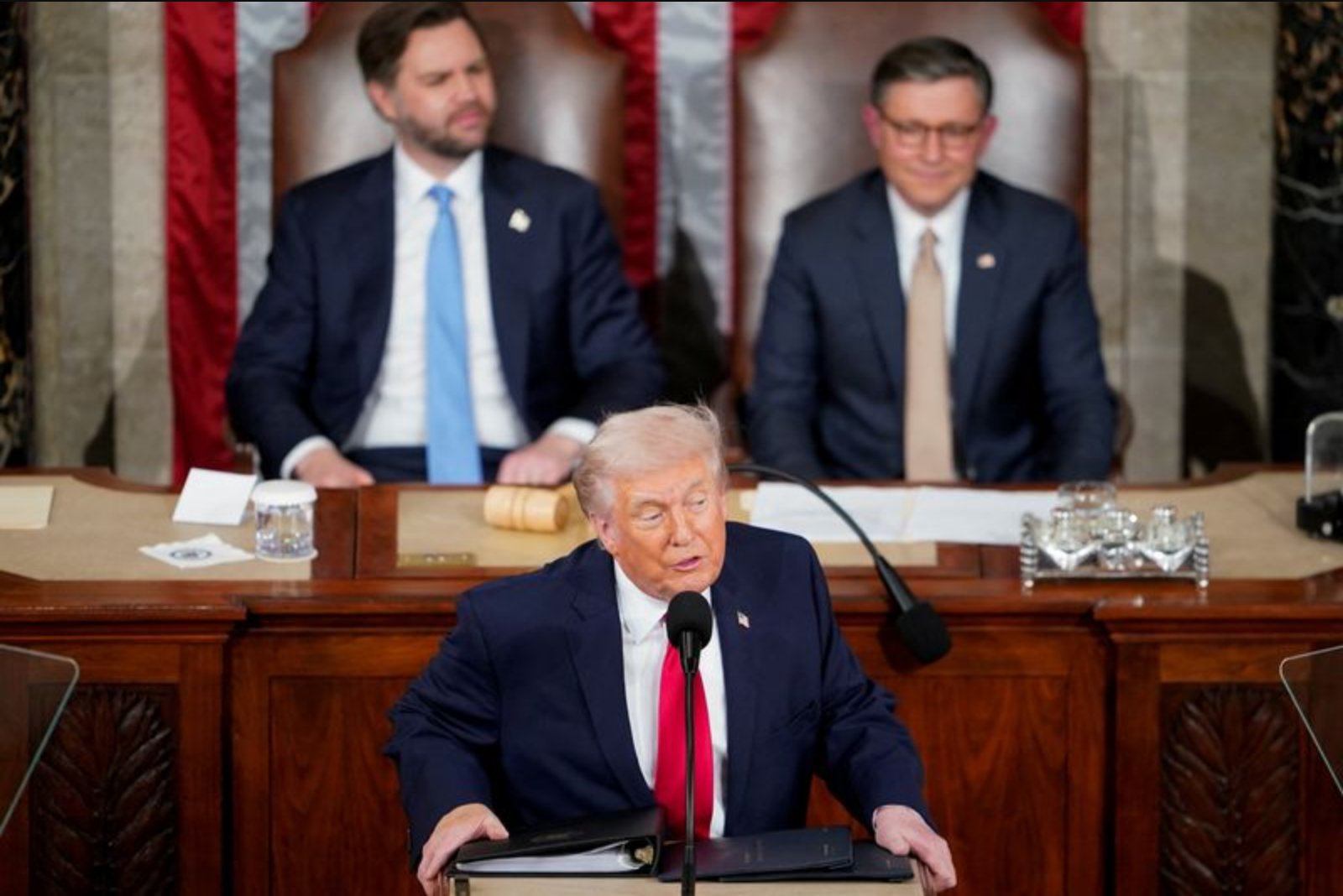
WASHINGTON - Officials with direct knowledge of U.S. intelligence reporting told Reuters that President Donald Trump’s assertion that Iran is "working on missiles that will soon reach" the United States is not borne out by available intelligence and appears to be an exaggeration. The comment was made by the president during his recent State of the Union address as part of an argument to the American public that the United States might need to consider strikes against Iran.

Three sources familiar with intelligence reporting said the claim is not supported by U.S. intelligence assessments. Two of those sources added that there have been no revisions to an unclassified 2025 assessment from the U.S. Defense Intelligence Agency that concluded Iran could require as much as a decade or more - until about 2035 - to translate its current satellite-launch technology into a militarily credible intercontinental ballistic missile.

The reporting from those familiar with the intelligence material raises questions about the factual basis for part of the president’s public case in favor of potential military action against the Islamic Republic. The sources characterized the president’s statement as exaggerated relative to what intelligence reporting indicates.

Requests for comment directed at the White House were declined. The absence of an official response leaves the public record without confirmation from the administration about whether the intelligence community’s unclassified assessment aligns with the president’s public remarks.


Context from the public record

During his address to Congress, the president argued that Tehran was advancing missile work that would allow its weapons to reach the United States. The three intelligence-connected sources who reviewed U.S. reporting counter that assertion, and two explicitly cited continued alignment with the unclassified 2025 Defense Intelligence Agency assessment on the timeline for a militarily viable ICBM derived from Iran’s space-launch vehicles.

The sources' accounts do not indicate any newly declassified intelligence or an updated consensus that contradicts the DIA projection of a path to ICBM capability extending toward 2035.


Reporting limitations: The description here reflects the assessments and remarks of the named sources and the existence of the unclassified 2025 DIA assessment as referenced by those sources. The White House declined to comment on the matter.

Risks

  • Uncertainty about the accuracy of high-profile public statements could complicate policymaking and public understanding - this is relevant for defense procurement planning and geopolitical risk assessments.
  • Potential divergence between presidential assertions and unclassified intelligence assessments may influence decision-making around possible military actions, affecting defense sector sentiment and government contracting timelines.
  • Lack of official comment from the White House increases ambiguity about whether intelligence community assessments or public rhetoric will guide policy choices, a risk for markets sensitive to geopolitical developments.

More from World

Green Party Triumphs in Greater Manchester By-Election, Humiliating Labour in Longstanding Stronghold Feb 26, 2026 Military Balance Between Pakistan and Taliban-Led Afghanistan Highlights Wide Disparity as Border Clashes Escalate Feb 26, 2026 Cross-Border Strikes Escalate as Pakistan and Taliban Trade Blows Across Frontier Feb 26, 2026 Geneva Talks Yield Signs of Progress but End Without Agreement; Diplomacy to Continue Feb 26, 2026 Philippines, Japan and U.S. Conduct Joint Naval Exercises in the South China Sea Feb 26, 2026