
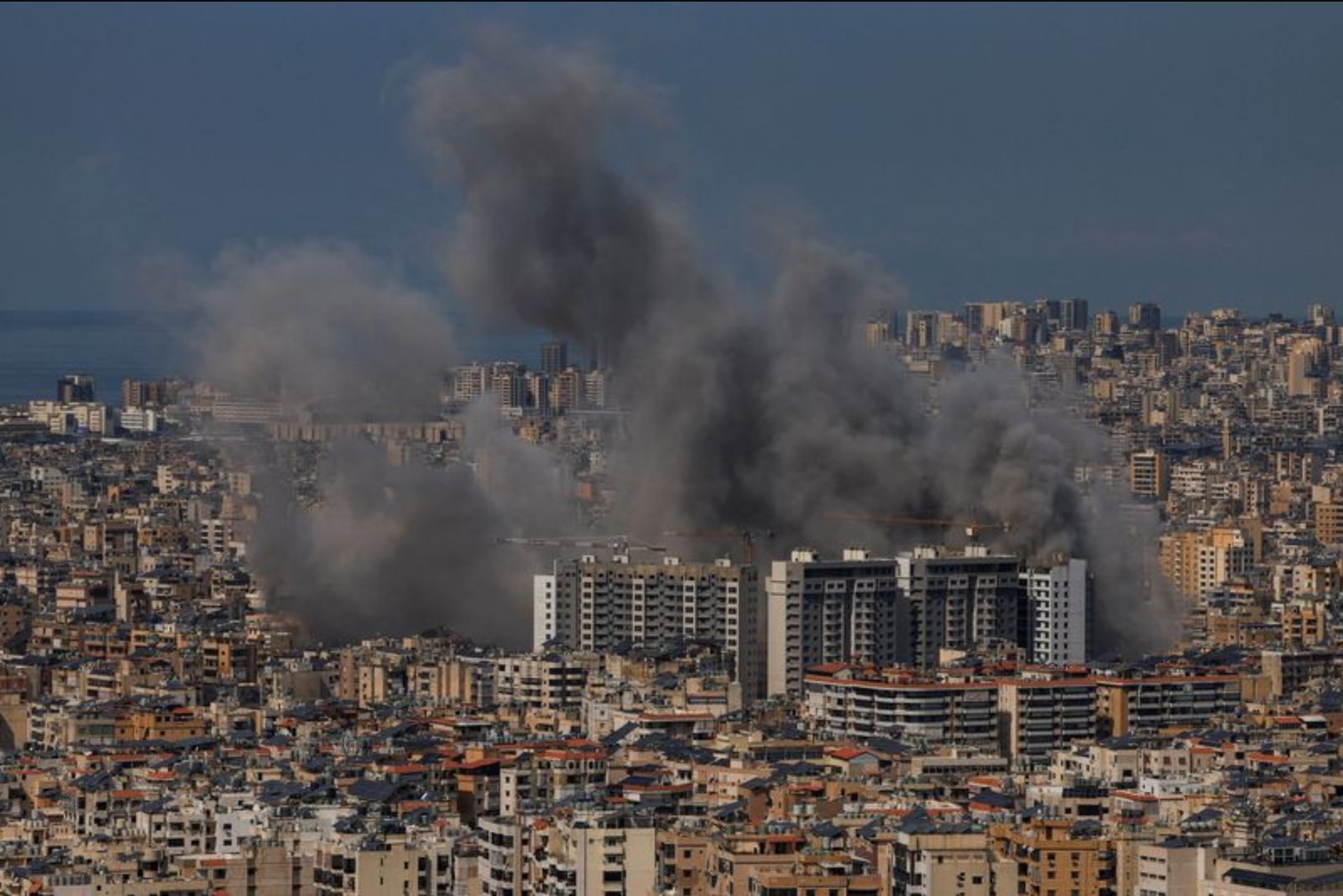
Preliminary results from an internal United Nations inquiry indicate that Israeli tank fire struck a U.N. position in southern Lebanon on March 6, wounding Ghanaian peacekeepers, a Western military source said. The early findings, led by UNIFIL’s Force Commander Reserve with support from explosive ordnance disposal specialists, point to three direct impacts at the al-Qawzah base from the main gun of a battle tank.
The probe concluded that the rounds were 120-mm M339 HE-MP-T shells. According to the source, the three strikes were not isolated single impacts but were fired within a five-minute window, signifying repeated targeting rather than a lone stray round.
"Israeli involvement in the attack against UNIFIL is undeniable, given that these munitions are manufactured by Israel Military Industries (IMI)," the source said.
UNIFIL, the U.N. peacekeeping mission stationed in southern Lebanon to monitor hostilities along the demarcation line with Israel, has been operating in an increasingly hazardous environment as clashes unfold between Israeli forces and Iran-backed Hezbollah fighters. The mission is scheduled to be halted at the end of 2026.
On the day of the incident UNIFIL said Ghanaian peacekeepers were wounded amid heavy firing and described the episode as "unacceptable," though initially it did not assign responsibility. A UNIFIL spokesperson, Kandice Ardiel, reiterated that the inquiry remains ongoing, saying: "That investigation is not yet complete. Once it is finalized, it will be shared with the parties, per usual practice." Ardiel added that all actors have an obligation to ensure the safety and security of peacekeepers and to avoid harm to civilians, and that deliberate attacks on peacekeepers would constitute a grave violation of international humanitarian law and of U.N. Security Council Resolution 1701.
According to the Ghanaian army, three Ghanaian soldiers were wounded in the strike. The source who discussed the probe highlighted that the coordinates and location of the al-Qawzah base were well known to all parties active in the area, underlining serious concerns about the safety of U.N. personnel operating there.
UNIFIL also reported that, on the same Sunday, another group of peacekeepers was likely fired upon on three separate occasions in southern Lebanon, "likely by non-state armed groups." No injuries were reported in that set of incidents.
The M339 HE-MP-T round identified by the inquiry is a multi-role munition that can be employed against personnel, helicopters, materiel, armour and structures. The probe’s finding that three rounds of this specific type struck the base is central to the U.N. inquiry’s preliminary assessment.
Requests for comment to multiple parties named in the probe went unanswered at the time the inquiry’s initial conclusions were discussed. Israel’s military did not immediately respond to a request for comment. IMI could not immediately be reached, and Elbit Systems, the Israeli defense contractor that owns IMI, also did not immediately reply to requests for comment. The Lebanese prime minister’s office likewise did not immediately respond to a request for comment.
The source who described the preliminary findings warned that the escalation is not isolated, saying it is part of a concerning dynamic that is severely testing UNIFIL’s capacity to fulfill its peacekeeping mandate. That assessment highlights the strain on the mission amid an environment where Israeli operations have expanded and the risk of harm to U.N. personnel has grown.
Israel maintains positions within Lebanon, occupying five posts, and despite a ceasefire last year has conducted frequent airstrikes in the country’s south, which it says target the Iran-backed militant group Hezbollah. Lebanon was drawn into the wider conflict when Hezbollah fired rockets at Israel, prompting a renewed Israeli offensive against the group.
U.N. Security Council Resolution 1701, invoked by U.N. officials in their responses to the incident, includes provisions that no armed forces should operate in southern Lebanon other than U.N. peacekeepers and the Lebanese armed forces. Israel has repeatedly accused Hezbollah of attempting to rearm and has criticized the Lebanese armed forces for not disarming the group.
Summary
Early results from a U.N. internal probe indicate that three tank-fired 120-mm M339 HE-MP-T rounds hit the al-Qawzah U.N. base in southern Lebanon on March 6, wounding three Ghanaian peacekeepers. The probe, supported by explosive ordnance disposal teams, attributes the strikes to the main gun of an Israeli battle tank and highlights escalating risks to UNIFIL as regional operations broaden.
Key points
- The U.N. inquiry’s preliminary assessment identifies three direct hits at the al-Qawzah base from 120-mm M339 rounds fired from a tank main gun.
- Three Ghanaian peacekeepers were wounded in the March 6 incident; UNIFIL called the event "unacceptable" and is continuing its investigation.
- The incident underscores heightened operational risks for UNIFIL and carries implications for defense and regional security concerns, potentially affecting defense contractors and entities engaged in regional logistics and operations.
Risks and uncertainties
- Ongoing hostilities and targeted fire near known U.N. positions threaten the safety of peacekeepers and could impede UNIFIL’s ability to operate effectively - affecting peacekeeping operations and associated logistical support.
- Uncertainty over attribution and the completion of the U.N. investigation leaves open questions about accountability and potential diplomatic or operational responses - relevant to defense suppliers and regional security planning.
- Repeated incidents of fire in southern Lebanon raise broader concerns about escalation between Israeli forces and non-state actors, creating uncertainty for military and civilian movements in the area.
Note: The investigation is ongoing and UNIFIL has stated it will share its final conclusions with the parties once the inquiry is complete.