
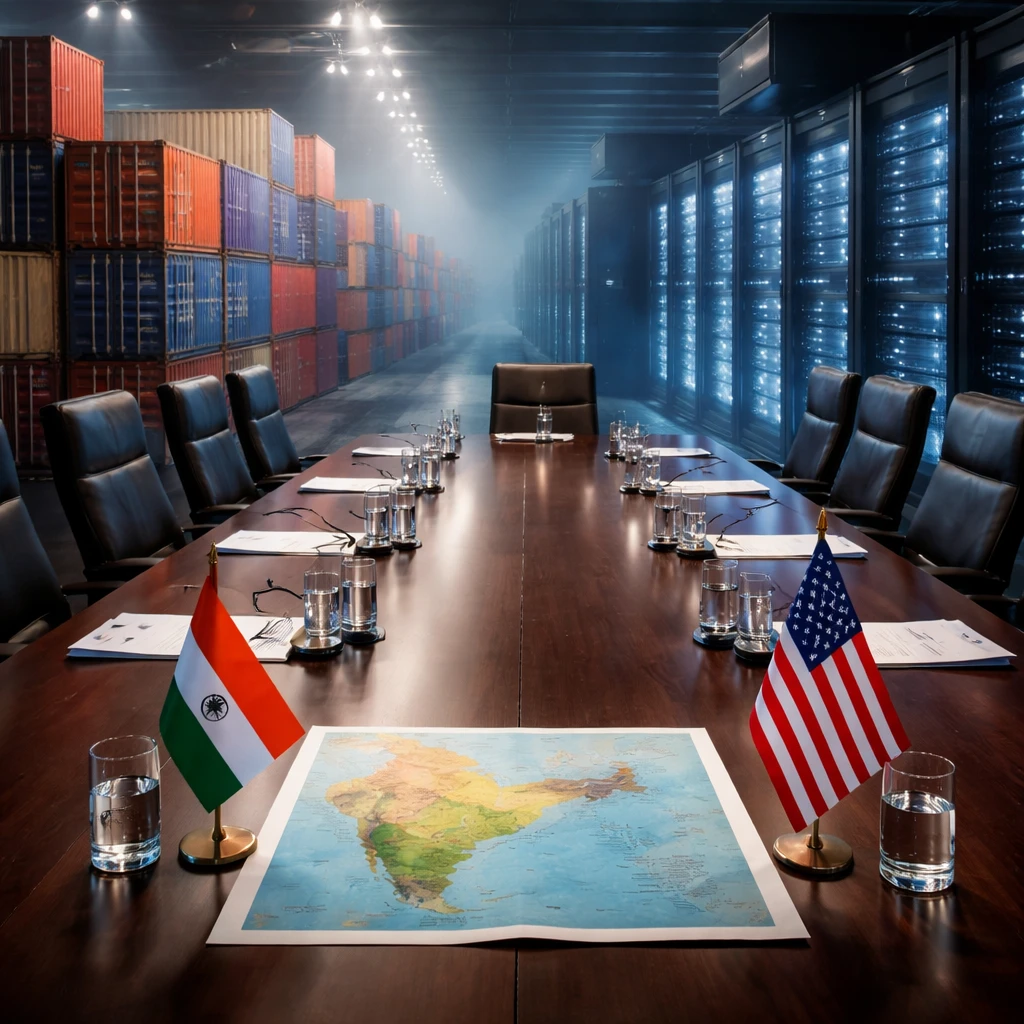
India’s bilateral trade relations with the United States have been thrown into political and policy uncertainty following a U.S. Supreme Court ruling that invalidated portions of President Trump’s recent tariff regime. The legal reversal has prompted vocal calls from the Indian opposition for Prime Minister Narendra Modi’s administration to pause and renegotiate the existing Indo-US trade framework.
Opposition figures, led by Congress party member Jairam Ramesh, contend that the Washington decision materially alters the basis on which the interim trade arrangement was agreed and therefore requires a complete restart of negotiations. The opposition argues that with the changed legal landscape in the United States, the previous reciprocal benefits India secured are effectively nullified.
Under the interim deal negotiated earlier, India obtained a cut in levies to 18% from 25% and the removal of punitive duties. Those concessions were a central part of the arrangements New Delhi had achieved with Washington. The U.S. Supreme Court ruling struck down those specific levies, and President Trump has shifted instead to a universal 10% global tariff, altering the competitive dynamics that had justified India’s specialized concessions.
Ajay Sahai, director general of the Federation of Indian Export Organisations, said the outcome has restored a so-called "level playing field," but he added that the tailored agreement India had negotiated is now practically obsolete. His assessment underscores the view among exporters and trade bodies that the intended reciprocal advantage India fought for has largely evaporated.
Facing this trade-policy turmoil, the central government is accentuating a strategic push toward technology and digital services. At a high-profile summit in New Delhi this month, Prime Minister Modi framed India’s future growth ambitions around becoming the world’s leading hub for "affordable AI." He emphasized India’s large software talent base and extensive data resources as competitive assets that could enable the country to offer AI solutions at substantially lower cost than Western providers.
The emphasis on AI represents a deliberate reorientation in policy messaging: if shifting U.S. tariffs complicate conventional goods trade, India is signaling an intention to double down on the digital economy. By advancing the idea of "AI for all" and promoting democratized AI services, New Delhi aims to attract international investment and to strengthen India’s position in global technology markets, even as previously negotiated trade deals may need to be renegotiated or restarted.
The government’s technology-focused strategy is presented as both a response to recent trade friction and a broader growth platform following what the administration describes as a challenging year. How these twin tracks - renewed trade negotiations and a pivot toward AI-led growth - will play out remains subject to political debate and further diplomatic engagement.