
World March 7, 2026

India Permits Iranian Warship to Dock in Kochi as U.S. Strikes Another Vessel Off Sri Lanka

Foreign Minister frames the move as a humanitarian response after Tehran's urgent request on the day U.S. forces struck an Iranian frigate

By Priya Menon
India Permits Iranian Warship to Dock in Kochi as U.S. Strikes Another Vessel Off Sri Lanka

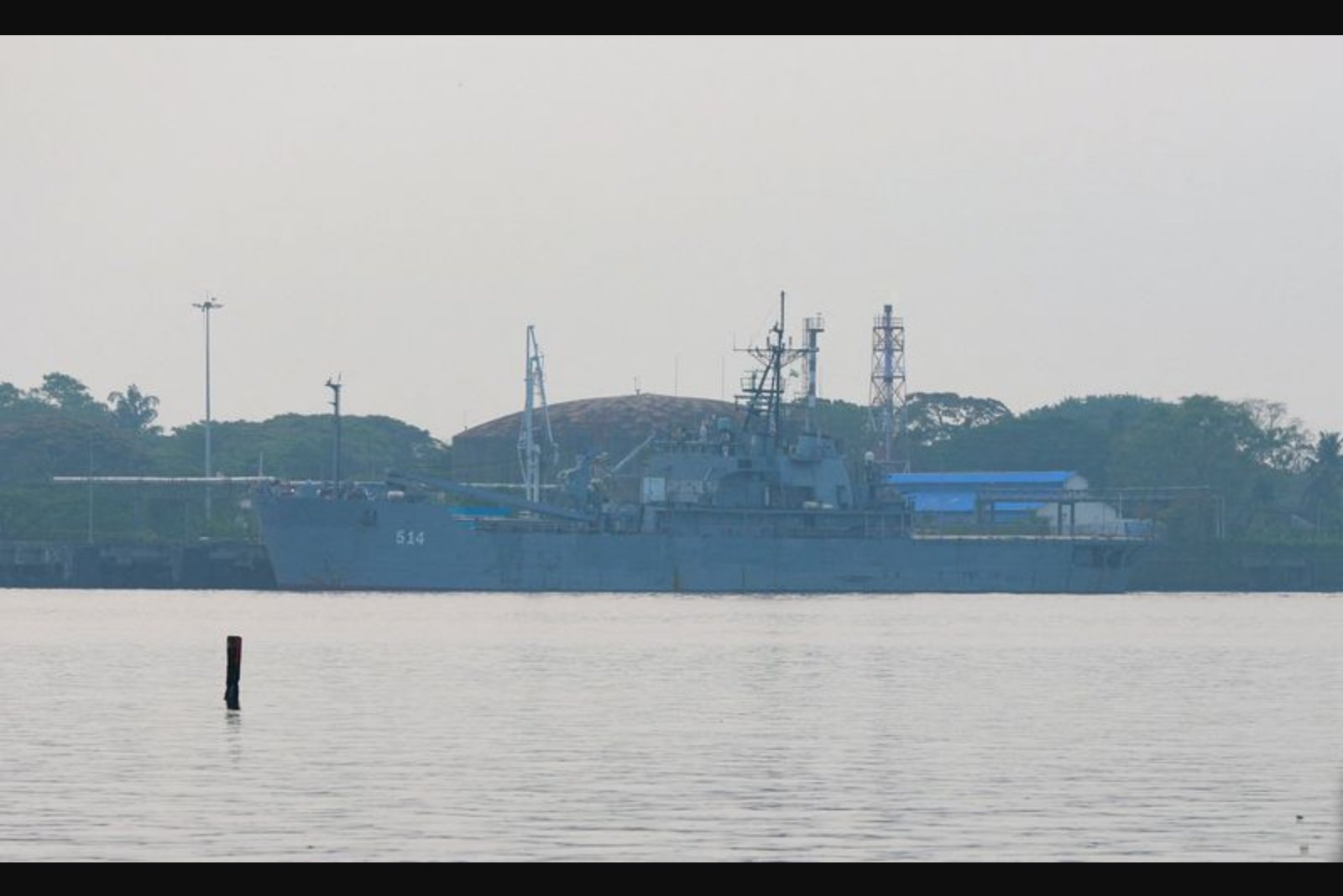
India allowed the Iranian amphibious vessel Lavan to berth at the southern port of Kochi following an urgent request from Tehran, a government source said, on the same day a U.S. submarine struck the Iranian frigate Dena off Sri Lanka. Foreign Minister Subrahmanyam Jaishankar described the decision as driven by humanitarian considerations rather than legal questions. The Lavan's 183 crew have been housed at naval facilities in Kochi while Sri Lanka escorts another Iranian ship and moves crew ashore.

Key Points

  • India allowed the Iranian amphibious vessel Lavan to dock at Kochi on an urgent request from Tehran, received on February 28, citing technical issues aboard the ship - sectors affected include defense and port operations.
  • Foreign Minister Subrahmanyam Jaishankar said the decision was driven by humanitarian concerns rather than legal considerations, noting the Lavan and two other Iranian ships had been due for a fleet review but were "caught on the wrong side of the events." - impacts diplomatic and defence relations.
  • The U.S. struck the Iranian frigate Dena in Sri Lanka's exclusive economic zone on the same day, with at least 87 fatalities; Sri Lanka is escorting the Iranian ship Booshehr to an eastern harbour and relocating most of its crew to a naval camp near Colombo - affecting maritime security and naval operations.

India accepted a request from Iran to allow the amphibious landing vessel Lavan to dock at the port of Kochi on Wednesday, officials said, describing the move as motivated by humanitarian considerations. The docking took place on the same day a U.S. submarine struck the Iranian navy frigate Dena off Sri Lanka, an Indian government source told Reuters.

Foreign Minister Subrahmanyam Jaishankar addressed the incident at the Raisina Dialogue annual conference, saying the Lavan and two accompanying Iranian ships "were coming in for a fleet review and then they got, in a way, caught on the wrong side of the events." He said India had treated the request "from the point of view of humanity, of other than whatever the legal issues were," and added, "I think we did the right thing."

The Lavan was described by the U.S. Naval Institute's online news site as an amphibious landing vessel. India received the formal docking request on February 28, the same day the Iran war began, according to an Indian government source who spoke on condition of anonymity.

That source said the request was urgent because the vessel had developed technical issues. India has provided accommodation for the Lavan's 183 crew members at naval facilities in Kochi, the source added.

Separately, at least 87 people were killed in the U.S. attack on the Dena, which occurred inside Sri Lanka's exclusive economic zone, 19 nautical miles off the country's coast and therefore outside Sri Lanka's maritime boundaries, the reporting said.

Officials and publicly available material on the naval drill indicated that the Dena was returning from a naval exercise organised by India. Sri Lankan authorities said they were escorting another Iranian naval vessel, the Booshehr, to a harbour on Sri Lanka's eastern coast and were in the process of moving most of that ship's crew to a navy camp near Colombo.

The Indian source's account emphasized the technical nature of the problem aboard the Lavan and characterized India's response as prioritising the immediate safety and welfare of the sailors. The Foreign Minister's remarks framed the decision firmly as humanitarian and as separate from any legal debate about port access or maritime jurisdiction.


Contextual notes: Information in this report is based on statements from an Indian government source and comments made by the Indian foreign minister at the Raisina Dialogue, together with public reporting on the classification of the Lavan and official Sri Lankan statements regarding the Booshehr and the Dena.

Risks

  • Escalation of naval hostilities and regional maritime insecurity following the U.S. strike on the Dena - this directly affects the defence sector and maritime operations.
  • Legal and jurisdictional uncertainty linked to actions inside exclusive economic zones, underscored by the Dena attack 19 nautical miles off Sri Lanka's coast - implications for international maritime law and port-state responsibilities.
  • Humanitarian and operational strains from accommodating naval crews and addressing technical failures at sea, as shown by the urgent request to dock the Lavan and the need to house 183 crew members - impacts port services and naval logistics.

More from World

How a Kathmandu Campaign Operation Lifted Rapper-Politician Balendra Shah to the Brink of National Power Mar 7, 2026 Refugees and Migrants Seek Shelter in Beirut Church as Israeli Strikes Displace Hundreds of Thousands Mar 7, 2026 One Week In: How the U.S.-Israeli Campaign Against Iran Is Expanding Risks for Washington and Markets Mar 7, 2026 Tornadoes Rip Through Rural Michigan, Killing Four and Damaging Hundreds of Structures Mar 6, 2026 Conflict in Iran Extends Into Second Week as U.S. President Demands 'Unconditional Surrender' Mar 6, 2026