
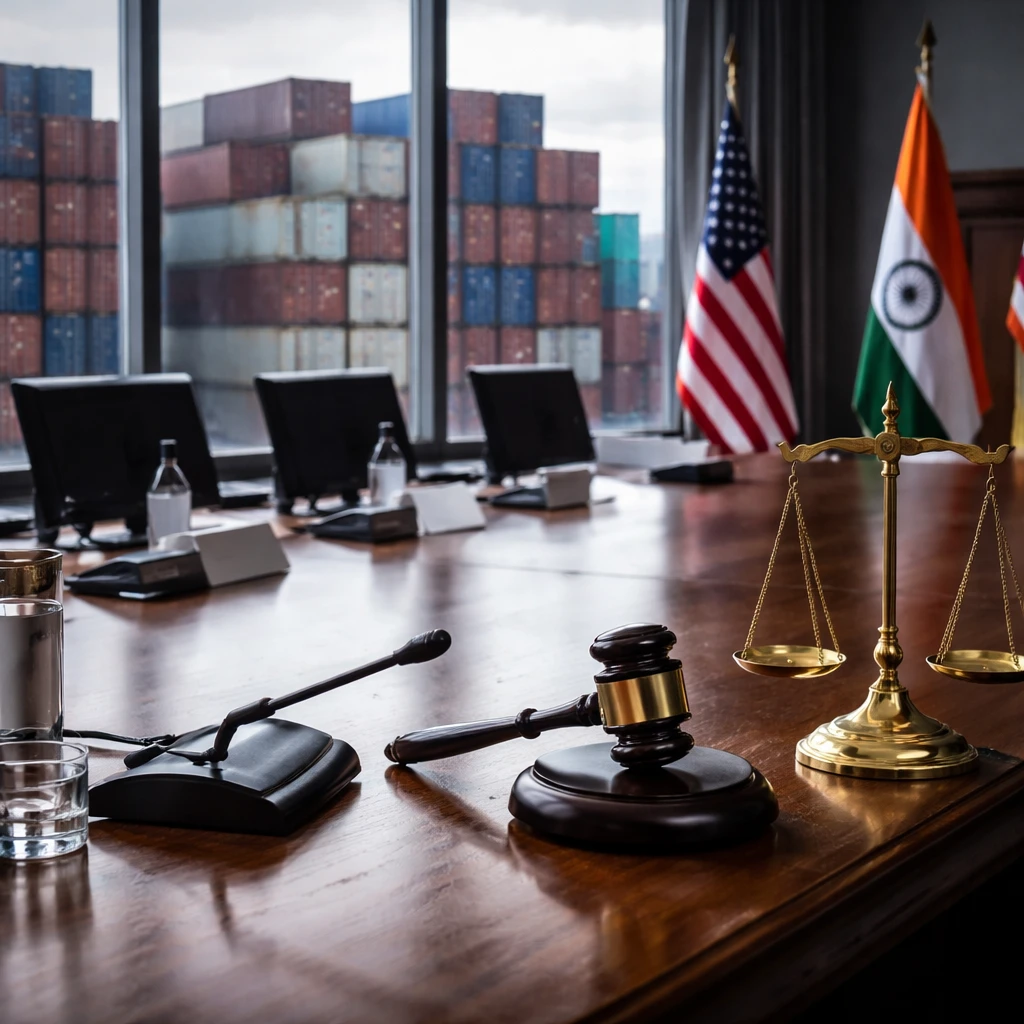
Indian trade authorities have called off a scheduled trip to Washington that was meant to finalize an interim trade agreement, citing the need to review what officials described as the "legal and commercial chaos" created by a recent U.S. Supreme Court ruling. The delegation had been due to depart on February 23, but the visit has been postponed while New Delhi studies the implications of the court's decision.
The Supreme Court ruling invalidated tariffs that had been imposed under the International Emergency Economic Powers Act (IEEPA) - the legal foundation used in negotiations between President Trump and Prime Minister Narendra Modi. With that legal basis removed, officials from both countries find themselves without the statutory framework that supported their earlier deal.
The situation shifted further over the weekend when President Trump invoked Section 122 of the Trade Act of 1974 to issue a global surcharge. That surcharge was initially set at 10% and then raised to 15% on Saturday. The rapid sequence of legal and policy moves has changed the commercial math of the interim arrangement.
Immediate commercial consequence
Indian exporters are confronting an anomalous outcome: a negotiated "preferential" tariff rate of 18% that was agreed just weeks earlier is now effectively higher than the 15% global baseline established by the U.S. The sudden emergence of a lower, across-the-board surcharge has rendered the original tariff concession commercially redundant in a short time.
Quid pro quo under review
Sources indicate India’s Ministry of Commerce is reassessing the reciprocal elements of the interim framework. Under the terms previously negotiated, India agreed to halt purchases of Russian oil and to commit to $500 billion in U.S. imports over five years. In return, the United States had promised to reduce punitive 25% duties to 18%.
Now that the Supreme Court has declared the 25% duties unlawful, New Delhi is questioning the value of its commitments. Negotiators are being asked to evaluate whether they should remain bound by concessions that were traded for a tariff reduction that may no longer be required under the new 15% global surcharge. Observers describe the situation as a strategic "reset" for the talks.
Sectors and market consequences
The postponement poses an immediate setback for industries that had expected clarity by the second quarter. Textiles, pharmaceuticals, and gems and jewelry are among the sectors cited as vulnerable to disrupted timelines and uncertain tariff floors. Market participants are also watching Indian American depositary receipts (ADRs) for signs of stress as traders absorb the news of the delay and the altered tariff environment.
The planned March visit by U.S. Trade Representative Jamieson Greer - intended to serve as the final signing ceremony - is now complicated by the need to re-establish a legal and commercial baseline. If the two countries cannot agree on a new minimum duty level, engineering and technology exports from India could face extended pricing volatility.
At present the 15% surcharge is framed as a temporary measure lasting 150 days. That temporary characterization, combined with the legal uncertainty, increases the likelihood of a return to case-by-case trade scrutiny, a dynamic some market participants describe as "trade by investigation."
For now, negotiators from both capitals must navigate a compressed window to determine whether the concessions that underpin the interim framework remain defensible in light of the court ruling and the new global tariff baseline.