
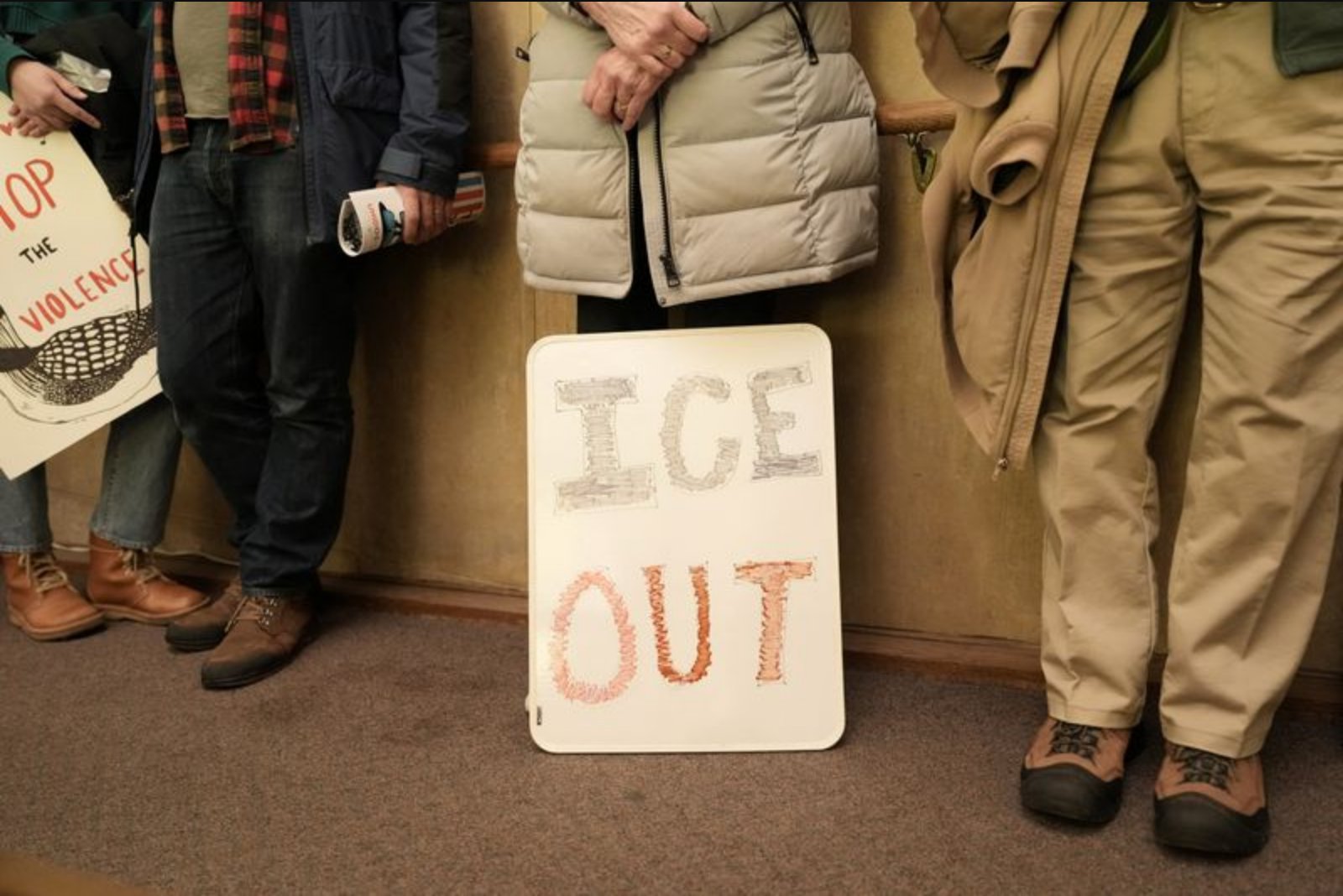
An immigration judge has ruled to terminate the asylum application filed by a young Ecuadorean boy and members of his family, a decision that legal counsel for the family says will be challenged in the courts.
The child, identified as Liam Conejo Ramos, was taken into custody with his father in late January during an enforcement action in Minneapolis. The pair were held in a detention facility in Texas for 10 days before being released and returning to their home in the Minneapolis area. A widely circulated photograph of Liam wearing a blue bunny hat as federal agents stood nearby outside his house drew national attention to the case.
U.S. Immigration Judge John Burns issued the order ending the asylum claims submitted by Liam and his relatives. Attorney Danielle Molliver, who represents the family, said the family intends to appeal the ruling. Molliver noted that the appeals process can extend for months, if not years. Molliver did not immediately reply to a request for comment.
"The announcement that an immigration judge has ended the asylum claims of the family of Liam Conejo Ramos is heartbreaking. We understand that this decision will be appealed and remain hopeful for a positive outcome," Columbia Heights Public Schools said on Wednesday. The district is located near Minneapolis, where Liam attends school.
"The detention in January of Liam and his father shed light on the harm caused by Operation Metro Surge, during which many children and families have been detained," the school district added. "While we respect the legal process, we cannot ignore the profound human impact - especially on children - of this federal action, which has disrupted the lives of so many of our community members who entered this country through legal means."
The detentions occurred as part of an initiative known as Operation Metro Surge, when the federal administration deployed roughly 3,000 armed immigration agents to Minnesota to carry out deportation operations. In separate incidents in January, immigration agents fatally shot two U.S. citizens in Minneapolis after those individuals had come outside to observe or protest the activities of the agents.
Following those events, the operation was discontinued last month. Local officials and community members have described the aftermath as a period marked by trauma and economic effects arising from the enforcement actions.
Legal representatives for the family have indicated they will pursue an appeal of the judge's decision. The timeline for such appeals can be protracted, leaving legal status and related uncertainties unresolved for an extended period. Community leaders and school officials have emphasized the broader consequences of the enforcement actions, particularly for children and families who were detained during the operation.
The case and the photograph of the young child have continued to draw attention to the human dimensions of immigration enforcement and to the procedural steps that follow when asylum claims are denied. For the family involved, the immediate next step is an appeal process that legal counsel describes as potentially lengthy, with outcomes that will be determined through further court proceedings.
Contacted leaders and counsel have framed the situation as both a legal matter and a community concern, underscoring the tension between enforcement actions and the social disruptions experienced by affected families.