
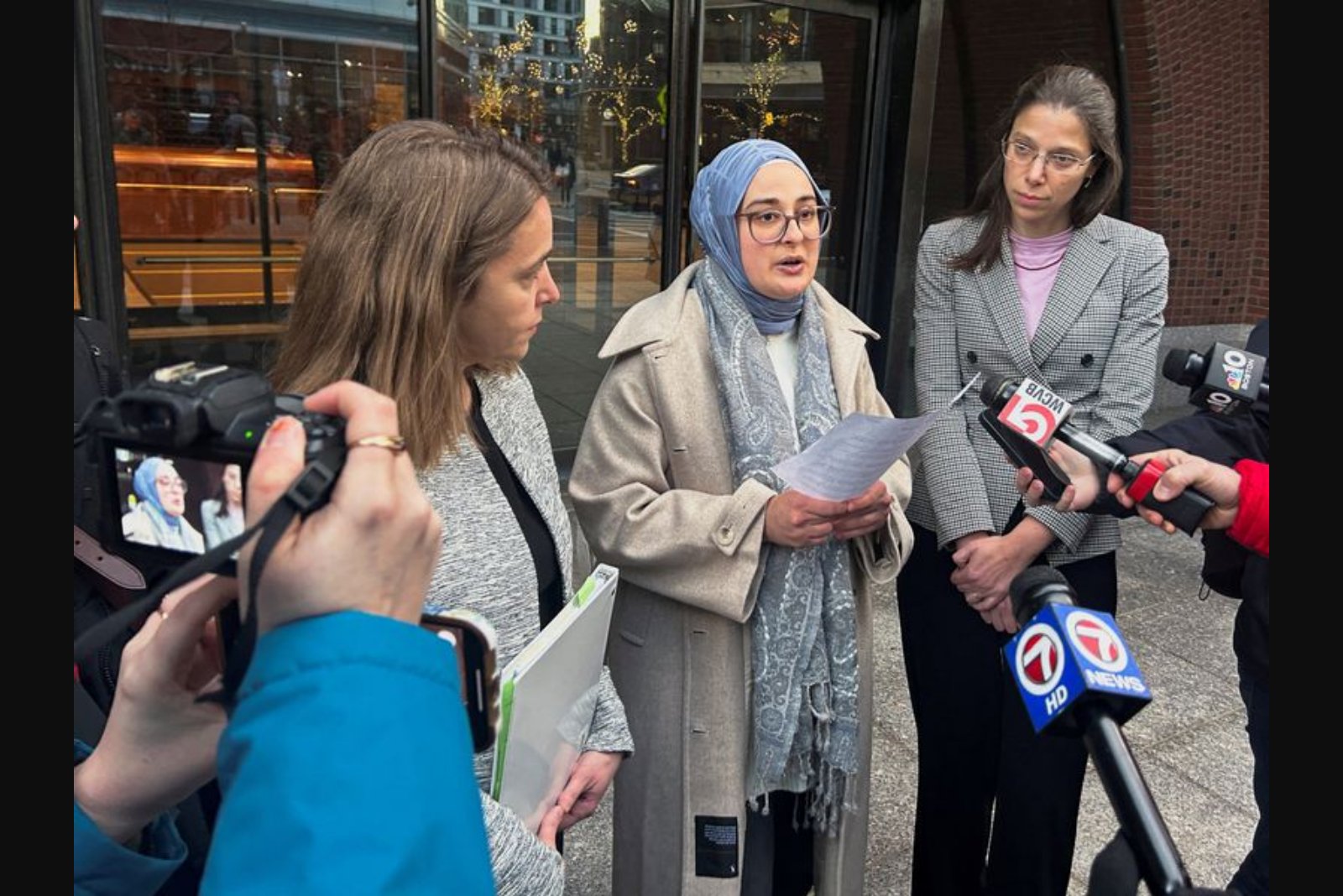
An immigration judge in Boston has terminated proceedings seeking to deport Rumeysa Ozturk, a Tufts University doctoral student who was arrested last year amid enforcement actions aimed at pro-Palestinian campus activists, according to filings by her legal team.
The decision, issued on January 29 and described by attorneys representing Ozturk, concluded that the U.S. Department of Homeland Security (DHS) did not meet its burden of proving she was removable. The termination of the case was detailed in a filing submitted to the New York-based 2nd U.S. Circuit Court of Appeals, which had been reviewing an earlier ruling that led to Ozturk's release from immigration custody in May.
Ozturk's immigration counsel, Mahsa Khanbabai, identified Immigration Judge Roopal Patel in Boston as the official who issued the decision. The case began after Ozturk, a Turkish national and doctoral researcher in child development, was arrested on a street in Massachusetts in March following a decision by the U.S. State Department to revoke her student visa. Authorities have said the only reason given for the revocation was an editorial Ozturk co-authored in Tufts University's student newspaper criticizing the university's response to Israel's war in Gaza.
The arrest and subsequent detention drew widespread attention. A video of Ozturk's arrest in the Boston suburb of Somerville circulated widely, prompting criticism from civil rights organizations. She was held for 45 days at a detention facility in Louisiana before a federal judge in Vermont ordered her immediate release, finding that she had raised a substantial claim that her detention amounted to unlawful retaliation infringing her free speech rights.
"Today, I breathe a sigh of relief knowing that despite the justice system's flaws, my case may give hope to those who have also been wronged by the U.S. government," Ozturk said in a statement.
The immigration judge's written decision is not publicly available at this time. The Department of Homeland Security, which oversees U.S. Immigration and Customs Enforcement, did not provide comment in response to requests. The administration retains the option to challenge the January 29 ruling by appealing to the Board of Immigration Appeals, a component of the U.S. Department of Justice.
Ozturk, who has been described in court filings as a former Fulbright scholar, was initially taken into custody after her visa was revoked. Her lawyers at the American Civil Liberties Union furnished the court filing that outlined the recent termination of removal proceedings. The ACLU and Ozturk's defense pointed to constitutional concerns about retaliation and free speech during the litigation that led to her release from custody in May.
As the matter stands, the termination of proceedings marks a significant procedural victory for Ozturk, though the possibility of administrative appeal means the case may not be finally resolved. For now, the January 29 ruling halts the removal process that began with the March arrest and the State Department's visa revocation tied to an editorial she co-authored.