
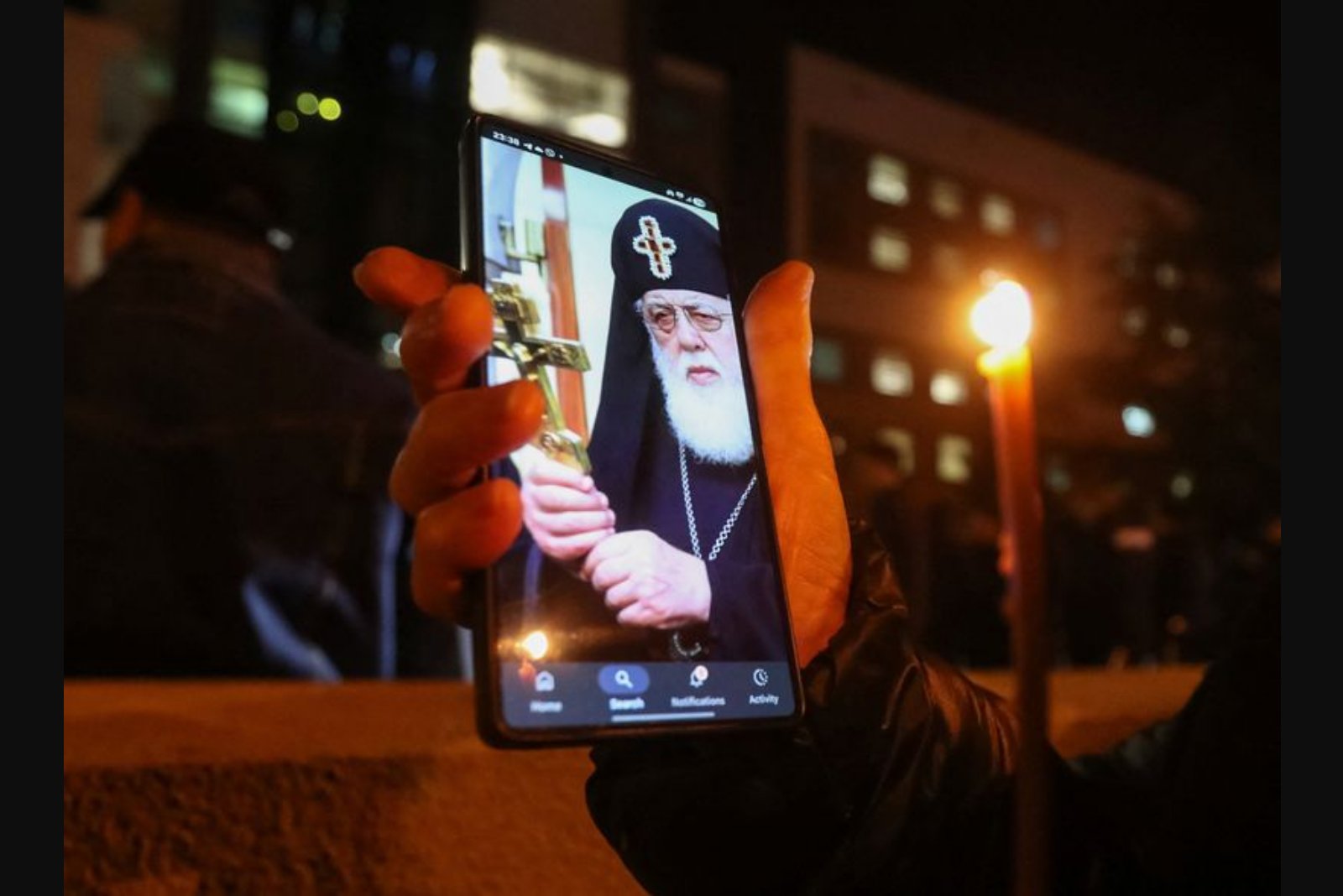
Ilia II, the Catholicos-Patriarch who presided over the Georgian Orthodox Church for just under half a century and shepherded it from a suppressed Soviet-era institution to the most powerful non-state body in Georgia, has died at the age of 93. Senior cleric Metropolitan Shio said the patriarch was hospitalized after suffering massive internal bleeding the previous evening and later passed away.
The Holy Synod, a council composed of senior bishops, has a 40-day window to elect a new leader to head the ancient church.
Early life and ordination
Born Irakli Ghudushauri-Shiolashvili on January 4, 1933, Ilia II came into the world in Russia's North Caucasus region. His family traced its origins to Georgia's Kazbegi district, located on the far side of the Greater Caucasus mountain chain that separates Russia from Georgia.
He pursued theological studies at Moscow's Theological Academy. That institution had been temporarily closed by a Soviet ban on the teaching of religious doctrines but was later reopened in the waning days of World War Two. Upon completing his studies he was ordained under the name Ilia and returned to Georgia, where he advanced through the church hierarchy.
He was elected Catholicos-Patriarch of Georgia in 1977.
Rebuilding a battered institution
Ilia II inherited a church that had been severely damaged by anti-religious campaigns under Soviet rule. Those campaigns included deadly purges of clergy and desecrations of holy sites, leaving the institution with only a small number of clergy to serve a flock numbering in the millions.
Following the collapse of the Soviet Union in 1991, the Georgian Orthodox Church moved to fill the ideological vacuum left by the retreat of state communism. Many Georgians turned to the church as a repository of the country’s traditions while they sought a renewed national identity.
In 2002, a formal agreement with Georgia's first post-Soviet president, Eduard Shevardnadze, cemented the church’s special position in Georgian social and political life. The accord granted the church privileges in education and cultural heritage preservation and provided tax exemptions.
Religion and public life in Georgia
Georgia adopted Christianity as its state religion in the early fourth century, and religious identity remains strong in the country today. A 2017 study by the Pew Research Center found that 89% of Georgians identify as Orthodox Christians.
The church has consistently been rated the most respected institution in Georgia. Ilia II himself was named the country’s most trusted man in a 2008 poll. At the same time, weekly church attendance in Georgia has remained at the relatively low levels seen in many European countries.
Through his long tenure, Ilia II and the church frequently found themselves at the center of Georgia’s core tension: balancing deeply held conservative and traditional values with aspirations for integration with Western political and social norms.
Social positions and controversies
On a number of social issues, Ilia II was a vocal conservative. He opposed abortion and described homosexuality as a "disease," at times likening LGBT people to drug addicts. In 2013 he called on the government to ban a gay rights rally. When the march proceeded, several thousand counter-protesters led by Orthodox priests attacked participants, an incident that resulted in 17 injuries, according to rights group Amnesty International.
Critics have also argued that under Ilia II’s leadership the Georgian Orthodox Church came under the sway of the Russian Orthodox Church. That allegation carries particular sensitivity in Georgia, which fought and lost a short war against Russia in 2008, and where Moscow’s influence in domestic affairs is a contentious political issue.
Stance on the war in Ukraine and later interventions
When Russia’s full-scale invasion of Ukraine began in 2022, Ilia II expressed "deep heartache" over the conflict and later called for a ceasefire, aligning with appeals from other global spiritual leaders, including Pope Francis.
In 2023 he engaged directly in a politicized church controversy tied to the Russia-Ukraine conflict. As Ukrainian authorities prepared a ban on a Russian-aligned wing of the Orthodox Church on grounds it was collaborating with Moscow, Ilia II intervened, urging the spiritual head of Eastern Orthodox Christians to "reduce tensions" and advocating for "mutual rapprochement."
Observers noted this posture came as Georgia's ruling Georgian Dream party was deepening economic ties with Moscow and sharply U-turning from its Western path.
In his 2023 Easter epistle, speaking a year after the Ukraine war began, Ilia II reflected on the global situation: "We live in difficult times, explosive times, when the threat of a nuclear catastrophe is real," he wrote. "Therefore, we reflect especially on peace, which is a priceless gift of God."
Transition and institutional implications
Ilia II’s death marks the end of a near five-decade era during which the Georgian Orthodox Church expanded its reach within Georgian society and secured formal privileges that tied it closely to the state. The mechanism for choosing his successor rests with the Holy Synod, which has 40 days to name the next Catholicos-Patriarch.
How the church's leadership transition will affect the institution’s role in Georgia’s political, cultural and social life remains to be determined by the bishops charged with the election.
Summary: Ilia II, who guided the Georgian Orthodox Church from a weakened Soviet-era body into the country's most influential non-state institution and served as Catholicos-Patriarch since 1977, has died at 93 after hospitalisation for massive internal bleeding. The Holy Synod has 40 days to elect his successor. His long tenure was marked by close ties with the state formalized in a 2002 agreement, conservative social stances, and contested relations with the Russian Orthodox Church amid the Russia-Ukraine war.