
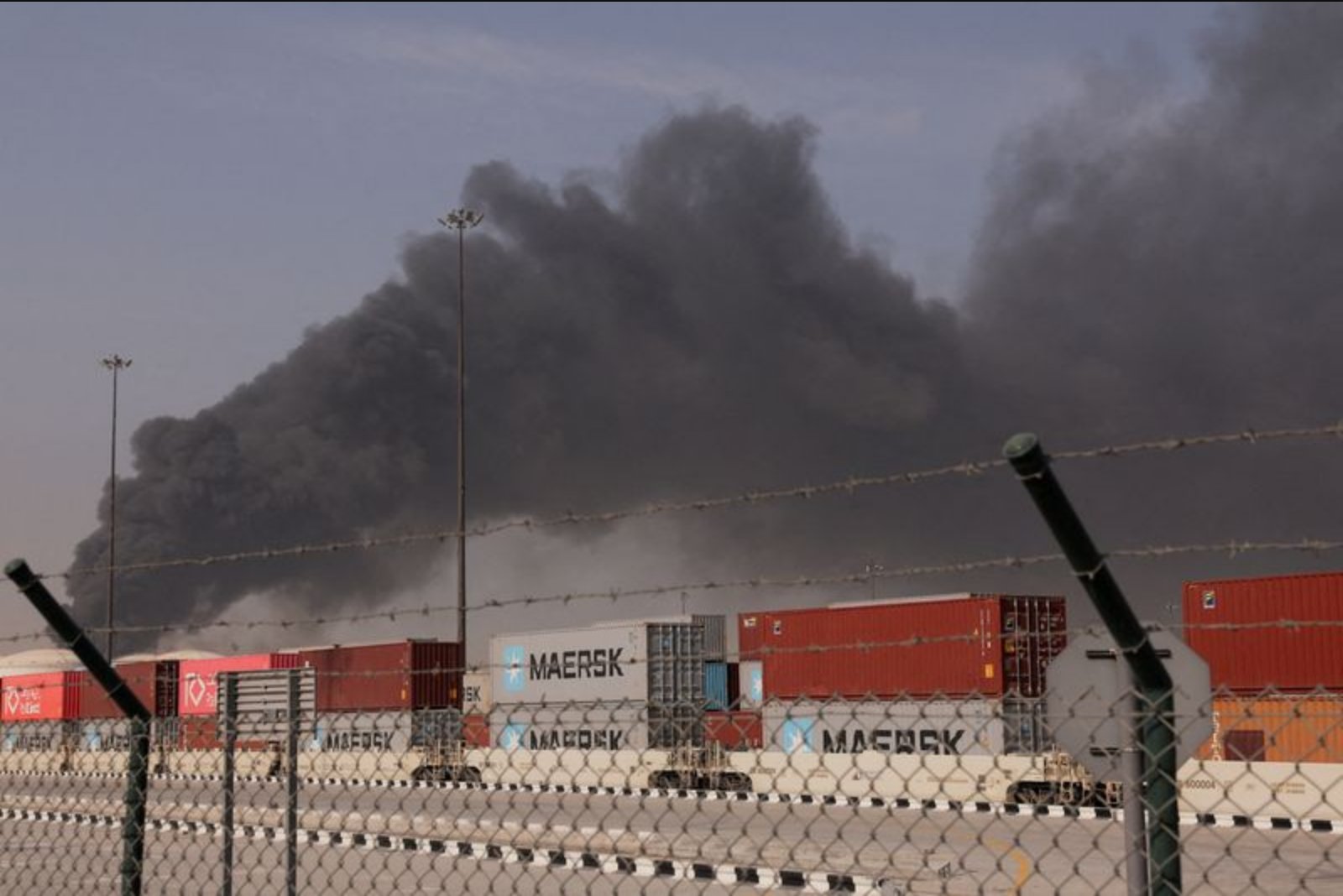
On March 6, as the U.S.-Israeli war on Iran entered its seventh day on Friday, aid organisations warned that disruptions to key transport corridors are choking humanitarian supply chains and slowing delivery of life-saving items to some of the world’s most severe crises.
Relief agencies say the conflict has caused airspace closures and interrupted shipping through the Strait of Hormuz, constraining routes used to move emergency food, medical kits and shelter materials. Ten aid officials spoke to Reuters and described growing delays and cost pressures that threaten the tempo of relief operations to Gaza, Sudan and other regions confronting hunger and instability.
Supply chains and regional hubs under strain
Goods staged for rapid deployment from regional logistics hubs are being held up. Tents, tarpaulins and lamps destined for Gaza and the West Bank, which are under Israeli occupation, have been caught in the supply chain, the International Organization for Migration said. The flow of these items has slowed as maritime and air routes become less reliable and transit options narrow.
Dubai’s Humanitarian Hub, a major staging area for regional dispatches, has encountered operational friction as air and sea corridors tighten. Shipping firms are imposing emergency surcharges at roughly $3,000 per container, the IOM reported, pushing up the cost of moving relief commodities.
The International Federation of Red Cross and Red Crescent Societies (IFRC) said trauma kits earmarked for the Iranian Red Crescent are immobilised in a Dubai emergency stockpile valued at 10 million Swiss francs - about $13 million. Cecile Terraz, a director at the IFRC, said the organisation cannot move stock through Jebel Ali port - the region’s largest container terminal - after it was set on fire by debris from an intercepted missile. From Jebel Ali, cargo normally transfers to aircraft or onward shipping through the Strait of Hormuz.
The World Health Organization reported its Dubai hub operations are frozen, according to regional director Hanan Balkhy. She said the closure of those operations is obstructing 50 emergency requests from 25 countries and impeding interventions such as polio vaccination campaigns.
Ripple effects and regional chokepoints
The disruption extends beyond the immediate theatre of conflict. The United Nations refugee agency, UNHCR, warned that famine-struck Sudan is particularly vulnerable because of additional restrictions placed since February 28 on passage through the Suez Canal and the Bab el-Mandeb Strait at the southern entrance to the Red Sea. Some cargoes are being rerouted around the Cape of Good Hope, an alternative that can add up to three weeks to transit times.
Rising costs for fuel, transport and insurance are compounding the crisis. Terraz said the IFRC may be forced to reduce deliveries to the Iranian Red Crescent if expenses and access stay constrained. Emma Maspero, senior manager in Copenhagen in the supply division at UNICEF, said she hoped flights carrying perishable humanitarian goods such as vaccines could be prioritised amid the airspace restrictions.
Operational and budgetary consequences
Aid groups reported that higher operational costs are squeezing budgets that already face major donor cuts. Organisations that pre-position supplies for quick response are finding movement increasingly difficult and expensive. The cumulative effect is slower assistance to people in urgent need; as Jean-Martin Bauer, Director of Food Security at the World Food Programme, put it: "People in dire need of assistance will have to wait longer for food."
The constraints on ports, airports and maritime routes, together with the imposition of emergency surcharges, threaten to reduce the volume and timeliness of humanitarian aid precisely where need is acute. Aid agencies say they are assessing which shipments can proceed, which must be prioritised and which deliveries may need to be scaled back if the logistical environment does not stabilise.
($1 = 0.7799 Swiss francs)