
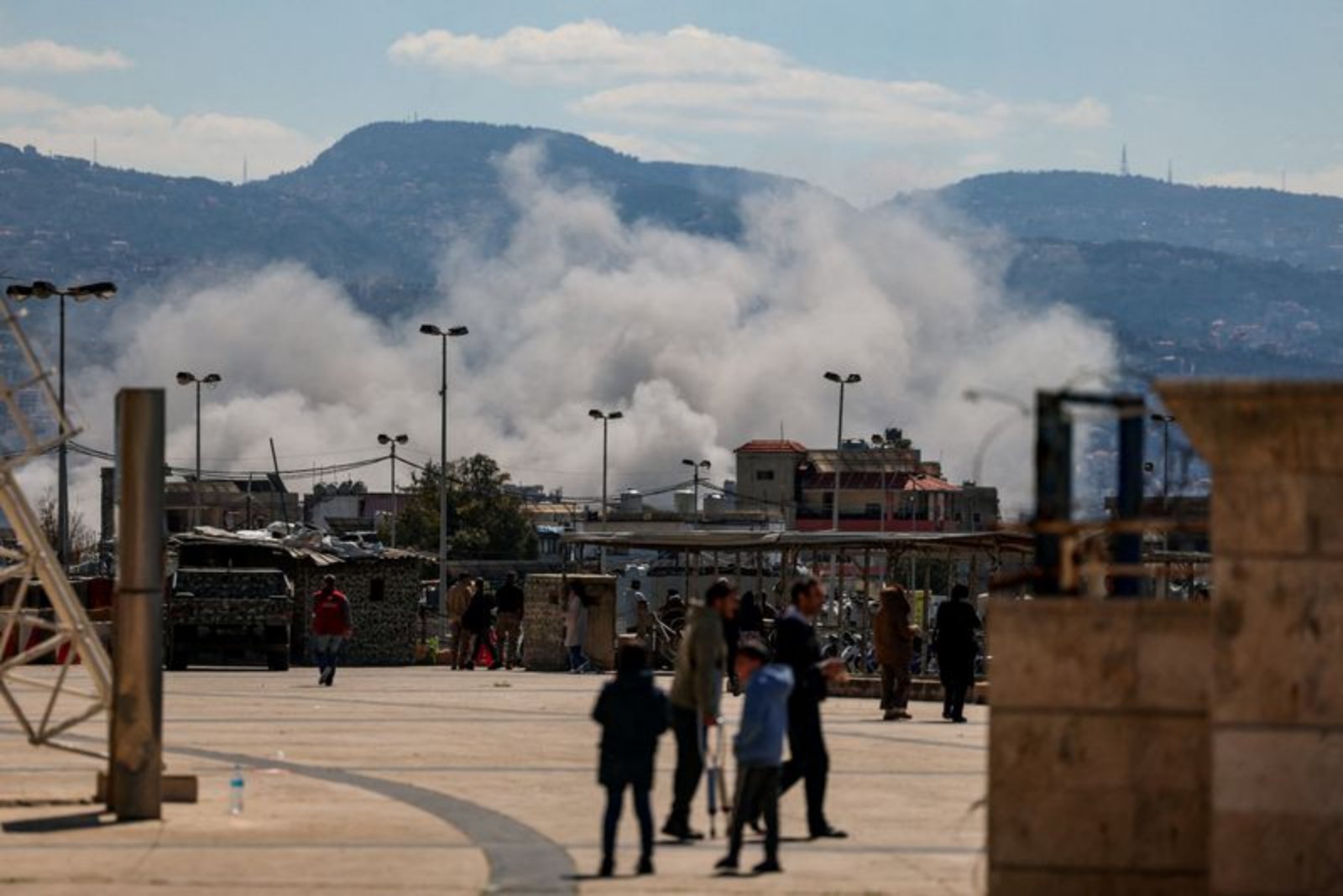
Human Rights Watch said in a report on Monday that the Israeli military illegally used white phosphorus munitions over homes in the southern Lebanese town of Yohmor on March 3, presenting significant risks to civilians.
Ramzi Kaiss, Lebanon researcher at Human Rights Watch, described the weapon's effects, saying the incendiary nature of white phosphorus can cause death or severe injuries that lead to lifelong suffering.
The rights group said it had verified eight images showing white phosphorus used over a residential section of Yohmor and footage of civil defence workers responding to fires in the area. The group's findings, it said, indicated the device had been deployed in a way that endangered civilians. The group's findings could not be independently verified.
In response to queries, the Israeli military said it was unaware and could not confirm the use of shells that contain white phosphorus in Lebanon. The military added that it had not reviewed the same videos cited by Human Rights Watch and therefore could not comment on the specific claims. Lebanese authorities have not commented on the report.
On March 3 early in the day, the Israeli military had issued an order telling residents of Yohmor and 50 other villages and towns to evacuate. Separately, farmers in Lebanon have been testing their soil to determine whether they can resume planting in the aftermath of Israel's reported use of white phosphorus in 2023.
Data cited in the report indicates that as of July 2024, the Lebanese National Council for Scientific Research said there had been 175 Israeli attacks on south Lebanon using white phosphorus since October 2023. Many of those incidents sparked fires that affected over 600 hectares (1,480 acres) of farmland.
White phosphorus munitions are used on battlefields for a range of military purposes - to create smoke screens, provide illumination, mark targets or burn bunkers and buildings. However, Human Rights Watch stated that under international humanitarian law the use of airburst white phosphorus over populated areas is unlawful. White phosphorus is treated as an incendiary weapon under Protocol III of the Convention on the Prohibition of Use of Certain Conventional Weapons. That protocol prohibits using incendiary weapons against military objectives located among civilians, although Israel has not signed the protocol and is not bound by it.
Human Rights Watch also recalled earlier accusations that Israel used white phosphorus during operations in 2023; at that time the Israeli military denied the charge. The current report comes amid an escalation of strikes in Lebanon that, according to the report, have resulted in nearly 400 deaths and forced hundreds of thousands of people from their homes as Israeli strikes have pounded the country for over a week.
The Human Rights Watch report and the surrounding claims highlight immediate humanitarian concerns for civilians in affected areas, as well as potential longer-term impacts on agricultural land where fires were ignited.
Key points
- Human Rights Watch alleges white phosphorus was used over residential areas in Yohmor on March 3 and verified eight images and civil defence footage supporting the claim.
- The Israeli military said it was unaware and could not confirm use of shells containing white phosphorus and had not reviewed the same videos cited by the rights group.
- As of July 2024, the Lebanese National Council for Scientific Research reported 175 such attacks in south Lebanon since October 2023, many of which sparked fires affecting over 600 hectares (1,480 acres) of farmland - relevant to agriculture and rural economic sectors.
Risks and uncertainties
- Verification gap - the rights group presented imagery it said it had verified, but the findings could not be independently confirmed, leaving uncertainty over attribution and scale of use - this affects legal, humanitarian and defense assessments.
- Humanitarian impact - the reported use of incendiary munitions over populated areas poses direct risks to civilian lives, shelter and displacement, with implications for relief organisations and local economies.
- Agricultural damage - fires reportedly ignited by white phosphorus attacks have affected hundreds of hectares of farmland, creating economic uncertainty for farming communities and related supply chains.