
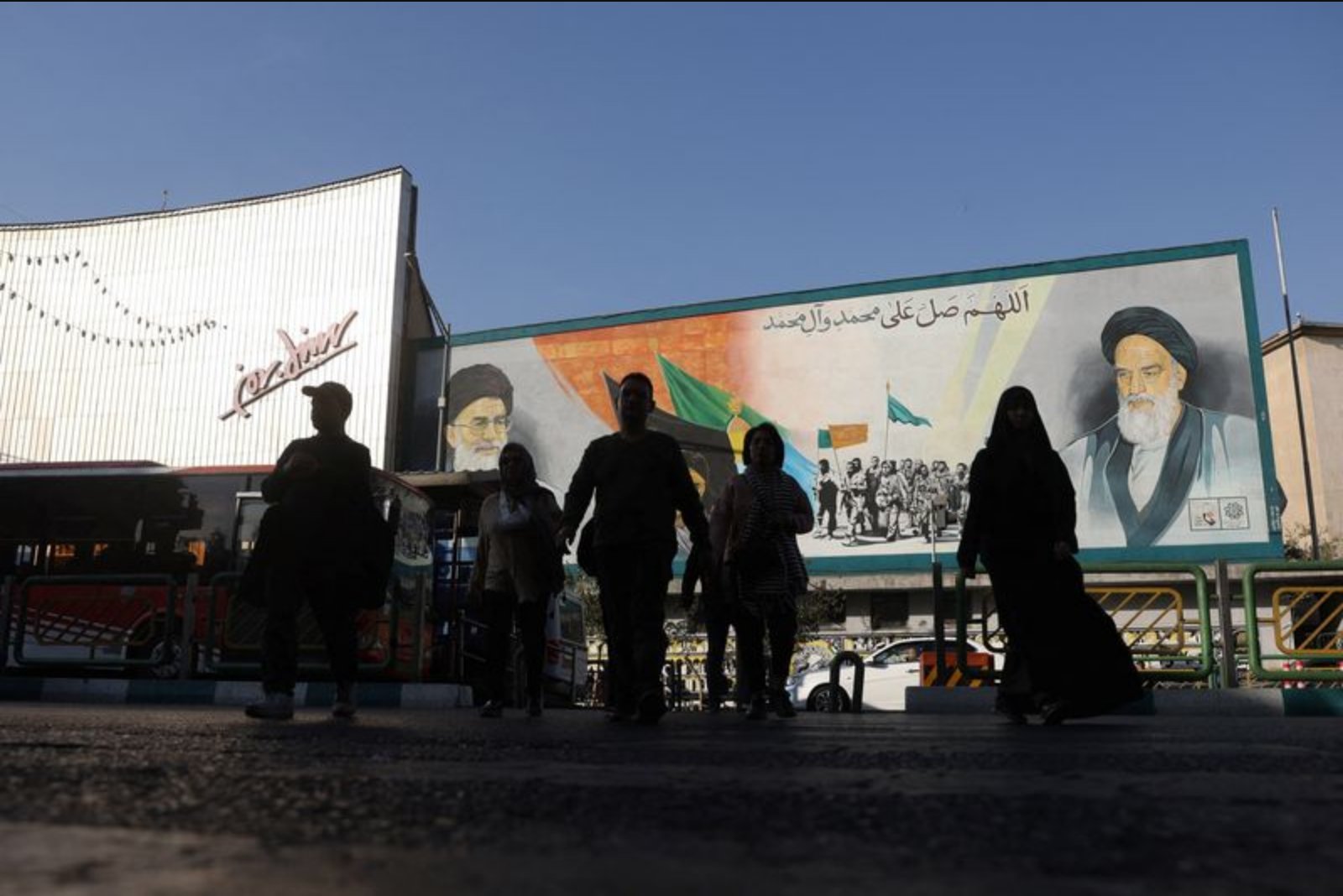
Iran’s governance model vests final authority in a single clerical office known as the supreme leader, a principle rooted in the doctrine of vilayat-e faqih, or the guardianship of the Islamic jurist. That framework holds that, until the return of the Shi’ite 12th Imam, practical authority on earth should be exercised by an eminent cleric. Under this arrangement the supreme leader has the ultimate decision-making power across state affairs.
On Saturday Ayatollah Ali Khamenei was reported killed in strikes attributed to the U.S. and Israel. If those reports are confirmed, they would represent an unprecedented test of the Islamic Republic’s system, which has not previously faced a sudden vacancy at its apex. The immediacy of the problem is compounded by uncertainty over how many of Khamenei’s closest advisers and senior figures in the state survived the strikes.
Who is eligible to succeed the supreme leader?
By constitutional design the supreme leader must be a cleric. The theory of vilayat-e faqih underpins the requirement that a religious jurist hold the office. The office has been occupied by two figures who shaped the revolution and the post-revolutionary state: the founder, Ayatollah Ruhollah Khomeini, and his successor, Ayatollah Ali Khamenei. Both men exercised final authority over state matters.
Khamenei, 86, was never publicly recorded as having named a successor, and it remains unclear who might assume the role if his death is confirmed. Names that have appeared in public discussions in the past include his son, Mojtaba Khamenei, and Hassan Khomeini, the grandson of Ayatollah Khomeini. Other older senior clerics have also been mentioned at times. But no remaining figure is described as enjoying the same standing or breadth of influence as Khamenei, and any new leader would likely encounter powerful interest groups that could limit their autonomy.
How would a new supreme leader be chosen?
The Assembly of Experts, a body composed of senior ayatollahs elected for eight-year terms, holds the constitutional authority to appoint the supreme leader. The constitution also gives the Assembly the power to question and potentially dismiss a sitting leader, though it has never exercised that option.
In practice the selection process has tended to be driven by the most senior figures within the Islamic Republic, with the Assembly subsequently affirming their choice. But the selection mechanism could be complicated if senior political and military actors who typically influence the decision are themselves casualties or otherwise incapacitated. With some top Revolutionary Guards leaders reported as dead, it is far from clear which individuals or institutions would emerge to dominate the decision-making process.
What are the key unelected institutions that sustain clerical control?
Several clerical-led institutions extend the reach of the theocratic elite across governance. The Guardian Council is a particularly powerful body; half of its members are appointed directly by the supreme leader and half by the head of the judiciary. The council can veto parliamentary legislation and disqualify candidates from running for elected office - mechanisms that have been used in the past to block critics of the supreme leader.
The judiciary itself is overseen by a chief judge appointed by the supreme leader. The current judiciary chief named in discussions is Gholamhossein Mohseni Ejei, who has been targeted by Western sanctions for his role in a violent crackdown on protesters in 2009 when he served as intelligence minister. Other influential clerics often cited in the political landscape include former judiciary chief Sadiq Larijani, Assembly of Experts member Mohsen Araki, Tehran Friday prayer leader Ahmad Khatami, and the brother of a senior adviser, Ali Larijani.
What is the role of the Islamic Revolutionary Guards Corps?
The Islamic Revolutionary Guards Corps, or IRGC, answers directly to the supreme leader rather than to the Defence Ministry within the elected government. Formed soon after the 1979 revolution, the Guards’ remit of defending the Islamic system expanded significantly during the 1980-88 war with Iraq. Over time the IRGC has become the most capable and best-equipped segment of Iran’s armed forces.
The IRGC has built influence not only militarily but also politically and economically. An elite unit within the Guards, the Quds Force, has managed Iran’s regional policy of supporting allied Shi’ite groups across the Middle East, with prominent roles in Lebanon and Iraq. The Quds Force suffered a significant blow in 2020 when its commander Qassem Soleimani was killed in an air strike in Iraq, and the wider strategy was also affected by Israel’s intensive campaign against Hezbollah in 2024.
Domestically the Basij militia, a part-time paramilitary force under IRGC control, is frequently used to suppress protests. Economically, the Guards have expanded their footprint through commercial activity; the IRGC-affiliated contracting firm Khatam al-Anbiya has secured projects worth billions of dollars in Iran’s oil and gas sector.
There are reports that IRGC commander Mohammed Pakpour was killed on Saturday, according to three sources familiar with the matter. The targeted nature of recent strikes on senior Guards commanders has prompted questions about possible intelligence penetration in the corps’ upper ranks. Regardless of those questions, the IRGC is likely to play a central role in whatever political outcome follows.
Why does Iran hold elections if these institutions hold such power?
Iranian voters elect a president and members of parliament to four-year terms. The president forms a government responsible for day-to-day policy implementation, but that administration must operate within the boundaries set by the supreme leader.
In the early decades of the Islamic Republic elections drew large turnouts. Over time, however, the Guardian Council’s capacity to constrain who can run for office, the disputed 2009 election outcome, and the ascendancy of unelected institutions have eroded public confidence in electoral politics.
In 2024 the electorate chose Masoud Pezeshkian, regarded as a moderate, to be president, defeating a leading hardliner. Israeli authorities said he was also targeted in Saturday’s strikes; there was no immediate confirmation of his condition later in the day.
What remains uncertain
- The number and identities of senior clerical and military figures who survived the strikes remain unclear, complicating who would exert influence in selecting a new supreme leader.
- Whether the Assembly of Experts would act independently in a successor selection or follow the lead of senior military or clerical actors cannot be determined given the reported casualties among those circles.
- The capacity of the IRGC to project both domestic control and regional strategy after the targeting of senior commanders is uncertain and will be a critical factor in shaping immediate outcomes.
The combination of an unelected nexus of power, a dominant military force that reports directly to the supreme leader, and the constraints on electoral competition creates a political architecture that is resilient in ordinary times but untested by a sudden, catastrophic loss at the top. How that architecture responds will depend on which senior figures are able to exert authority in the coming days.