
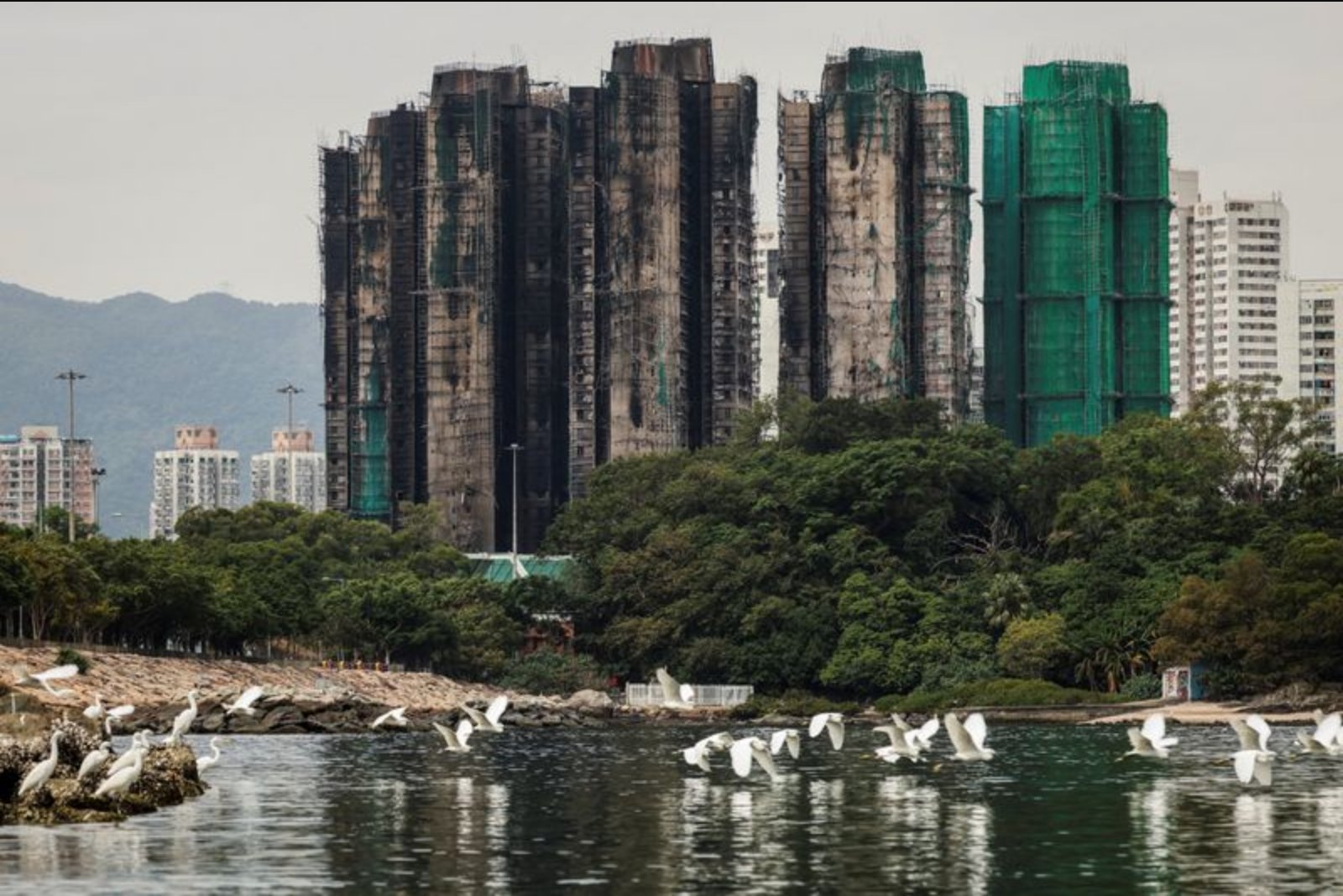
Hong Kong authorities have put forward a plan to acquire homes at Wang Fuk Court, the high-rise housing complex devastated by a massive November fire that killed more than 160 people. Officials said on Saturday that the government intends to allocate about HK$4 billion to buy out affected owners, with standardized per-square-foot payments and an option designed for tenants who need alternative housing.
Under the proposal, owners who do not receive a land premium payment would be offered HK$8,000 per square foot. For those entitled to a land premium payment, the proposed offer rises to HK$10,500 per square foot, officials told reporters at a media briefing in the city.
Wong Wai-lun, Hong Kong’s deputy financial secretary, said the government believes the proposed figures will allow displaced residents to relocate and obtain stable long-term housing. He was quoted as saying:
"We believe the proposed price is sufficient for the affected residents to relocate and secure long-term housing."
In addition to the buyout, authorities proposed an apartment exchange programme that would apply to the approximately 4,600 tenants who lived across nearly 2,000 housing units at Wang Fuk Court. The programme aims to provide a direct housing option for tenants impacted by the blaze.
The broader fiscal implications of the plan were set out by officials, who estimated a total outlay of HK$6.8 billion. That figure could be reduced by HK$2.8 billion as a result of a contribution from a relief fund, and officials added that the final net cost could decline further once insurance compensation is taken into account. The government also cited the currency conversion rate of $1 = 7.8148 Hong Kong dollars when discussing the figures.
As presented, the proposal outlines a multi-pronged approach: a standardized purchase price per square foot, a tenant exchange pathway for thousands of displaced residents, and an expected offset to gross spending through relief fund support and insurance recoveries. The government framed the pricing as sufficient for long-term relocation needs, while acknowledging the accounting adjustments that could alter the final budgetary burden.
Contextual note: The plan is presented as a proposal and reflects the government’s current costing and policy options. Officials highlighted both the immediate measure to secure housing for affected residents and the fiscal mechanics that could reduce the net cost to public coffers.