
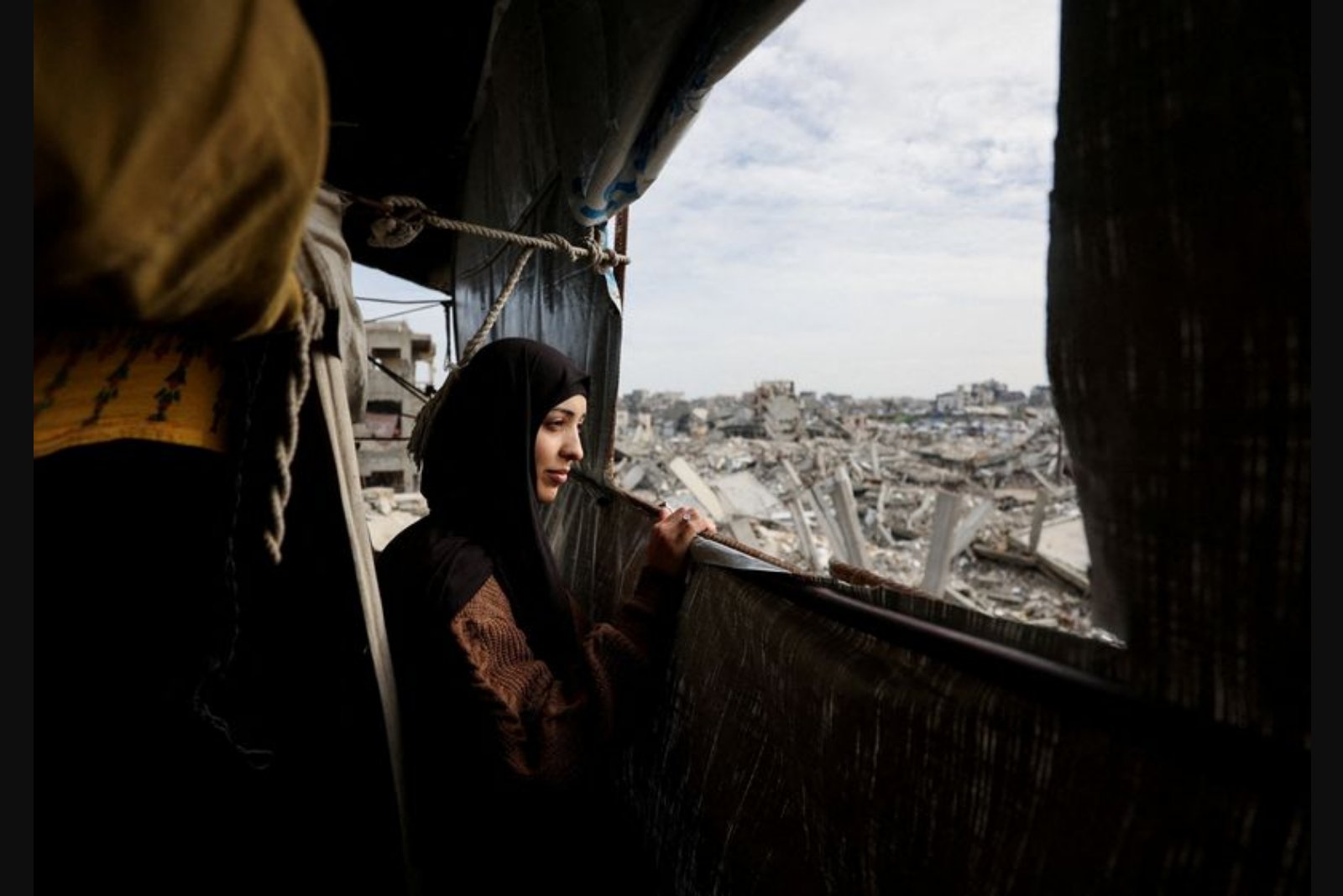
After almost two years apart, Eatedal Rayyan finally rejoined her husband in Gaza on Thursday, completing a journey that began when she left the enclave with her mother and three young children to seek medical care in Egypt.
Rayyan, 29, said she had left Gaza in March 2024 after sustaining a leg injury that doctors warned might require amputation if not treated. Treated in Egypt for months, she regained the ability to walk and, when Israel allowed a limited reopening of the Rafah border crossing, she and her family were among a small group of Palestinians permitted to return.
Speaking from the Egyptian town of Al-Arish before crossing, Rayyan described a persistent longing for family and homeland despite the devastation of Gaza during the two-year war. She and her children - Hanan, 8, Ezz, 5, and Mohammad, 4 - packed blankets and winter coats, the children excitedly preparing for the reunion that had been delayed by the conflict and her medical treatment.
Rafah is the only entry and exit point for most of Gaza’s population of more than 2 million people. Its limited reopening on Monday was a key element of U.S. President Donald Trump’s plan to end the Israel-Hamas war. Although around 50 people were expected to cross in each direction daily, actual numbers have been much lower: on Thursday only 21 Palestinians, including Rayyan and her children, re-entered Gaza, according to enclave authorities.
The route from Al-Arish to Gaza required clearance through three separate checkpoints: an Egyptian checkpoint, another administered by Palestinian and European officials, and a third overseen by Israeli security forces. From Rafah, a bus transported returnees to Khan Younis, which lies in territory controlled by Hamas. Reuters followed the family’s journey from Al-Arish to the border crossing.
Rayyan and her family reached Khan Younis near midnight. Ahmed, her husband, waited for them and the reunited family embraced. Ahmed kissed and hugged the children, and Hanan clung to her father’s leg.
Despite having anticipated damage, Rayyan said the scene on returning shocked her. "No building is standing," she said. "Everything is destroyed, destroyed. There is no electricity, or anything." Ahmed said the family’s former large house in Al-Saftawi, a district near Gaza City in the north, was destroyed during the fighting. With their home lost, the family will live together in a tent in a Gaza City encampment.
"I tried in every possible way and managed to get three mattresses for five people to sleep on," Ahmed told Reuters, describing immediate efforts to re-establish a basic living arrangement for the family.
Those returning through Rafah described harsh treatment at times. Rayyan said some people traveling with them were subjected to abuse, including having their hands tied, being blindfolded, and enduring prolonged humiliation and interrogation. She said these actions were carried out by young men traveling with them; she also said that members of a local gang backed by Israel had interrogated or harassed returnees. Israel’s military denies such claims.
Rayyan acknowledged that life in Egypt had been comfortable and that people there were kind, but she emphasized the pull of family and homeland. "You long for your country, your family, your relatives, your husband, your life. Being away from home is hard," she said. "Life in Gaza is still beautiful, even though it’s been destroyed."
The return of Rayyan and others highlights the very limited movement permitted through Rafah since the crossing was largely shut at the start of the conflict in October 2023. The small numbers of returnees underscore the constrained ability for displaced Gazans to re-enter the enclave and the difficult conditions they face when they do.
Context and immediate conditions
The family’s experience underscores several persistent conditions in Gaza following two years of conflict: widespread destruction of residential areas, an absence of electricity and basic services in many places, and ongoing displacement with many residents living in makeshift encampments.
Returnees face multiple security screenings and checkpoints as part of the crossing process, and some report mistreatment and lengthy interrogations. The numbers permitted to cross remain far below initial expectations set at the reopening, with only a handful of people returning on the day Rayyan crossed.