
World March 9, 2026

Historic Pact Becomes Largest Force in Colombia’s Senate but Falls Short of Majority

Left-leaning party leads a fragmented Congress and faces coalition-building ahead of a contested presidential race

By Jordan Park
Historic Pact Becomes Largest Force in Colombia’s Senate but Falls Short of Majority

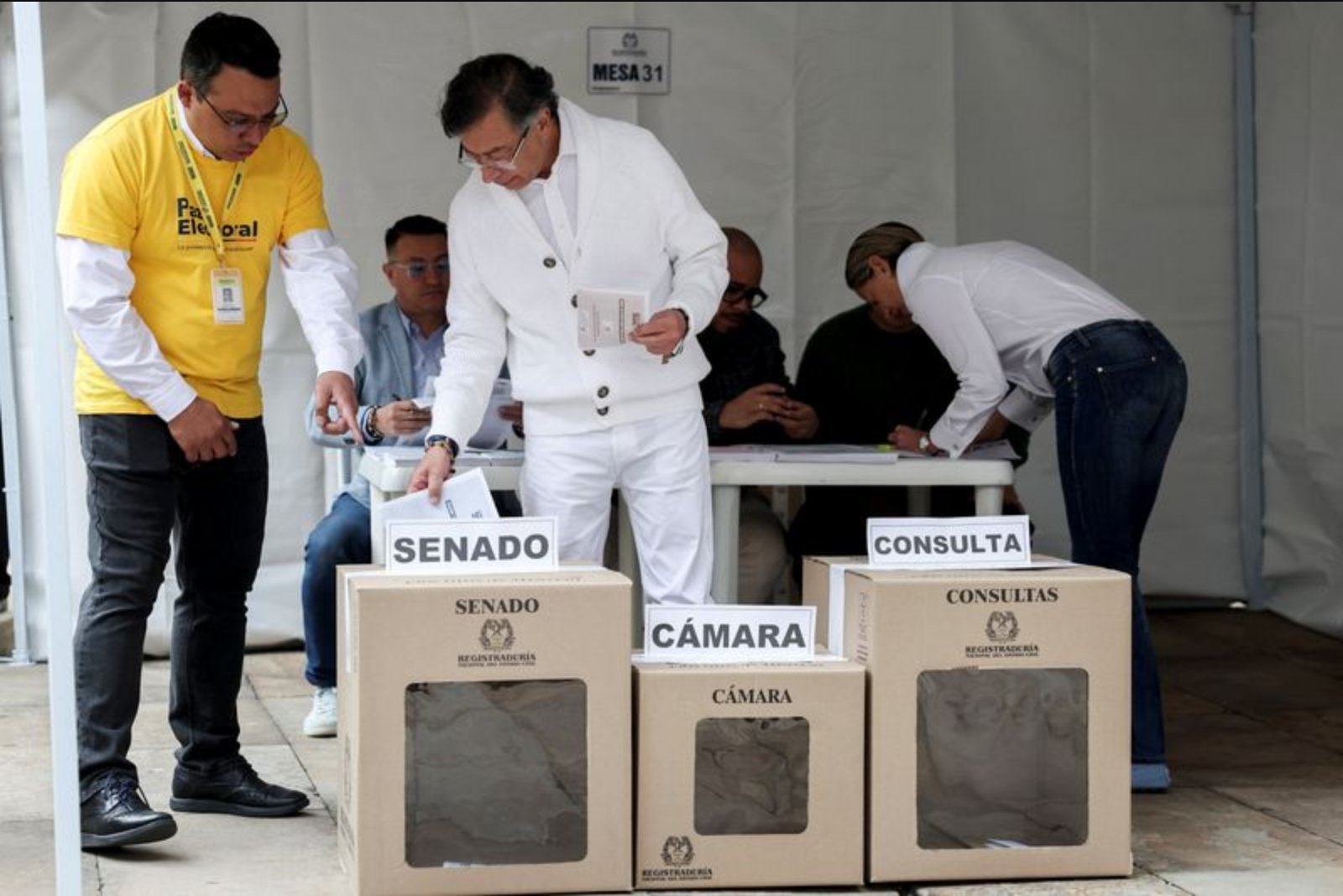
Colombia’s ruling Historic Pact won the largest share of Senate seats in the recent legislative elections but did not secure an outright majority, setting up a fragmented Congress where coalition-making will be necessary. The opposition Democratic Center leads in the lower chamber, and analysts warn the outcome could leave the next president constrained by a divided legislature.

Key Points

  • Historic Pact won 25 of 102 Senate seats, making it the largest single party in the incoming Senate but short of an absolute majority.
  • The Senate is highly fragmented - key parties include the Democratic Center (17 seats), Liberal Party (13), Green Alliance (10), Conservative Party (10), La U (9), and Radical Change (7), with eleven seats going to smaller parties. In the House, the Democratic Center leads with 32 of 182 seats, followed by the Liberal Party (31) and Historic Pact (29).
  • The article does not specify particular economic sectors or market impacts resulting from the election outcome; it focuses on seat distributions, political dynamics, and statements by key political figures.

Colombia’s ruling party, the left-leaning Historic Pact, emerged as the single largest force in the incoming Senate after Sunday’s legislative elections, but it did not win an absolute majority and will need to build alliances to advance its agenda.

Official tallies show the Historic Pact secured 25 of the Senate’s 102 seats. The right-wing Democratic Center, led by former President Alvaro Uribe, finished second with 17 seats. The balance of power in the chamber is spread across several other parties.

Seats in the Senate were distributed as follows:

  • Historic Pact: 25 of 102 seats
  • Democratic Center: 17 seats
  • Liberal Party: 13 seats
  • Green Alliance: 10 seats
  • Conservative Party: 10 seats
  • La U: 9 seats
  • Radical Change: 7 seats
  • Eleven other seats were allocated among various smaller parties

In the House of Representatives, the distribution differs from the Senate outcome. The electoral authority’s results show the Democratic Center leading the lower chamber with 32 of 182 seats, followed by the Liberal Party with 31 and the Historic Pact with 29. The Conservative Party obtained 18 seats, Radical Change 13, and the Green Alliance 7.

Historic Pact’s presidential candidate for the upcoming May contest, Ivan Cepeda, hailed the legislative results as a "categorical victory," stating his party had become the primary political force in Congress. Observers, however, note that without a Senate majority the party will need to negotiate with other groups to pass legislation.

Analysts also highlighted a potential political reversal: if Cepeda is defeated in the presidential election by right-wing candidates Paloma Valencia or Abelardo De La Espriella, the Historic Pact would shift from governing party to the main opposition force in Congress.

Ariel Avila, a re-elected senator from the Green Alliance, cautioned that the overall fragmentation of Congress will make governance difficult regardless of which side controls the presidency. Avila predicted a "vetocracy" in which lawmakers block initiatives simply because they originate from opposing parties.

The election results establish the Historic Pact as the largest single bloc in the Senate but underline the fragmented composition of both chambers. With no party commanding an outright majority in the upper house and the opposition leading the lower chamber, coalition-building will be central to the next legislative period.


Contextual note: The article reports the official distribution of seats and the public comments attributed to party figures and a re-elected senator. It does not provide additional information on specific policy agendas or sectoral impacts beyond what is reported.

Risks

  • Governability risk - Without an absolute Senate majority, the Historic Pact will need to form coalitions to pass legislation, creating uncertainty about the pace and content of policymaking. The article ties this risk directly to the fragmented Senate composition.
  • Potential shift to opposition - If Ivan Cepeda loses the presidential race to right-wing candidates Paloma Valencia or Abelardo De La Espriella, the Historic Pact would become the main opposition force, changing its role in Congress as described in the article.
  • Legislative deadlock - As expressed by Green Alliance senator Ariel Avila, the fragmented Congress raises the prospect of a 'vetocracy' where partisan blocking could impede the next president's ability to enact policies; the article presents this as a prospective political constraint.

More from World

Legal Challenge Filed to Block End of U.S. Protections for Somali Immigrants Mar 9, 2026 U.S. Urges Review of International Aid to Afghanistan as Taliban Restrictions Persist Mar 9, 2026 ICE records 11 deaths in U.S. immigration custody through early March 2026 Mar 9, 2026 Alexander Butterfield, Whistleblower on Nixon’s Secret Tape System, Dies at 99 Mar 9, 2026 Trump Says Cuba Faces Humanitarian Crisis, Suggests Potential 'Friendly Takeover' Mar 9, 2026