
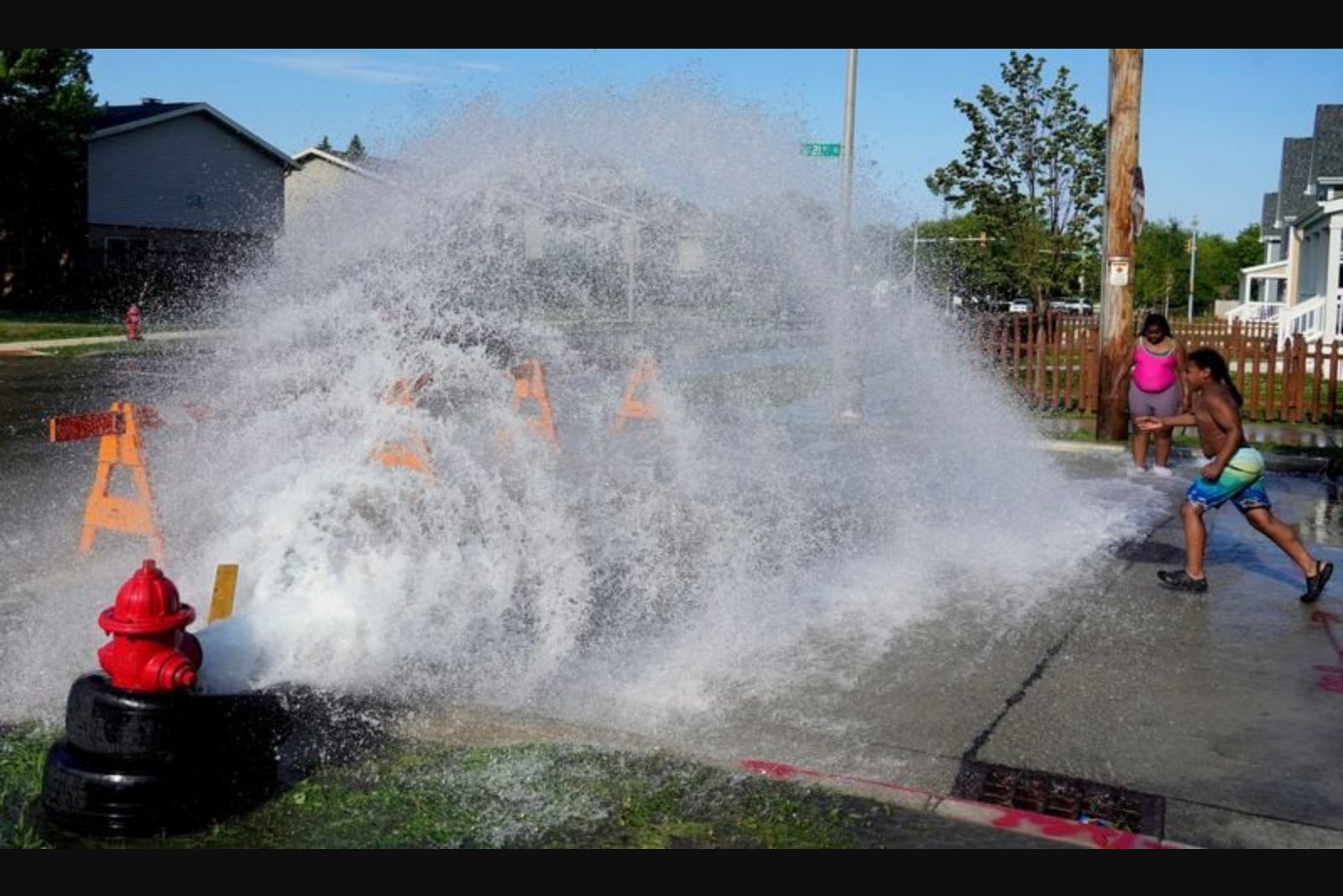
Record-setting heat that began in the central United States intensified on Wednesday as it pushed toward the East Coast, with meteorologists warning that tens of millions of people could remain under heat alerts through the July 4 holiday weekend, when the nation will mark its 250th anniversary. Forecasters projected "real-feel" temperatures between 100 and 115 degrees Fahrenheit (37.8 to 46.1 degrees Celsius) across much of the affected area, heightening the risk of heat-related illness for those most susceptible and raising concerns about the capacity of electricity networks already experiencing heavier demand from data centers and electric vehicles.
In Hill City, Kansas, a small community on the high plains about 270 miles east of Denver, 34-year-old mail carrier Sabrina Hooper said she had been contending with temperatures above 100 degrees just a week into the job. Hooper walks as much as 10 miles a day delivering parcels and described the heat as "completely debilitating." She said brief relief comes from neighborhood sprinklers - a chance to wet her hat and face before continuing her route.
Hill City has a track record of extreme heat; it was the warmest location in the country for five consecutive days in 2012 during an earlier heatwave, when the town's heat index reached 108 degrees. The heat index is a measure that combines air temperature and humidity to estimate how hot conditions actually feel to people.
Further east, residents in the Chicago area reported stepping up preparations for the incoming heat over the weekend. High-school science teacher Michelle Klein, 57, filled her car with gas, completed her grocery shopping early, stocked extra cold drinks in the refrigerator and deeply watered her plants ahead of the hottest days. On Tuesday evening, after an evening walk, she noted that the heat index reached 103 degrees.
In the suburbs, property investor Amy Kaspar received an urgent call from a tenant whose air conditioner seemed to be malfunctioning. Kaspar found the unit operating but unable to keep the apartment sufficiently cool given the intensity of heat and humidity. "Combined with the wind, it feels like standing behind the exhaust of a bus right now in Chicago," Kaspar, 50, said, describing the oppressive conditions.
The U.S. heat wave paralleled extreme temperatures experienced recently across western Europe. Scientists cited in the region said that such events would have been "virtually impossible" without human-caused climate change. Research over many years has confirmed that greenhouse gas emissions are increasing both the likelihood and intensity of heatwaves globally.
By Wednesday morning the heat had only recently started to reach New York City. City officials moved to expand relief options, opening hundreds of cooling centers and sending out more than a dozen "cool vans" stocked with water, electrolyte drinks, sunscreen and meals for residents who need assistance, Mayor Zohran Mamdani said at a press briefing.
At a senior center in Harlem, air conditioning was running full strength on Wednesday. A sign posted in 13 languages identified the facility as an available "cooling center" for members of the public. Richard Allman, the center's director, said staff planned to keep the facility open beyond normal hours through the July 4 weekend. "We try to make this a comfortable place for people on an extra-hot day," he said.
City leaders in New York also asked operators of the iconic Times Square billboards to dim their lights to conserve energy and urged businesses to set thermostats no lower than 78 degrees. The region's energy supplier, Con Edison, asked customers to limit electricity use between 2 p.m. and 10 p.m. Additional measures included extending public pool hours, opening more cooling centers in libraries and municipal buildings, and expanding street outreach to direct people to relief services.
Public health and infrastructure officials emphasized the particular danger posed to vulnerable groups, including older adults, those with pre-existing health conditions, and people without reliable access to air conditioning. The combination of high temperatures and humidity can produce dangerously high heat indices that make outdoor work and prolonged exposure risky. Utility officials and municipal leaders warned that increased demand tied to cooling needs, as well as expanding loads from data centers and electric vehicle charging, could strain the grid during peak hours.
The heat wave's movement from the Midwest toward the East raised concerns for cities and small towns alike, from rural postal workers covering long walking routes to urban residents relying on communal cooling resources. Local responses ranged from individual preparations, such as stocking refrigerators and filling gas tanks, to municipal measures designed to reduce consumption and provide public relief.
Officials emphasized outreach to ensure those in need are aware of available cooling options and to encourage residents to take precautions as high temperatures persist into the holiday weekend. The combination of forecasted extreme "real-feel" temperatures, public health risks, and pressure on electricity systems left authorities urging caution and preparedness as communities prepared for July 4 activities.
Key points:
- Widespread heat warnings covered tens of millions of people, with "real-feel" temperatures forecast at 100 to 115 F (37.8 to 46.1 C), increasing risks of heat-related illness. - Sectors affected: public health, emergency services.
- Power grids face added strain from increased cooling demand alongside growing loads from data centers and electric vehicles, prompting conservation requests and operational adjustments. - Sectors affected: energy, utilities, technology.
- Municipal measures included opening cooling centers and deploying mobile relief units, while private responses ranged from homeowners watering plants to landlords assessing air conditioning performance. - Sectors affected: real estate, retail (beverages), municipal services.
Risks and uncertainties:
- Elevated risk of heat-related illness for vulnerable populations, particularly in areas where cooling resources are limited. - Relevant sectors: healthcare, social services.
- Potential for electricity systems to be overwhelmed during peak demand periods, magnified by rising consumption from data centers and electric vehicles. - Relevant sectors: energy, utilities, technology.
- Air conditioning units may be unable to maintain indoor comfort under extreme and prolonged heat and humidity, affecting housing quality and tenant well-being. - Relevant sectors: residential property, appliance services.