
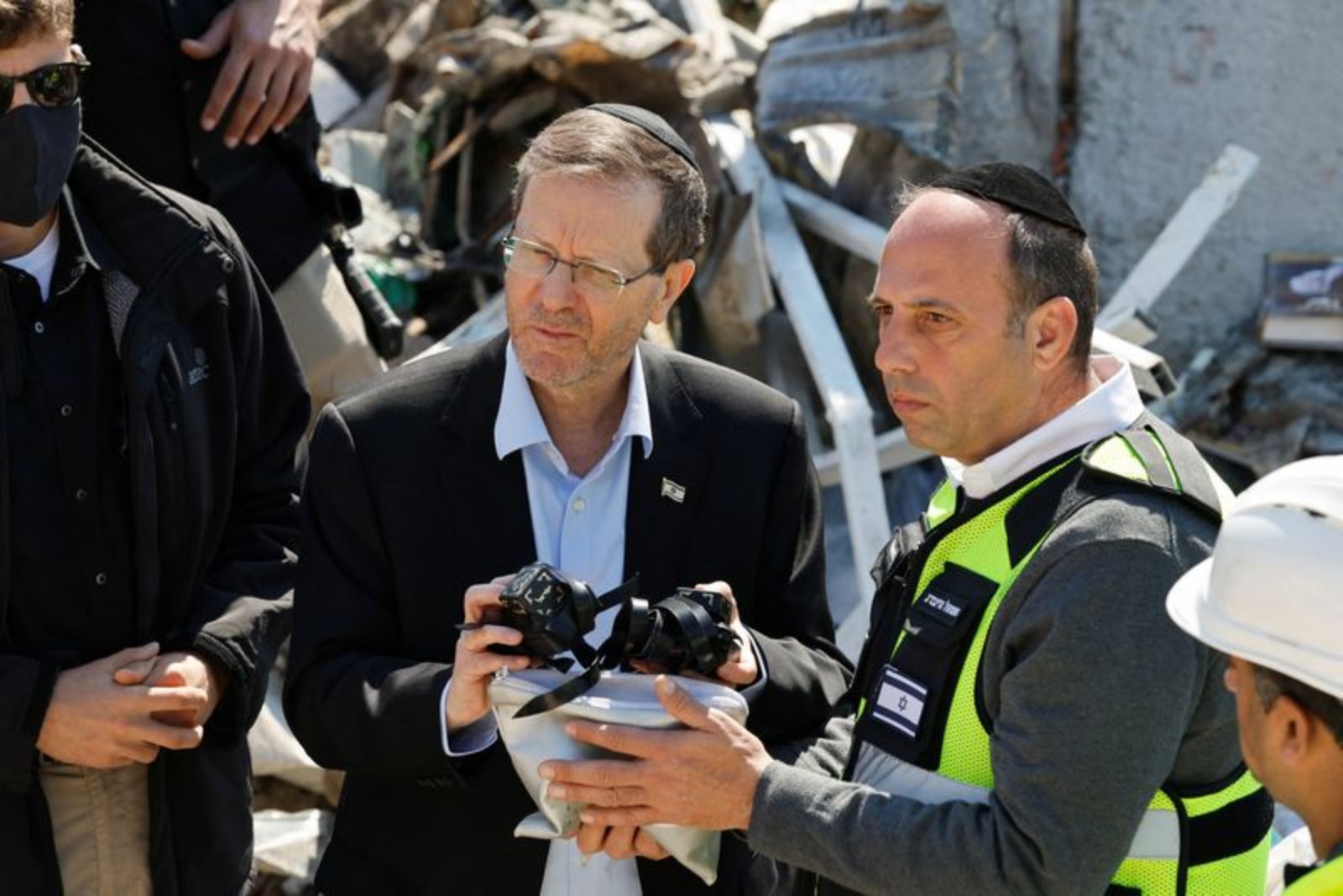
March 10 - Israel's President Isaac Herzog on Tuesday declined to offer a schedule for when the war with Iran might conclude, telling Germany's Bild newspaper that the focus should be on the ultimate outcome rather than how quickly it is achieved.
Herzog emphasized a results-oriented approach, arguing that moving too quickly would be counterproductive. He said recent military action by the United States and Israel is transforming the configuration of the Middle East, and he defended targeted strikes on Iranian oil facilities as a way to reduce funds available to what he called Tehran's "war machine."
"The Iranians are the ones spreading chaos and terror throughout the region and the world. So I think if we measure everything by a speedometer, we won’t get anywhere. We need to take a deep breath and get to the end result," Herzog told Bild.
Herzog said that removing the Iranian threat would allow "the entire system in the region to suddenly breathe again and develop further. That’s fantastic," framing the objective in terms of regional stability and development.
The president's comments were published as U.S. and Israeli forces intensified air operations against Iran. Both the Pentagon and Iranians on the ground described these strikes as the most intense of the war to date. Those operations came amid market expectations that President Donald Trump would seek to bring the conflict to a close in the near term.
Earlier, Israel's foreign minister, Gideon Saar, had said the country was not preparing for an endless war and that consultations with Washington were ongoing about when to halt military action. That statement introduces a tension between the administration's stated consultations on an endpoint and the president's emphasis on concentrating on the final result rather than speed.
The remarks underscore continuing uncertainty over the conflict's duration and its immediate regional consequences. Herzog framed recent strikes on oil infrastructure in narrow financial terms - as measures intended to cut revenue streams that can sustain military activity - while also linking those measures to broader hopes for restoring regional breathing room and development prospects.
Context note: Herzog declined to set a timetable; he defended attacks on Iranian oil sites; U.S. and Israeli air operations were described as the most intense by the Pentagon and Iranians on the ground; markets were betting on a near-term U.S. effort to end the conflict; Gideon Saar said Israel was not planning an endless war and was consulting with Washington about when to stop.