
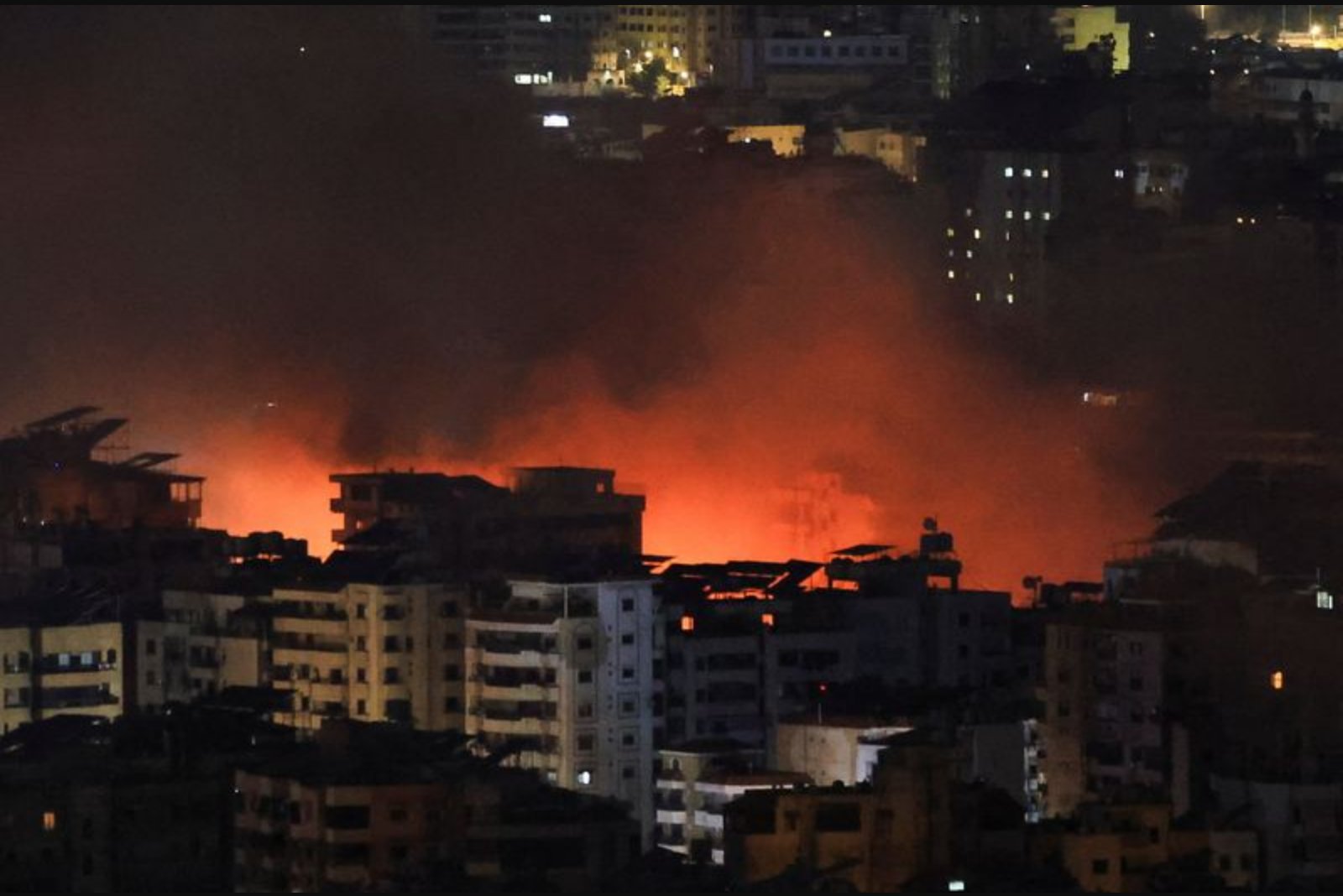
Israel conducted intense air operations overnight against the Hezbollah-controlled southern suburbs of Beirut after instructing residents there to relocate, while Hezbollah issued a warning telling Israelis to leave towns and villages near the Lebanese frontier.
Images and video footage captured explosions and flashes that illuminated the night sky above Beirut's southern suburbs. The Israeli military reported it carried out 26 waves of strikes overnight in the southern suburbs, identifying targets that it said included Hezbollah command centres and weapons storage facilities.
An Israeli military spokesperson on Thursday directed inhabitants of the southern suburbs to move east and north, publishing a map that identified four large districts of the capital they were told to abandon. The map included areas adjacent to Beirut airport among those the spokesperson said residents must leave.
In response, Hezbollah published a message in Hebrew on its Telegram channel early on Friday, instructing Israelis to vacate towns within 5 km (3 miles) of the border. The post read: "Your military’s aggression against Lebanese sovereignty and safe citizens, the destruction of civilian infrastructure and the expulsion campaign it is carrying out will not go unchallenged," Hezbollah said.
The confrontation builds on fighting last year when, during clashes in 2024, tens of thousands of Israelis were evacuated from border towns. Many of those residents have since returned. Israeli officials have previously indicated there are no current plans to remove those returnees.
Lebanon was drawn into the wider Middle East conflict on Monday, the moment Hezbollah opened fire and triggered a new Israeli offensive. Since then, Israeli airstrikes have concentrated on Beirut’s southern suburbs as well as on parts of southern and eastern Lebanon. Israel has also ordered Lebanese civilians to leave sizeable tracts of southern and eastern Lebanon.
The Lebanese health ministry reported that 123 people have been killed and 683 wounded as a result of Israeli attacks this week. The ministry’s figures do not distinguish between civilians and combatants. By contrast, there have been no reported fatalities in Israel as a result of Hezbollah attacks.
Hezbollah, a Shi’ite Muslim group founded by Iran’s Revolutionary Guards in 1982, was described as having been badly weakened by Israel during the 2024 war.
The situation continues to evolve with significant civilian impact in Lebanon and heightened security measures on both sides of the border. Observers note the concentrated strikes on southern Beirut and orders to clear districts near the airport and along the frontier have immediate humanitarian and logistical consequences for residents and services in affected areas.