
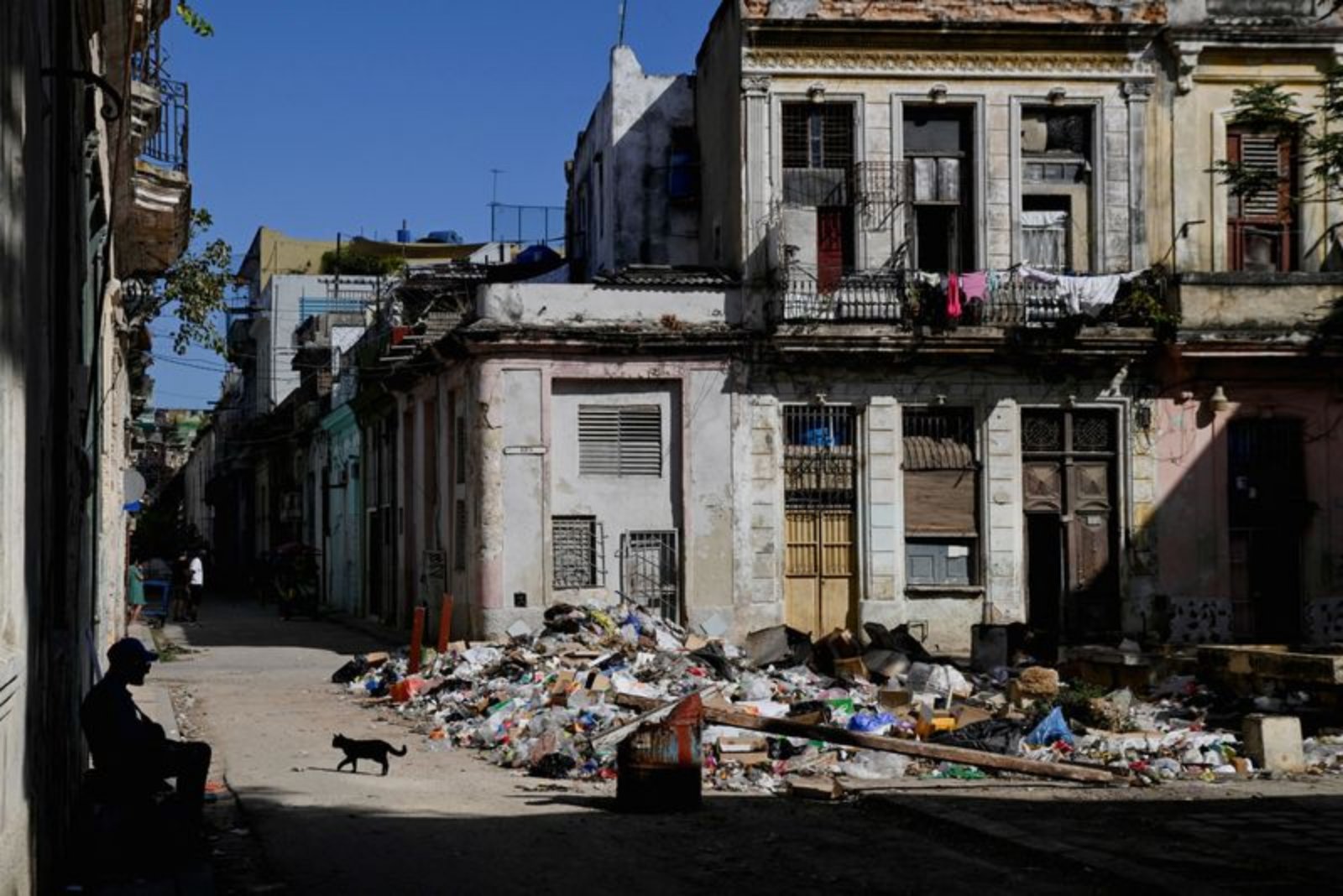
Garbage has begun to build up on corners and promenades across Havana, producing foul odors and drawing swarms of flies, as municipal collection slows amid a severe fuel shortage affecting the Cuban capital.
State-run news outlet Cubadebate said this month that just 44 out of 106 rubbish trucks in Havana have remained operational because of the lack of fuel, a sharp reduction that has slowed regular collection routines. Cardboard, used bags, plastic bottles and rags have accumulated in public spaces along the seafront city, where some residents have been observed sifting through refuse for items they can re-use. The bloated heaps are forcing motorists, cyclists and pedestrians to navigate around obstructive piles.
"It’s all over the city," said local resident Jose Ramon Cruz. "It’s been more than 10 days since a garbage truck came." In other towns on the island - home to around 11 million people - social media posts by residents have warned of the potential public health risks as sanitation services falter.
The authorities in Havana and across the country have adopted rationing measures intended to preserve fuel supplies for essential services as Cuba grapples with acute shortages of food, fuel and medicine already affecting daily life.
Cuba’s oil supply has declined sharply over the past two months. Venezuela - previously the island’s principal supplier - effectively ceased shipments in mid-December. Mexico’s government also announced it was halting fuel deliveries after the United States warned it would consider tariffs against countries that continued to supply Cuba.
A Russian newspaper reported last week that Moscow was preparing to dispatch crude and fuel cargoes to the Communist-run island in the near future, but did not provide a specific timetable for those shipments.
The United States has maintained an embargo on Cuba since the 1960s, and in recent months the administration of President Donald Trump has stepped up pressure, sanctioning vessels that transport oil to Cuba and threatening tariffs on suppliers. Washington says such measures are intended to exert pressure for political change in Cuba.
International responses to the tightening of supplies have been mixed. The United Nations has repeatedly voted in favor of ending the U.S. embargo, and leaders from Mexico and Venezuela have warned that blocking fuel shipments could carry severe humanitarian consequences.
This is an unfolding situation that has left municipal waste services stretched thin and raised concerns about sanitation and the availability of essential supplies. Local authorities are managing rationing policies while residents contend with visible, growing refuse in public spaces.