
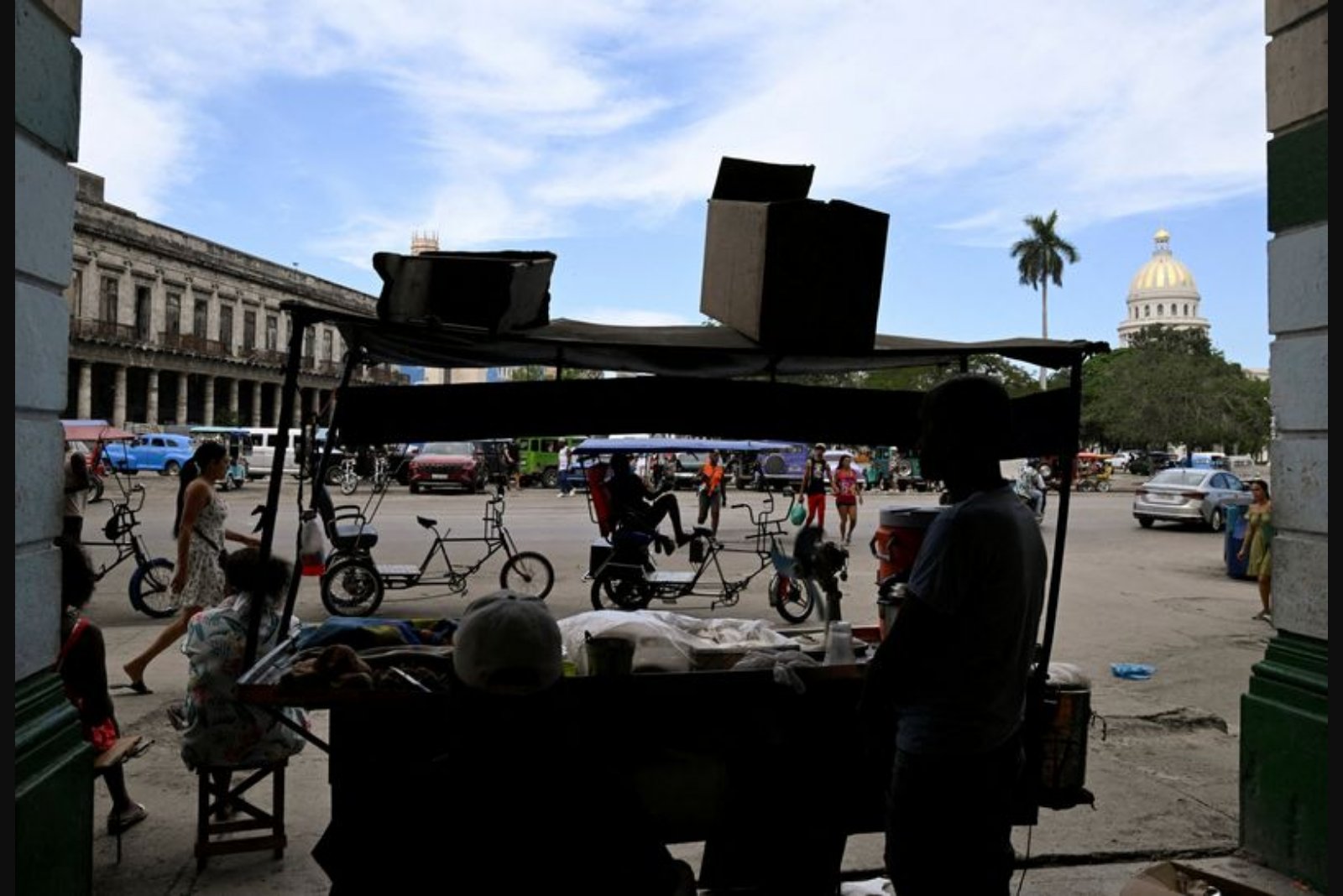
U.S. President Donald Trump has presented competing messages about Cuba - alternating between outreach and threats - and those contradictions are shaping reactions among Havana residents. On the streets of the Cuban capital on Tuesday, many told Reuters they would rather see negotiations than confrontation, even as they questioned the reliability of the president’s statements.
Several people interviewed said they had been surprised by a sequence of recent remarks from Trump, including his comment that he could "do anything I want with Cuba." Marianela Alvarez, a 50-year-old state worker, said she was alarmed by that language and urged the United States to leave Cubans alone.
"I wish Trump would understand, he should leave us in peace," Alvarez said.
Both Havana and Washington have publicly said they are engaged in talks amid heightened tensions between the two neighbors. Those tensions have been amplified, residents noted, by a U.S. oil blockade that officials say followed the capture of Venezuelan President Nicolas Maduro, who has been described by Cuban authorities as the island’s most important benefactor.
Trump’s statements have varied in tone. In the days before Reuters spoke to Cubans in Havana, he suggested he might soon have the "honor of taking Cuba," and at other times used the phrase "friendly takeover," later adding that "it may not be a friendly takeover." He also referenced the sequence of possible actions in relation to other regions of concern when he said, "We’re talking to Cuba, but we’re going to do Iran before Cuba."
Voices from Havana
Interviews carried out around Havana on Tuesday captured a range of responses. Some people were willing to discuss the subject, others declined to speak in a country where public expression is constrained, and still others said they had not heard the president’s remarks. Limited awareness among some residents was in part attributed to a series of recent power grid failures that have left parts of the island without electricity.
The Cuban state has in turn been promoting military readiness. State television has been airing near-nightly coverage that shows civilians training alongside armed forces as part of a government initiative termed the "War of the Entire People," a national defense plan intended to mobilize broad segments of the population to repel any invasion.
But not everyone felt prepared for armed conflict. "We as people, as civilians, are not prepared for a war," Alvarez said.
Others prioritized negotiation. Luis Enrique Garcia, 55, said that dialogue is the most important course of action. He pointed to the approach of Delcy Rodriguez in Venezuela, whom he described as having largely cooperated with the Americans following the ouster of Nicolas Maduro, and said that restraint and talks helped avoid escalation.
"She said, 'I don’t want war in my country, let’s have dialogue,'" Garcia said.
Some Havana residents welcomed the idea of discussions with the United States but remained wary of the president who is speaking for Washington. Amed Echenique, 26, said he supported bilateral talks but had personal doubts about Trump’s trustworthiness.
"Even though for many people it’s encouraging that we’re in talks with Trump, and it’s possible the situation will improve, I don’t trust a dialogue with Trump," Echenique said.
Like many others questioned by Reuters, Barbara Rodriguez, 58, placed responsibility for Cuba’s economic hardships squarely on U.S. policy. She cited the decades-long blockade maintained by Washington and said recent restrictions are deepening the island’s fuel crisis.
"We are tired of the blockade that has been imposed on us for 60-odd years. And now the blockade is intensifying with the issue of fuel; they aren’t letting any ships into Cuba with fuel," Rodriguez said. "No one can develop like this."
Context in public life
The mix of official engagement and heightened rhetoric from the White House has produced a cautious public mood in Havana. While some see talks as a hopeful path away from escalation, others remain doubtful about whether the administration’s words will translate into steady and constructive policy changes.
Power outages, visible preparations for civilian defense on state television, and lingering economic strains tied to the blockade were recurrent themes in conversations with residents who spoke to Reuters on Tuesday. Several people declined to be quoted, and some reported they had not been following the recent statements closely due to intermittent electricity.
Overall, the prevailing sentiment among those willing to speak was a preference for negotiation over confrontation, coupled with a recognition of uncertainty about how recent U.S. pronouncements might be carried out in practice.