
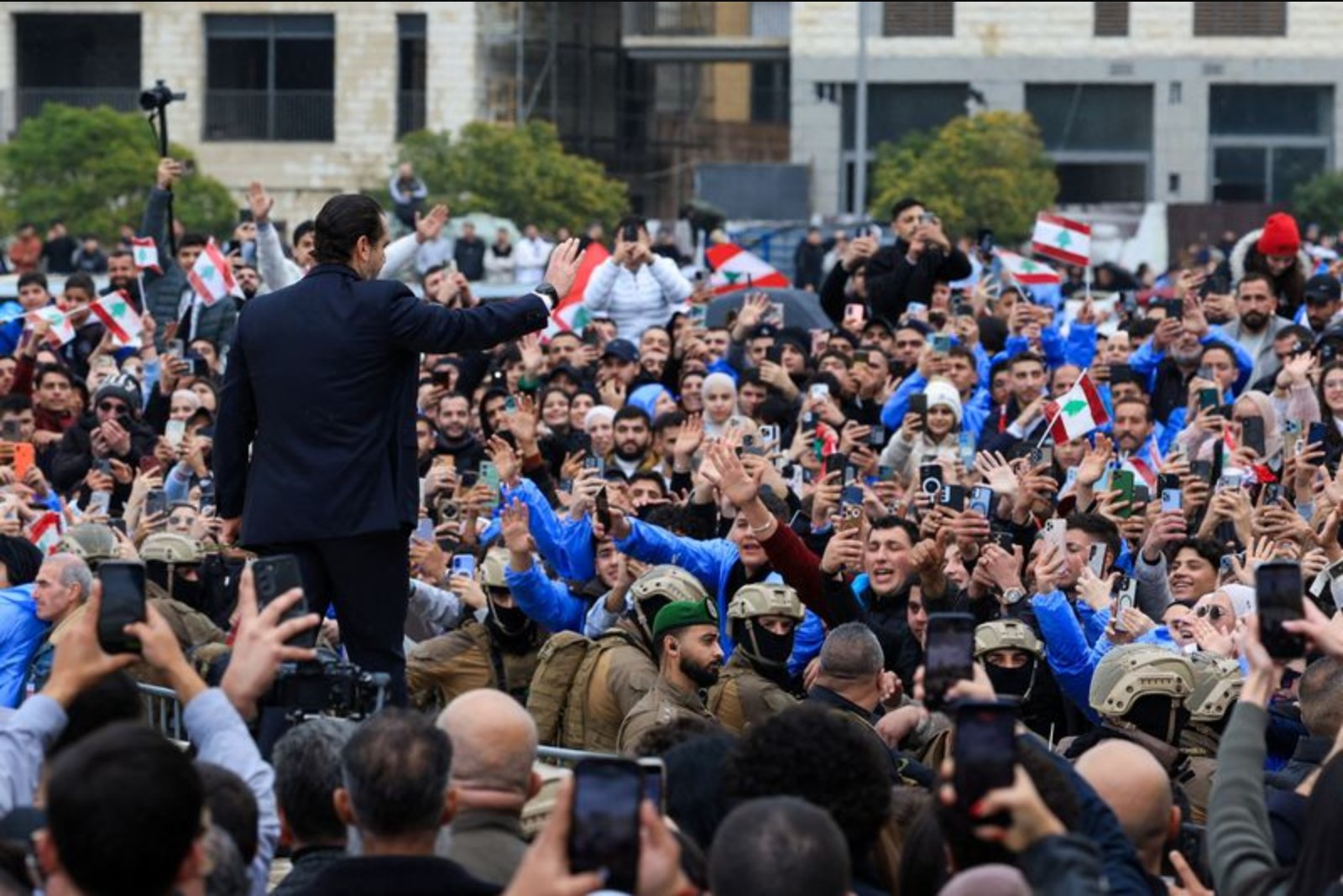
Former Lebanese premier Saad al-Hariri indicated on Saturday that his Future Movement intends to take part in Lebanon's forthcoming parliamentary elections, a return to formal electoral competition four years after he stepped back from frontline politics.
Speaking in Beirut at an event commemorating the 21st anniversary of the assassination of his father, Rafik al-Hariri, who also served as prime minister, Saad al-Hariri told supporters that when the vote is held "others would hear our voice, and count our votes." He did not specify whether he himself would stand for election, though the article notes his continued popularity among Lebanon's Sunni Muslim community.
Large crowds gathered in Beirut's Martyrs' Square, waving the party's flag and chanting his name as Hariri addressed the assembly. "You are not a few, and you never were," he told the gathering.
Parliamentary speaker Nabih Berri confirmed on Friday that elections would proceed as scheduled on May 10. That timetable remains despite calls from some politicians to delay the vote, driven in part by security worries in southern Lebanon where Israel has carried out air strikes aimed at the militant group Hezbollah.
Hariri, who has served three times as prime minister, withdrew from active politics in 2022 and prevented the Future Movement from fielding candidates in that year's parliamentary election. In explaining that decision at the time, he cited factors including Iran's influence in Lebanon, a remark presented in the article as an indirect reference to Hezbollah.
The article states that Hezbollah, a Shi'ite political and militant group that had increased its role in Lebanese politics, was severely weakened after a 2024 conflict with Israel. Since a ceasefire in late 2024, Hezbollah has been under U.S.-backed pressure to disarm, according to the account.
Before his withdrawal, Hariri led one of the largest parliamentary blocs, having inherited political leadership following his father's death. The absence of the Future Movement from the 2022 vote produced a fragmentation of Sunni representation in parliament, where seats are allocated according to a sectarian quota system.
The article also included a promotional passage about investment research tools and data-driven insights, posing a question on the best investment opportunities in 2026 and describing a service that combines institutional-grade data with AI-powered analysis to inform investment decisions.