
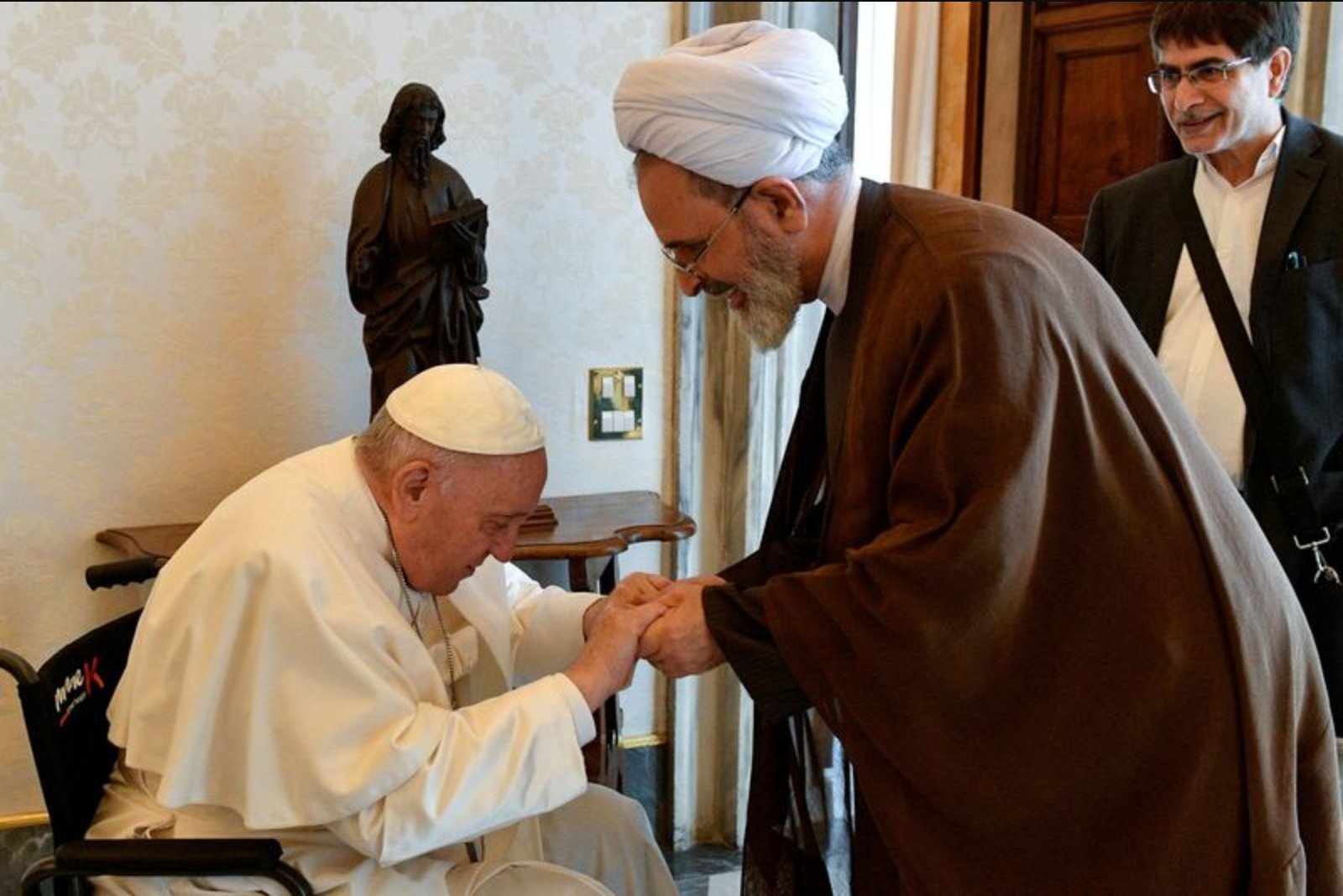
Ayatollah Alireza Arafi has been brought to the center of Iran’s ruling structure at a time of acute crisis, joining a short-term leadership council tasked with steering the country after the killing of Supreme Leader Ayatollah Ali Khamenei. The move places Arafi, previously known primarily for his roles within the clerical and educational establishments, among three senior officials charged with guiding state affairs during what officials describe as the most turbulent period since the 1979 revolution.
The interim council was formed in the wake of U.S.-Israeli attacks that began on February 28. Alongside President Masoud Pezeshkian and Chief Justice Gholam-Hossein Mohseni-Ejei, Arafi now shares responsibility for coordinating Iran’s response to those attacks and for managing the sensitive, high-stakes process of selecting a new supreme leader.
Officials within the clerical establishment and observers say the succession question is urgent. If a new supreme leader is not named promptly, the assembly of clerical authorities risks being portrayed as divided or incapable of ensuring continuity - a perception that could undermine the clerical system’s legitimacy at a time of war.
Background and institutional standing
Born in 1959, Arafi is in his late 60s and is less familiar outside Iran than some other senior clerics. His trajectory, however, has been shaped by repeated promotions under Khamenei, who elevated loyalists into influential roles across the religious and educational apparatus. At various points Arafi has been considered by some clerics as a potential successor to the supreme leadership, although that prospect faces substantial procedural constraints.
Arafi’s principal authority derives from the significant posts he has held. He served as head of Al-Mustafa International University and as dean of the seminary in the holy city of Qom. He also holds membership in the Guardian Council, the body responsible for vetting candidates for elected office, and he is a member of the Assembly of Experts, the 88-member body constitutionally charged with selecting the supreme leader. Those positions were attained with the backing of Khamenei and are widely viewed as reflecting the supreme leader’s confidence in him.
His clerical credentials trace back to his youth. Arafi moved to Qom at the age of 11 to pursue Islamic studies, and he later completed advanced training in jurisprudence and philosophy. Early in his public career, after Khamenei became supreme leader in 1989, Arafi was appointed a Friday prayer leader in his hometown of Meybod at the age of 33 - an appointment seen as an early sign of Khamenei’s trust and of his strategic placement of loyalists.
Roles in education and international outreach
Arafi expanded his profile through leadership of Al-Mustafa International University, an institution with affiliated seminaries and Islamic colleges in more than 50 countries that aims to advance the Islamic Republic’s religious and ideological outreach overseas. Al-Mustafa’s Persian-language website states that the university enrolled over 50,000 foreign students and that students on its Iran campuses receive benefits including free housing, home loans and health care for their families. Arafi stepped down from the university post in 2018.
During his tenure, Arafi stated that the institution’s outreach had led to roughly 50 million conversions to Shi’ite Islam within an eight-year span, a claim critics questioned. The article notes that two years after he left the university, the U.S. State Department formally designated the Quds Force as a foreign terrorist organization, and it reported that the Quds Force had recruited Pakistani and Afghan students from Al-Mustafa into the Zaynabiyoun Brigade and the Fatemiyoun Division - militias that have been deployed in Syria under the command of the Revolutionary Guards’ Quds Force and previously targeted by U.S. counterterrorism and human rights measures.
Procedural challenges to any elevation
Despite his close alignment with Khamenei’s ideological stance - including advocacy for governance rooted in the comprehensive application of Shi’ite jurisprudence - Arafi lacks extensive hands-on political experience, and his path to the supreme leadership is constrained by formal procedures. A committee within the Assembly of Experts would first have to nominate his name at a session attended by at least two-thirds of the assembly’s 88 members. Following that nomination, Arafi would need the support of two-thirds of those present, which translates to roughly 40 senior clerics. The process contains no guarantees at any stage.
In parallel, the interim leadership must respond to immediate security concerns triggered by the U.S.-Israeli attacks. That dual mandate - crisis management and succession planning - creates competing demands on a narrow window of time and places the clerical establishment under unusual pressure.
What remains notable
Arafi’s career reflects a steady accumulation of authority within Iran’s religious institutions, rooted in both scholarly credentials and administrative leadership. His elevation to the interim council brings a figure with strong clerical credentials and institutional links into the forefront of state decision-making at a moment when both external threats and internal legitimacy questions are acute. How the Assembly of Experts proceeds and whether it coalesces around a candidate with Arafi’s profile remain open questions framed by constitutional procedure and the extraordinary pressures of wartime governance.