
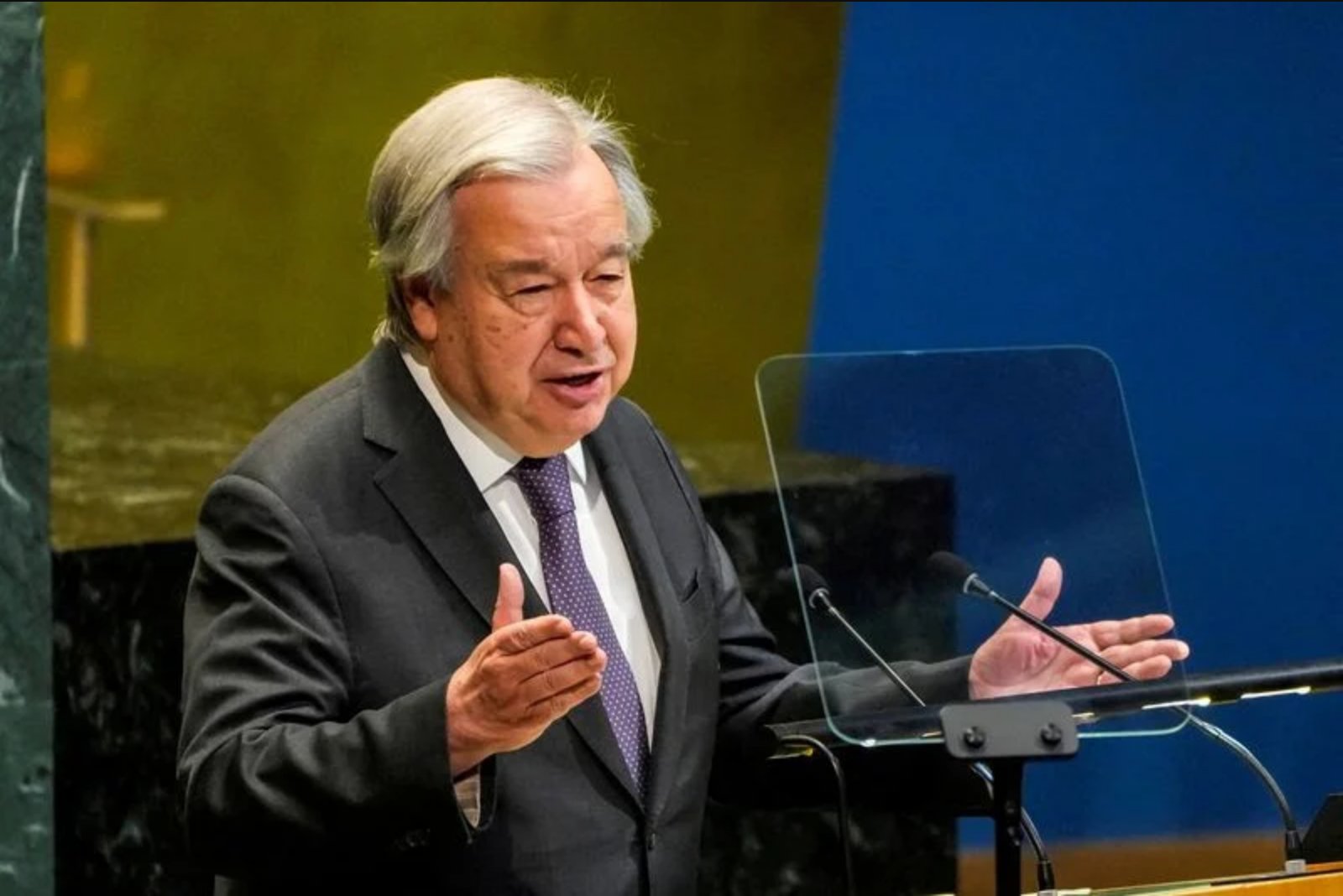
U.N. Secretary-General Antonio Guterres has formally presented to the U.N. Security Council three alternative configurations for a continued uniformed United Nations presence in Lebanon once the current U.N. Interim Force in Lebanon (UNIFIL), currently 7,500-strong, reaches the end of its mandate at the end of the year. The options were outlined in a letter to the 15 members of the Security Council dated Monday and reviewed by Reuters.
Context and overarching assessment
Guterres highlighted that the security environment in Lebanon has worsened markedly since March. He wrote that under every proposed configuration a uniformed U.N. presence would be required to back a bolstered U.N. political mission tasked with seeking a long-term resolution to the conflict.
The three options
- Option 1 - This proposal pairs an unarmed military observer contingent of 350 personnel with an armed component for force protection made up of four infantry battalions of 750 troops each and a force reserve of 700. Guterres indicated such a formation would be capable of most credibly observing developments along the full length of the Blue Line and reaching up to the Litani River.
- Option 2 - This variant calls for 285 unarmed military observers combined with an armed force protection element composed of two infantry battalions of 750 troops each and a force reserve of 450. The force under this option would concentrate on the area between the Litani River and the Blue Line and would be able to directly monitor segments of the Blue Line through static observation posts and patrols.
- Option 3 - The leanest of the three alternatives envisages 215 unarmed military observers together with two light infantry battalions of 450 armed troops each, plus a quick reaction force of 350 armed troops for force protection. This configuration would monitor developments along the Blue Line and extend several kilometers northward from it, utilizing static positions at key sites and mobile observation operations.
Limitations and operational considerations
Guterres made clear that under Option 3 the entire Blue Line could not be continuously monitored without additional technological support. He also warned that this option would not permit the force to position itself between Lebanese and Israeli forces to assist in de-escalation, and that the capacity to provide information on ceasefire violations would be limited.
Across the options, he identified a set of mission enablers considered necessary for any future uniformed presence. These include air assets to conduct medical evacuations, de-mining and engineering capabilities, and enhanced surveillance tools. Guterres specified that radar, helicopters, drones and satellite imagery would all increase the mission's monitoring capacity.
Operational scale and geographic reach
The three configurations range in total uniformed personnel from as few as 1,980 up to 5,525, offering a spectrum from a lighter to a more robust presence. The largest configuration is designed to provide broader monitoring and de-escalation capabilities, while the smaller options concentrate on more limited geographic areas and possess reduced capacities for continuous observation and interdiction.
As the Security Council considers these options, the letter frames the decision as balancing the need for credible observation, protection of personnel and the technological and engineering support required to operate effectively along the Blue Line and up to the Litani River.