
World February 27, 2026

Guinea Releases 16 Sierra Leone Security Personnel After High-Level Talks in Conakry

Detention and equipment seizure follow contested border incursion claims; ministers held discussions that led to the release

By Derek Hwang
Guinea Releases 16 Sierra Leone Security Personnel After High-Level Talks in Conakry

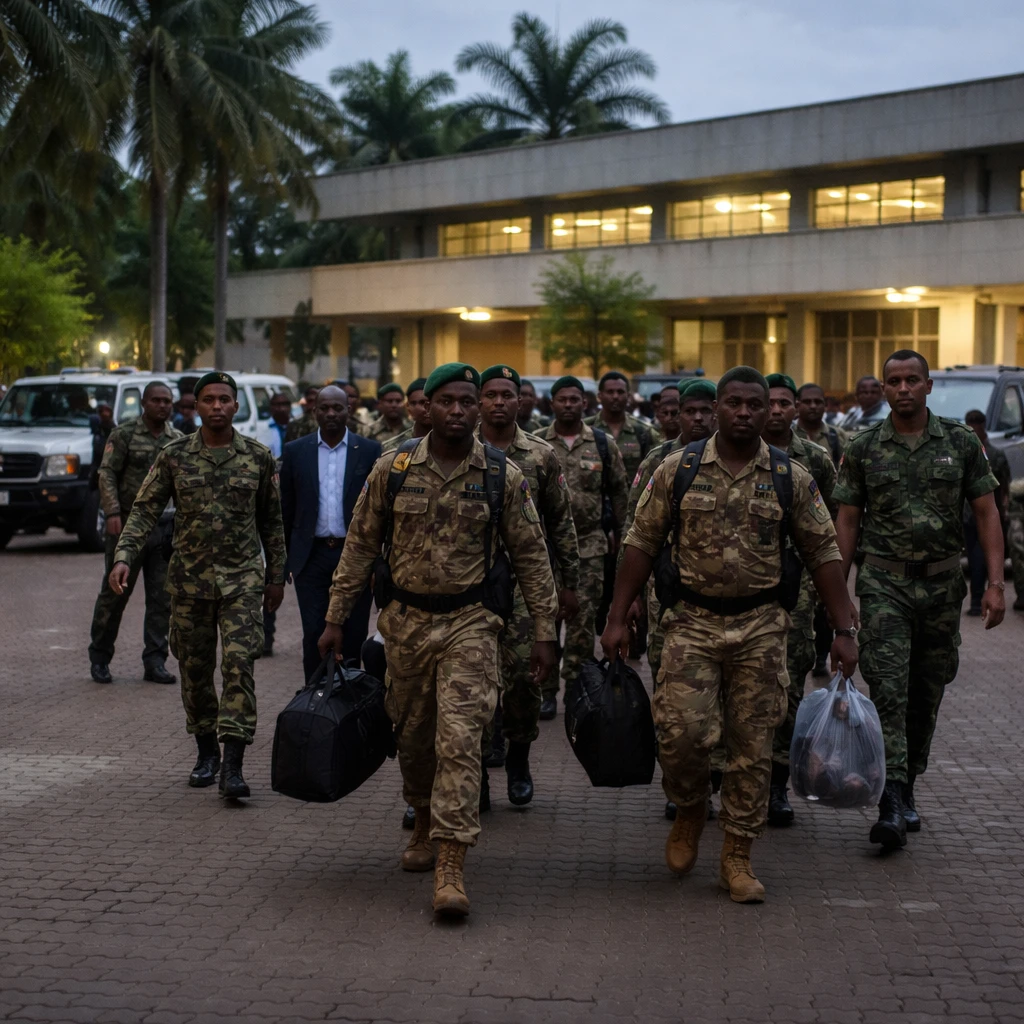
Guinea freed 16 members of Sierra Leone's security forces on Friday after talks in Conakry involving Sierra Leone's foreign minister and Guinea's prime minister. The detainees had been arrested earlier this week amid competing claims over whether Sierra Leonean personnel had entered Guinean territory while constructing a border post. The episode highlights a long-standing territorial disagreement originating during Sierra Leone's civil war and underscores limited public communication from both governments.

Key Points

  • Guinea released 16 Sierra Leone security personnel after discussions in Conakry involving Sierra Leone's foreign minister and Guinea's prime minister.
  • The two countries provided conflicting accounts: Sierra Leone said its forces were constructing a border post in Kaliyereh, while Guinea said Sierra Leonean soldiers entered its territory without authorization and equipment was seized.
  • The territorial disagreement dates back to Sierra Leone's 1991-2002 civil war; the article does not provide information on sector-specific economic or market impacts.

Conakry, Guinea - Guinea released 16 security personnel from neighbouring Sierra Leone on Friday, two officials said, an action that could ease the immediate tensions in a recurring border dispute.

The officials, who requested anonymity because the two governments had not issued formal statements, said the release followed discussions in Conakry between Timothy Musa Kabba, Sierra Leone's foreign minister, and Amadou Oury Bah, Guinea's prime minister. The talks are reported to have taken place in the Guinean capital.

Neither Sierra Leone's information minister nor a spokesperson for Guinea's government immediately replied to requests for comment, according to the officials. The lack of public statements from either side leaves some details about the agreement and the condition of those released unclear.

The detentions were first disclosed on Tuesday when Sierra Leone accused Guinea of apprehending several members of its security forces. Sierra Leone's information ministry said that army and police personnel had been building a border post and an additional facility in Kaliyereh, a frontier town on the Sierra Leone side, when members of Guinea's armed forces arrived.

Guinea presented a different account, saying that several dozen Sierra Leonean armed soldiers had entered Guinean territory without authorization. In response, Guinea's armed forces detained 16 of the Sierra Leonean personnel and took possession of equipment.

The two officials who discussed the release noted the historical basis of the dispute, tracing its origins to Sierra Leone's 1991-2002 civil war when Guinea sent troops to help combat rebels. The report underscored that the territorial disagreement predates the recent incident and remains unresolved.

At present, the public record is limited to the officials' accounts: the release of the detainees after ministerial-level discussions, the mutually conflicting narratives about where the personnel were located when detained, and the seizure of equipment by Guinean forces. With both governments silent in public channels, the precise terms surrounding the release and any follow-up arrangements have not been made available.


Summary

Guinea freed 16 Sierra Leonean security personnel after high-level meetings in Conakry, following rival claims that the Sierra Leoneans had been either constructing facilities on their side of the border or had entered Guinea without authorization. The border dispute stems from actions during Sierra Leone's civil war and remains unresolved.

Risks

  • Renewed or ongoing border tensions given the long-standing territorial dispute originating during Sierra Leone's civil war - this could affect cross-border security dynamics.
  • Limited public statements from both governments create uncertainty about the terms of release and whether measures are in place to prevent further incidents.
  • Apprehension of personnel and seizure of equipment indicate potential for further operational or diplomatic incidents along the frontier; the article does not specify economic sector impacts.

More from World

Chile Refuses Onboard Medical Services from Chinese Hospital Ship Amid U.S. Pressure Over Cable Plan Feb 27, 2026 U.S. Removes Sanctions on Three Senior Malian Officers as Relations Thaw Feb 27, 2026 Satellite imagery shows surge in support aircraft at Prince Sultan Airbase amid US-Iran tensions Feb 27, 2026 U.N. Expert Warns Taliban-Imposed Health Rules Put Afghan Women and Children at Risk Feb 27, 2026 Poland Questions France’s Place in a Europe-Wide Nuclear Deterrent, Reaffirms U.S. as Sole Credible Partner Feb 27, 2026