
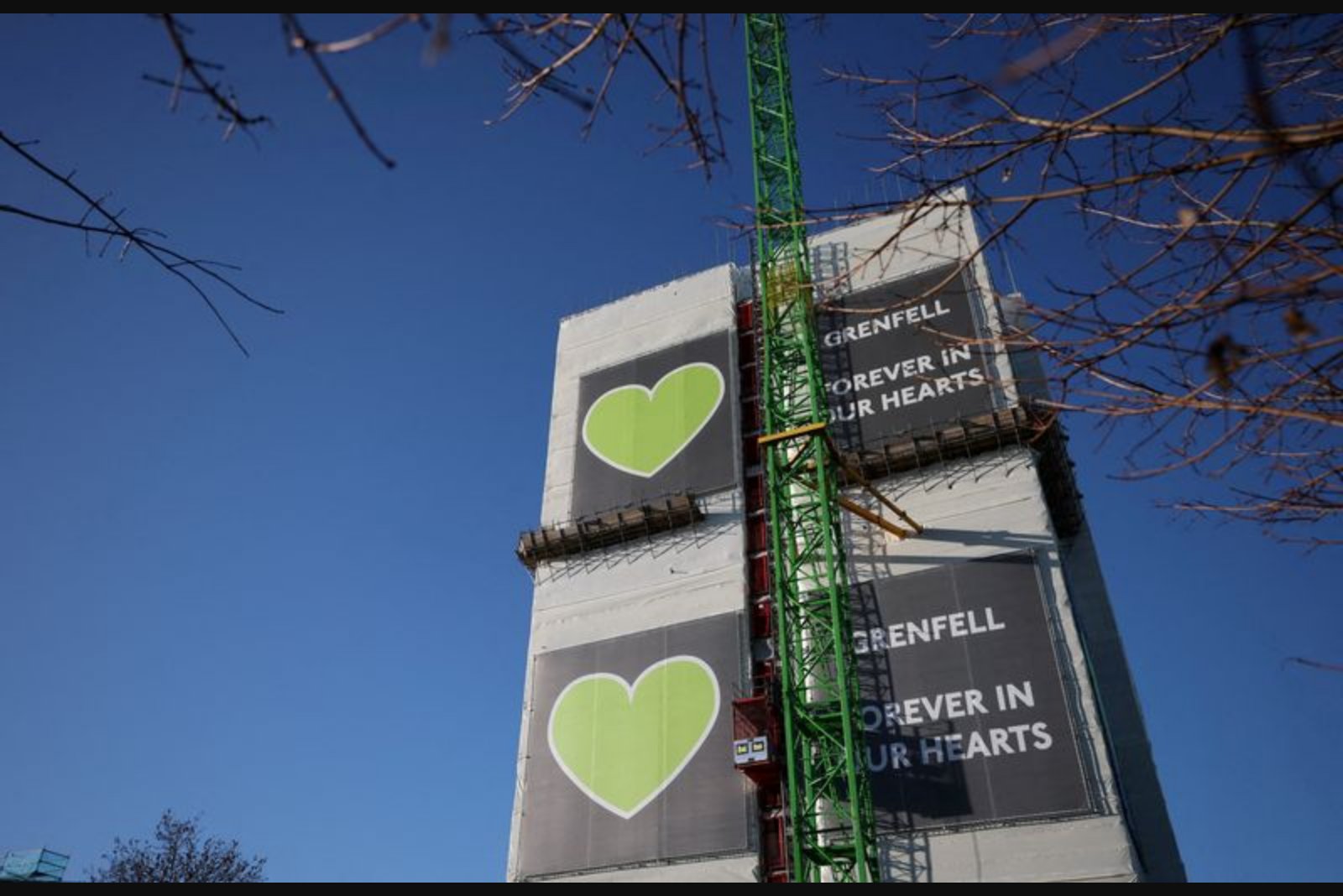
Family members of people who died in the 2017 Grenfell Tower blaze have urged the government to save parts of the building’s stairwell walls that show handprints believed to belong to victims or survivors. The call came as the tower continues to be dismantled following the deadly fire that swept the 24-storey social housing block on June 14, 2017, and claimed 72 lives.
Deconstruction work on the tower commenced in September last year and is scheduled to continue for around two years. During the dismantling, sections of wall in a stairwell were found to be darkened by smoke and fire and to bear at least three visible handprints. An Arabic inscription reading "Allahu Akbar" - which translates as "God is greatest" - was discovered on a different floor. Additional handprints have been identified in another stairwell.
Relatives say these marks are powerful physical traces of the night of the fire. "These sections on the walls in the stairwell hold the voices of that night - and we will not let them be erased, silenced, or this tragedy be sanitised," said Karim Khalloufi, who lost his sister in the fire. Families and their representatives argue that preserving these sections is important to memory and to designing any future memorial.
Groups representing relatives have taken formal legal steps. They have sent a pre-action letter to the government in an attempt to prompt a judicial review. The judicial review process would allow a judge to consider whether the actions or decisions of a public body were lawful.
The families note that a promise was made in 2025 by the former deputy prime minister Angela Rayner that parts of the tower could be retained for a memorial if the local community wished it. Grenfell Next of Kin, an organisation that represents close relatives of more than half of those who died, is pressing the government to preserve the identified wall sections to allow time for consultation with families and memorial designers.
Lawyers for the families say the government has indicated it will not preserve anything above the ninth floor because of sensitivity and loss of life on the higher levels. The handprints and the Arabic inscription were both found above the ninth floor, placing them in the area the government has said it will not retain.
A spokesperson for the Ministry of Housing, Communities and Local Government (MHCLG) said the government remained committed to "ensuring what happened at the tower is remembered, with the community’s voice at the heart of our work", and added that the removal work was being handled carefully with those affected.
Context and next steps
- Families have initiated pre-action correspondence to seek judicial review, a legal step allowing review of the lawfulness of government decisions or actions.
- Discussion is focused on whether material above the ninth floor - where the discovered markings are located - can be preserved despite the government’s stated position.
- Preservation would permit further talks between families and memorial designers about how to incorporate these elements into remembrance plans.