
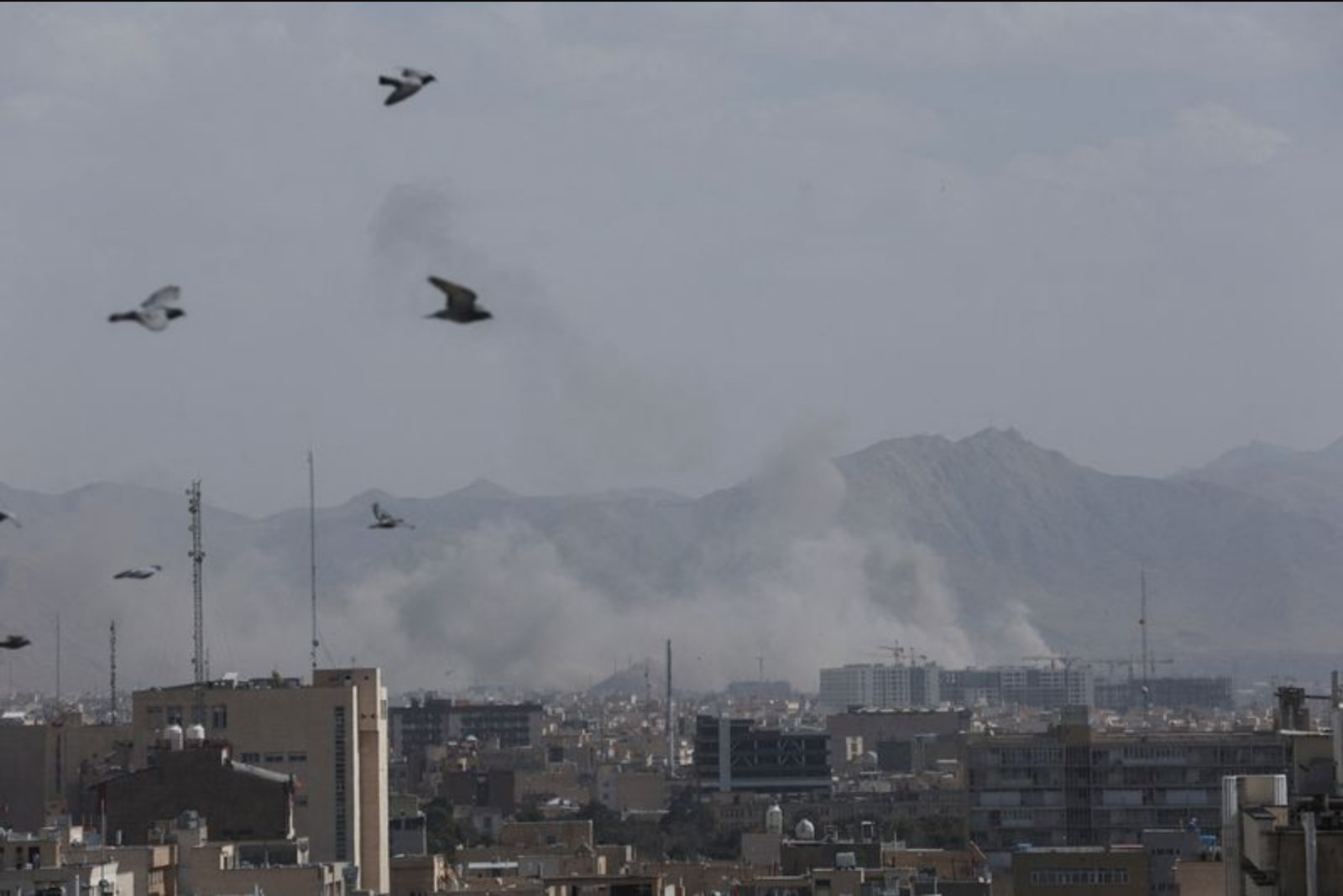
Feb 28 - Israel and the United States launched strikes on Iran on Saturday, an action that has escalated tensions across the Middle East and prompted widespread international comment. President Donald Trump publicly vowed to destroy Tehran’s missile arsenal and to prevent it from developing a nuclear weapon.
The strikes were described by officials in Israel and the United States as decisive military moves. The attacks have also sparked immediate and pointed reactions from foreign leaders and senior officials, reflecting a mix of skepticism, condemnation and concern over future fallout.
Reacting from Moscow, Dmitry Medvedev, deputy chairman of Russia’s Security Council and a former Russian president, criticized the approach to negotiations with Iran. He said:
"The peacemaker once again showed his face," Medvedev, a former Russian president, said. "All negotiations with Iran are a cover operation. No one doubted it. No one really wanted to negotiate anything."
Medvedev added a historical comparison in his remarks, noting the relative youth of the United States compared with the longevity of Persian history and concluding with a rhetorical challenge: "The question is who has more patience to wait for the inglorious end of their enemy. The USA is only 249 years old. The Persian Empire was founded more than 2,500 years ago. Let’s see in 100 years..."
In Beirut, Lebanese Prime Minister Nawaf Salam issued a warning about the potential domestic consequences of the strikes, stating:
"I reiterate that we will not accept anyone dragging the country into adventures that threaten its security and unity."
Norwegian Foreign Minister Espen Barth Eide challenged the legal rationale offered for the strikes. His assessment emphasized international law, saying:
"The attack is described by Israel as a preventive strike, but it is not in line with international law. Preventive attacks require an immediately imminent threat."
Officials and leaders quoted here underscore the diplomatic and legal tensions that have followed the strikes. The statements reflect differing perspectives on the legitimacy of pre-emptive military action, the state of negotiations with Iran, and the risks of broader regional destabilization.
At present, public comments from key figures signal heightened uncertainty over next steps in the region. The immediate international discourse centers on the legality of preventive strikes, the durability of diplomatic channels, and the potential for further escalation.
Key points
- Israel and the United States conducted strikes on Iran, prompting a renewed military confrontation in the Middle East.
- President Donald Trump vowed to destroy Tehran’s missile arsenal and to prevent Iran from developing a nuclear weapon.
- International responses raise legal and diplomatic questions; sectors likely affected include defense contractors, energy markets and regional trade given heightened geopolitical risk.
Risks and uncertainties
- Risk of regional escalation and further military confrontation, affecting security-related industries and market volatility.
- Concerns over the legality of preventive strikes, as voiced by Norway's foreign minister, which could complicate diplomatic avenues and international responses.
- Potential diplomatic breakdown or erosion of trust in negotiations, reflected in comments by Dmitry Medvedev, creating uncertainty for political and economic engagement in the region.