
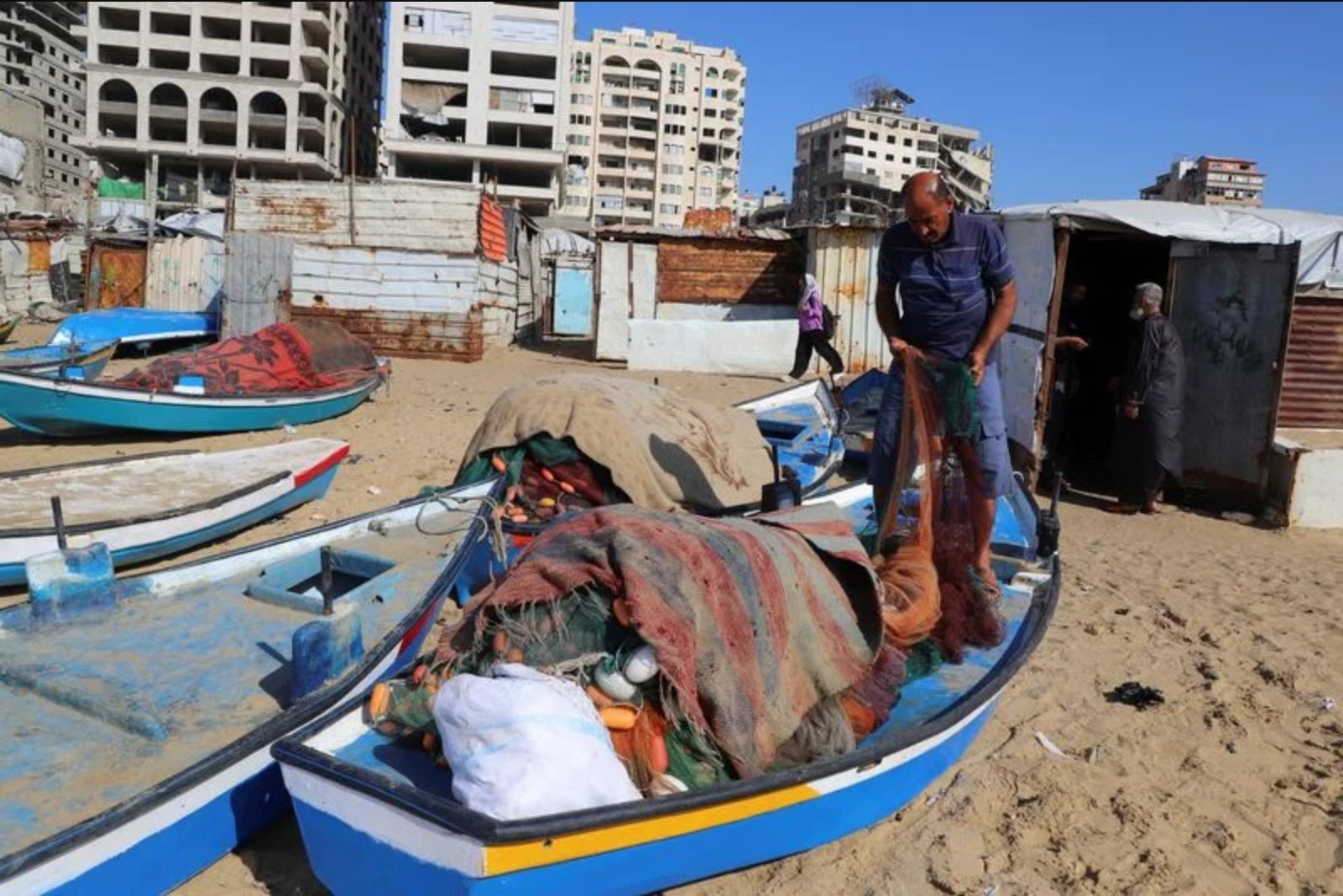
In a sparse workshop in Gaza, men are improvising repairs on small pleasure boats using reclaimed fibreglass, scrap wood and door frames taken from destroyed buildings, racing to outfit vessels that have become essential for coastal fishermen.
These small dinghies - once used by families and swimmers before the war - are now pressed into service to keep the enclave's fishing activity afloat. Fishermen and repair workers say limits on the flow of fibreglass and other materials into Gaza have made it costly and difficult to fix purpose-built fishing boats, leaving the smaller crafts as the only realistic option.
"A kilo of fibreglass in the era before the war was 50 or 60 shekels (approximately $17 or $21)," fisherman Mohammad al-Hissi told Reuters. He added that the cost today was around 800 shekels.
Officials at COGAT, the Israeli military agency responsible for controlling access to Gaza, told Reuters that the bans on certain goods cover items that could have both military and civilian uses. The agency did not give a direct comment about restrictions specifically on fibreglass.
Even before the conflict that began with Hamas attacks on southern Israel in October 2023, Gaza's fishermen operated under strict limits on how far out to sea they could venture. Fishermen now say they stay even closer to the coastline to avoid reported shooting incidents they say have continued since last year's ceasefire. Israel's military did not immediately respond to questions about the reported shooting or its effects on fishermen.
Fishing once supplied a meaningful portion of local food needs. Today, the Gaza fishing industry's total catch has fallen to less than 15 tons a month - roughly the amount they say they used to take in a single day before the war, according to Zakaria Baker, a member of the Gaza Fishermen Syndicate.
The humanitarian picture remains fragile. Gaza health officials report that more than 900 Palestinians have been killed in Israeli strikes since the truce began; those figures do not distinguish between combatants and civilians. Israel's military has said four Israeli soldiers have been killed by militants during the same period. While the hunger crisis in Gaza has eased since famine was declared in parts of the territory before the ceasefire, aid groups say most children still lack a sufficiently varied diet. The UN reported 3,500 children were admitted for malnutrition treatment in April.
Repair shops are trying to respond to the new needs. "We repair and maintain boats, and serve fishermen in any way we can," worker Musab Baker said at one repair shop. "But we are unable to do anything apart from the small boats." Those words underline the practical limits on maintenance and the reduced scale of maritime operations driven by material shortages and safety concerns.
Context and immediate effects
- Material scarcity and sharply higher prices for fibreglass have forced a shift from larger, purpose-built fishing vessels to improvised repairs on small dinghies.
- Reduced range at sea and reported incidents of shooting have contributed to a collapse in total monthly catch, according to local fishing representatives.
- Humanitarian indicators show continuing nutrition challenges, particularly among children, despite an easing from the worst conditions earlier.
This scene of makeshift repairs captures how civilian livelihoods, local food production and maritime services are being reshaped by restrictions on materials and ongoing security concerns. Repairers and fishermen are adapting with limited tools and reclaimed parts, but those adaptations reflect a narrower and more precarious sectoral footprint for Gaza's coastal economy.