
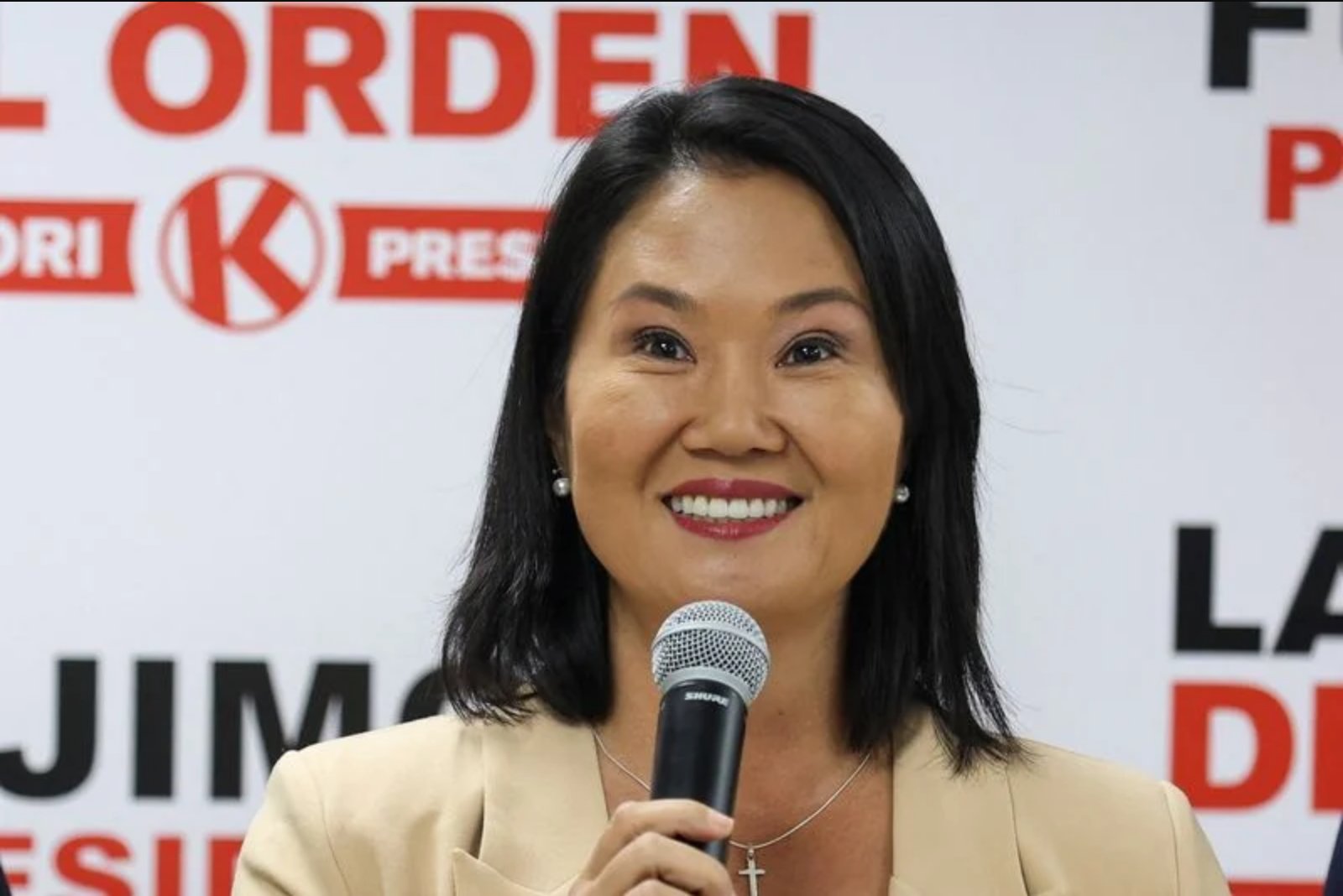
LIMA, June 3 - Conservative politician Keiko Fujimori moves into Peru’s presidential runoff this Sunday after receiving the largest single share of votes in the first round held in April, polling 17.17%. Her opponent in the decisive second round will be leftist congressman Roberto Sanchez, who placed a close second with 12.03% of votes.
This contest represents Fujimori’s fourth attempt to win the presidency. In 2021 she narrowly lost to leftist Pedro Castillo, who was later removed from office after an attempt to dissolve Congress; Castillo has publicly backed Fujimori’s runoff rival from jail.
Fujimori’s campaign is defined by a strong law-and-order message aimed at addressing surging insecurity across the country. She is framing herself as the candidate best positioned to bring back stability amid what campaign materials and public statements describe as rising rates of homicide and extortion - issues that have emerged as central concerns for many Peruvian voters.
"We will work with financial institutions ... to identify, track and block money from extortion," Fujimori said during a runoff debate, signaling a focus on financial controls and coordination with banks as part of her anti-crime platform.
At the same time, Fujimori carries the heavy weight of a family history that remains deeply divisive. Her father, Alberto Fujimori, was president from 1990 to 2000 and is remembered both for restoring a measure of public order by some observers and for an authoritarian style of governance by critics. He served 16 years in prison for human rights abuses committed during his administration.
After years of positioning herself somewhat apart from her father’s controversial record, Keiko Fujimori has in recent months more openly embraced elements of his legacy, adopting an image that borrows from the perception of strong, decisive leadership.
Her political circle, however, is keen to draw distinctions between the two generations. Luis Galarreta, Fujimori’s vice-presidential running mate, said that the elder Fujimori was skeptical of party structures and often created short-lived electoral groupings rather than enduring organizations. "Keiko is different," Galarreta said, adding that she supports "having a strong, formal party organization - building institutional political structures."
Galarreta has also framed the candidate as changed by recent personal experience. Fujimori endured years of inquiries over campaign funding that culminated in charges being dropped last year. She was detained in pretrial custody on two occasions between 2018 and 2020, spending nearly a year and a half in jail. According to Galarreta, that period contributed to a reshaping of her outlook.
"We talk a lot about a 'new Keiko,'" Galarreta said. "She is more open, more herself, as a person, as a friend." He described her as "chancona" - studious and diligent - and recounted seeing her help her daughters with homework and prepare lunches even while managing a demanding campaign schedule.
Galarreta also offered lighter personal details meant to humanize the candidate: Fujimori developed an affection for cats while in detention because they helped keep rats away, and she now keeps four felines.
Keiko Fujimori first entered the public eye as a teenager, serving as de facto first lady from age 19 after her parents separated. She later studied business administration in the United States and built her own political base. In 2006 she won a seat in Congress with what was at the time the highest vote total ever recorded for a Peruvian lawmaker. She subsequently lost three presidential runoffs by narrow margins in 2011, 2016 and 2021.
Despite her electoral experience, Fujimori continues to confront a high rate of voter rejection, although some polling indicates that opposition to her has eased. Ipsos Peru polling in May found that 40% of respondents said they would definitely not support her in a runoff, down from roughly 59% measured before the first round.
Critics of Fujimori point to the role of her political party, the right-wing Popular Force, which holds a dominant position in Congress and has been accused by opponents of repeatedly blocking reforms. Demonstrations of opposition have continued during the campaign period: hundreds of left-wing activists and civil society groups marched in Lima on Saturday to protest her candidacy.
Analysts following the election dynamics highlight the enduring phenomenon of an "anti-Fujimori" vote that has previously prevented her from capturing the presidency. "The anti-Fujimori vote is the factor that explains why Keiko Fujimori has fallen short of the presidential palace in three consecutive elections," said historian and analyst Daniel Parodi. "I sense that this anti-vote has declined - the question is by how much."
As the runoff approaches, the campaign narrative centers on competing claims about restoring public order and the implications of a polarizing political inheritance. Voter calculations appear to be balancing concerns about personal security against lingering mistrust rooted in past controversies and the candidate’s legal history.